
Managing Long Term Commitments With Mindfulness
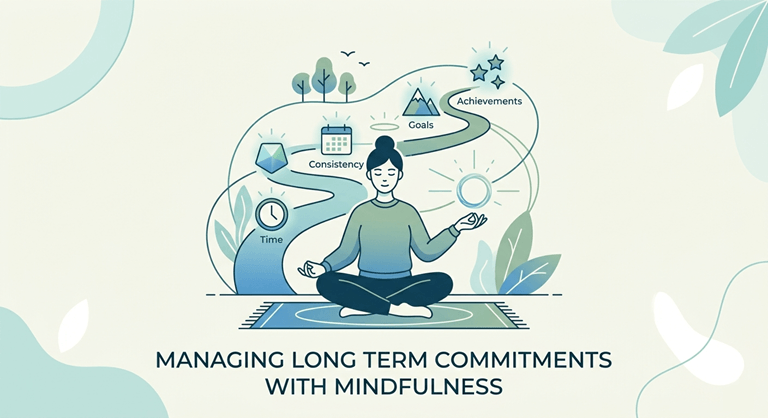
Stay Present With the Long Road
Long-term commitments can feel strange because they ask you to care about something that may not fully pay off for months or years. Paying down debt, building a business, finishing a degree, healing a relationship, improving health, or saving for a major goal all require effort long before the reward feels close. That distance can create overwhelm.
Mindfulness helps by bringing your attention back to the piece of the commitment you can actually handle today. Instead of trying to emotionally carry the entire future at once, you return to the next useful action. Someone working through financial pressure may research options like personal loan debt relief while creating a larger plan, but the daily challenge is staying steady enough to follow that plan without burning out.
The Future Is Built in the Present
A long-term commitment may point toward the future, but the work happens now. You cannot make next year’s choices today. You can only make today’s choice with next year in mind.
That is where mindfulness becomes practical. It is not just sitting quietly or trying to empty your mind. It is noticing what is happening right now without letting every emotion or distraction take control. You notice the stress, the resistance, the urge to procrastinate, and the temptation to rush. Then you choose the next action anyway.
This is how a large commitment becomes less overwhelming. You stop asking, “How will I keep this up forever?” and start asking, “What does this commitment need from me today?”
Overwhelm Comes From Carrying Too Much at Once
When you think about the entire goal at once, your mind can turn it into a mountain. A debt payoff plan becomes years of payments. A degree becomes dozens of assignments. A health goal becomes hundreds of workouts. A business becomes endless decisions.
That kind of thinking can make even a meaningful goal feel heavy. Mindfulness interrupts the spiral. It brings you back to the present task. Not the whole mountain. Just the next step.
If your mind says, “This is too much,” you can answer with, “Maybe the whole thing feels big, but this one action is doable.” That response does not deny reality. It simply stops the future from swallowing the present.
Small Daily Practices Strengthen Focus
Mindfulness works best when it becomes a small daily practice, not a tool you only use during a crisis. A few minutes of breathing, journaling, walking without your phone, or reviewing your priorities can train your attention to return when it wanders.
This matters because long-term commitments are full of distractions. Some are obvious, like social media, entertainment, and busy schedules. Others are internal, like doubt, impatience, comparison, and perfectionism. A mindfulness practice helps you notice these distractions before they quietly redirect your behavior.
Don’t make an absolutely flawless routine. Seek to begin with simplicity. Breathe slowly 3 times before opening the laptop. Take time to decide whether to make a purchase. You will check messages after reviewing your top goal. At the end of the day, question yourself as to what took you one step forward.
Mindfulness Helps Manage Emotional Reactivity
Stress can cause people to be “reactive. Perhaps you want to give up, not go, spend too much, fight, do it quickly, or alter your plans drastically just to feel better. The issue with relief-based decisions is that they are detrimental to long-term commitments.
Mindfulness provides a pause between feeling and response. You can see the signs of discouragement and not say, “Well, that’s a waste of time, I guess I should give up on this plan.” Avoiding your accounts does not mean you can’t notice, “I feel anxious about money.” You don’t need to try to solve all of this at one time to say, “I feel behind.
Such a pause is for the benefit of your commitment. It enables you to act in accordance with your will rather than your emotions.
Reduce Procrastination by Shrinking the Moment
When the work to be done is not clearly defined or is too deeply connected with emotions, procrastination can increase. Too large to work on my future. Too serious for Fix my finances. The term get healthy is very generic. Mindfulness takes the task back to the here and now.
Take the stance of inquiry, and ask: “What is the smallest action that I can do in full attention?” Perhaps it’s opening the file. Perhaps it is opening the file. Perhaps it’s paying one bill. Perhaps it’s taking a 10-minute walk. Perhaps it’s the first sentence of an email.
This is because it’s now that we can handle. It’s not necessary to be motivated throughout the entire trip. You don’t have to start the next step.
Align Daily Actions With Long-Term Values
Mindfulness can be helpful as it helps to bring your choices into focus. You become aware if your actions do not reflect what you believe to be important.
Where money is concerned, does what you spend today help you to be financially secure? When it comes to health, does today’s agenda accommodate your body? If learning or practice is important to you, did you pay attention to growth? Do you feel connected? Have you communicated care?
The following questions are not intended to be a burden of guilt. They have a function to align. Small actions that continually take steps in the right direction make a difference in the long-term commitments.
Use Mindful Reviews Instead of Harsh Reviews
A lot of people check and find out their progress and then criticize themselves. They are thinking about what they have missed out, what they are not as good at as they need to be, or what they have further to go. This type of review can generate shame and avoidance.
A mindful review isn’t the same. It has honest and curious questions. What has been successful this week? So why was it that it didn’t go well? How did stress get the best of you? What would make next week easier if there were a change of some sort?
This way, you’ll stay involved with the commitment rather than scared of it. You’re not blaming yourself for your mistakes. You are taking in from them, but not making a judgment on who you are.
Avoid the Burnout Sprint
Trying to get up to speed when people feel they are behind on a long-term goal can result in an “Intense” approach. They sacrifice sleep, rest, and effort, and expect more of themselves. This is sometimes a sprint that needs to be; it causes burnout.
When effort is going frantic, you can tune in and notice it in the moment because of mindfulness. You can question yourself, “Am I focused, or am I rushing because I am afraid?” That question matters. Sustaining effort is a goal of the focused effort. Attempting to do things through fear is not a fear-based effort.
There needs to be a rhythm to long-term commitments. They must work, rest, adjust, and recuperate. If it is only a plan that you will follow if you don’t pay attention to what your limits are, it is not a stable plan.
Create Anchors for Difficult Days
Commitment (long-term) should be anchored so that when feelings change, you remain anchored. An anchor is something that you can do repeatedly to maintain your focus on the goal if things get tough.
If you’re setting up a financial goal, you’ll want to follow up on your account balances on a weekly basis. It could be a walk to the health, on a regular basis. When it comes to learning, it may be reading 5 pages. It could be one honest check-in or a relationship. If you are working on a creative objective, then it could be 10 minutes of practice.
Anchors are effective because they decrease negotiations. It’s not a decision you need to make today – if the commitment is important, it will be in the future. When you’re told that it does, the anchor can remind you.
Make Room for Adjustment
Mindfulness also enables you to notice when a plan must change. Commitment doesn’t equal inflexibility. The end may be right, however, the ways in which you get there need to be refreshed.
Perhaps you have undergone a change in your schedule. Perhaps you’ve had a budget change. Perhaps you aren’t getting as much energy as you think you should. Perhaps setting a milestone was too lofty. Mindfulness allows you to see what is going on without panicking or denying.
You don’t give up, you adapt. You don’t try to impose the old plan, but you change it. This helps to maintain the commitment and respect for the life you have.
Progress Comes From Returning
The single most significant attribute of long-term commitments is returning. You will end up getting distracted. You will miss days. You will become depressed. There will be times when the objective seems out of the realm of possibility or uninteresting. But the commitment is not as complete as it was.
Mindfulness teaches returning. Come back to the breathing. Return to the task. Return to the plan. Go back behind the ball to the number. Going back if a mistake is made. Come back after a tough week! Return without drama.
This is what makes the effort sustained – just going back. Not perfection. Not constant motivation. Not a quick fix to solve all the problems. Simply making a habit of returning to it, the important stuff.
The key to long-term commitments is being mindful and awake in the process. You are conscious of your feelings but don’t act on them. You are in touch with the future without getting “burdened” by it. Today’s little actions are building up the plan to achieve tomorrow’s big goal. As time goes on, the steadying power of that gift becomes the influence that propels the commitment forward.
Popular on OTW Right Now!



About The Author

Gagan Bhangu
Founder of otechworld.com and managing editor. He is a tech geek, web-developer, and blogger. He holds a master's degree in computer applications and making money online since 2015.