
Everything You Want to Know About Beauty Product Lifecycle Management
The beauty and personal care industry is both dynamic and competitive. Amid this, fast-evolving regulations often pose significant obstructions if companies are not ready for the surprises. If you run a cosmetic company, you understand the importance of managing a product’s lifecycle end-to-end. Any misstep or gap can immediately affect costs and delay launches. You may also have to recall your product. Nothing can be more painful than these experiences. It hurts your finances, whether you are an enterprise or a startup. A big organization can still absorb the loss, but it also cannot take risks. Hence, investing in the right places is important. That’s why solutions like PLM, or product lifecycle management, are gaining traction. This software provides centralized data access, improves team collaboration, and accelerates time-to-market while ensuring compliance.
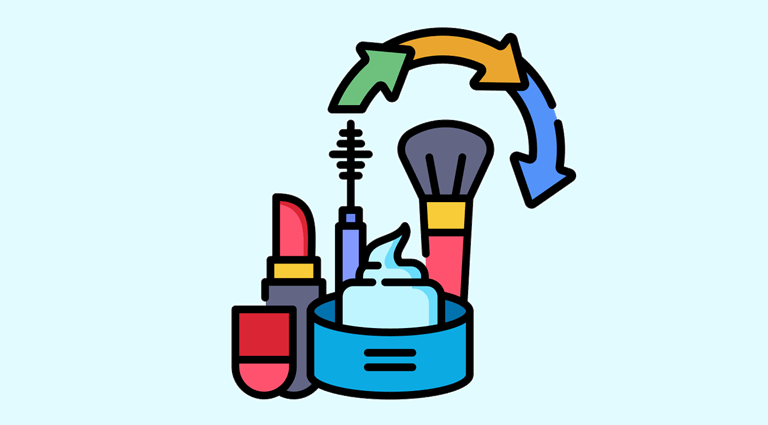
Cosmetic PLM software overview
Almost every industry uses a PLM today to improve its production capabilities. A beauty PLM is also similar in that sense, but it caters to a more niche market. With this digital platform, you can gather all product-related details in one place. As a result, every authorized department or individual has clarity on the concept, formulation, and market launch requirements. It acts as a strategic tool. It streamlines formulation, labeling, and safety-related information, enabling R&D, marketing, production, and regulatory divisions to collaborate smoothly. Whether you are a local or international brand, your formulations and packaging meet all the required standards. Since America and other countries are pretty strict about their rules, you cannot make a single mistake, no matter how minor.
With a solid PLM, your product development cycles can run faster and more smoothly. You can satisfy market demands by adhering to safety and traceability requirements. If you don’t use this, you already know the risks looming over your business. A well-designed PLM system can integrate all the databases, including regulatory and formulation databases, and provide proper documentation to minimize or eliminate any errors. All the details regarding raw materials, formulas, and labels are stored in a centralized system. Since regulatory monitoring is done in real time, compliance risks are also minimized. Teams don’t do the same job that has already been done. It aids in decision-making and saves time. To be precise, teams can dedicate more time to innovation when workflows and documentation are automated.
Choosing the right PLM for beauty products
Many software companies offer PLM solutions, but you have to select one that best meets your needs. When comparing your options, focus on a system that provides access to a centralized database storing all details on formulas, compliance, and manufacturing. It should promptly notify you of regulatory changes. Plus, it must ensure smooth collaboration between all the stakeholders. At the same time, you should be able to scale up your product line or meet growing demands without any trouble.
Modern PLM systems are known for providing easy access to AI generated tech packs. When you have structured, readily available technical documents to use, human resources can focus on other critical areas of product development. The AI handles formulation databases, stores templates, checks for regulatory adherence, and standardizes processes. All this reduces manual labor and expedites time-to-market. One doesn’t even have to worry about the risk of inaccuracy.
Popular on OTW Right Now!
-
 5 Ways to Reduce Downtime Using Predictive Analytics and Automation
-
 Why SEO Remains the Most Cost-Effective Customer Acquisition Channel in 2026
-
 The Strategic Role of Bulk Diesel Exhaust Fluid Supply in Enhancing Efficiency, Compliance, and Sustainability
-
 Customer Care Support Specialist Jobs in Tucson: What You Need to Know Before Applying

About The Author

Gagan Bhangu
Founder of otechworld.com and managing editor. He is a tech geek, web-developer, and blogger. He holds a master's degree in computer applications and making money online since 2015.