
Why Does Grease Collect in the Narrow Gap Between the Stove and Countertop?
A few drops of cooking oil can get into that narrow gap next to the stove before anyone realizes. Bits of veg, rice and crumbs will also find their way into that space. Initially, it’s not really a problem as most of the mess is out of sight. After a couple of weeks, though, you may well see a dark, sticky line running down the edge of the countertop and a nasty smell, plus some debris that’s very difficult to get to.
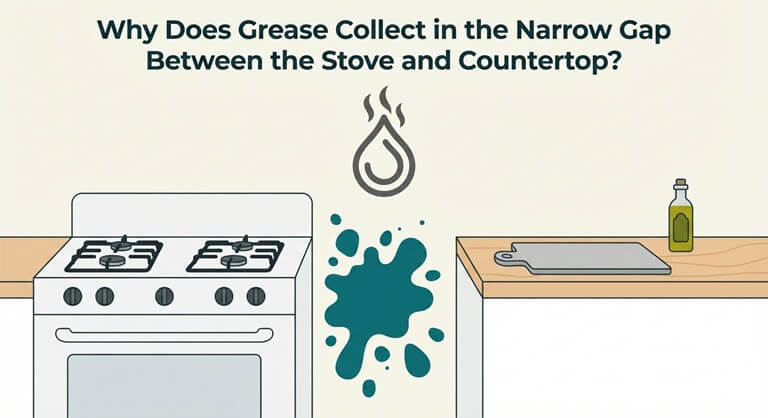
The gap between the stove and the counter adjacent to it is one of the toughest areas to get clean in the kitchen. It’s right next to the heat, is constantly splashed with food and is generally too narrow for a normal cloth. Houston Cleaning Services do a comprehensive kitchen clean which includes the stovetops, burners, splashbacks and the surrounding areas where cooking grime is likely to have accumulated.
Pulling the stove away from the cabinets isn’t necessarily the solution. That can, in fact, disturb the electricals, the gas lines, the flooring, and the safety features. If you’re thinking about a deep clean for that stubborn kitchen buildup, then you need to be aware of what you can safely clean from the gap and what may require a professional or a different approach.
How Grease and Food Debris Get Trapped Beside the Stove
The narrow space is down to the fact that so many freestanding ranges are positioned between two sections of cabinetry or between a cabinet and a wall. Even if the range looks like it’s right up against the countertop, there will still be a small gap.
Cooking creates a number of types of debris which can get into that gap.
Oil splashes are very much a feature of frying and sautéing. Small droplets will land on the edge of the counter, spread out across the surface and run down. As the oil cools, it can leave a thin film on the side of the hob or on the adjacent cabinet.
Loose food takes a different route. The rice, veg, bits of food, crumbs and seasoning can simply drop straight into the gap as you’re moving it from the worktop into the pan.
Over time the two types of residue blend together. The crumbs stick to the oily layer and the dust falls onto any exposed grease. It becomes a lot harder to clean as it’s no longer just loose bits.
Heat can make things worse. Warm surfaces will soften the grease and allow it to spread, and cooking over and over again will leave behind tough deposits as the liquids dry.
The “worst” bit at the top of the gap could well be the dirtiest, with the residue working its way down the sides and accumulating right up to the floor. That’s why simply wiping the edge that you can see might make it look better, but may not actually eliminate the smell.
What the Shape of the Gap Tells You About Cleaning It
Not every stove installation has the same clearance.
Some ranges fit very closely between the cabinets with only a hairline gap on either side. Others have a fairly significant gap which allows crumbs and small items to fall through. A slide-in range may have an overlapping cooktop edge or trim to suit its particular installation.
These differences will impact what you can clean without having to move the appliance.
If the opening is very narrow, then it’s probably safest to just clean the visible edge and pick up any loose bits with the appropriate tool. If the gap is wider then a soft crevice tool can be used to reach further down without it being necessary to press against the stove or the cabinets.
Before you do anything in the gap, check the installation. Look for loose trim, exposed wires, damaged seals and any signs that the appliance isn’t properly secured.
Don’t just assume you can pull the stove forward because it appears to slide easily. Many stoves have anti-tip brackets or other restraints to prevent them from tipping. Gas stoves can also have connections that would be damaged if you tried to move them the wrong way.
If you need to disconnect, lift or move the stove in order to get at the debris then STOP. Follow the manufacturer’s instructions or get a qualified professional to do it.
It’s also worth checking the countertop adjacent to the hob. A dark line may simply be residue on the exposed edge rather than actually running deep into the gap. In that case the majority of the visible problem can be sorted out with a bit of careful cleaning of the surface rather than having to get to the side of the hob panel.
Start With Loose Crumbs Instead of Grease Cleaner
If you’ve got a mixture of dry rice, some seasoning and a bit of sticky oil sitting next to the stove then spraying cleaner straight away may seem like the obvious thing to do. The problem with that is it can actually make the situation worse by incorporating the loose bits into the liquid.
First of all make sure the stove is off and is completely cool. Remove all the pans, utensils and other items from the counter adjacent to the gap so that nothing drops into it whilst you’re cleaning.
Use a flashlight to check out the area you can get to. You may well spot some crumbs up near the top, some dried sauce along the edge of the counter or something that’s simply fallen up beside the stove.
For loose debris, try a vacuum with a narrow attachment to get into the gap. Go slowly and keep the tool well clear of vents, electricals, controls and any delicate surfaces.
Don’t push the nozzle down if the gap is getting tighter. A hard attachment could scratch a painted stove, chip a stone countertop or get caught on something you can’t see.
A soft tool designed for cleaning gaps will be of use if you can get into the gap. Don’t use metal blades, screwdrivers or any other sharp object.
After you’ve removed the loose bits, have a look at what’s left. The dark line is often considerably smaller as most of the build up was just crumbs and dust rather than actual hardened grease.
This step makes wiping considerably easier later on. A clean cloth can deal with sticky spots without the cloth becoming clogged up with all the loose food right away.
Remove Sticky Grease Without Flooding the Opening
When you’re removing the grease, it’s important to control how much moisture and cleaning product you use.
The narrow gap is often going to have quite different materials in contact with each other (a painted or stainless steel panel, a countertop edge, and the side of a cabinet, for example). A cleaner that’s safe on one of those may well be detrimental to another.
Before you use any cleaner, check what you can actually get it on. Stone, laminate, painted wood, stainless steel and coated metal all require different treatment.
Follow the manufacturer’s cleaning advice for each surface. For finishes that can take it, a little mild cleaner on a soft cloth is often all that’s required to lift the normal build-up of grease.
Don’t blast the cleaner directly into the gap, as the liquid can run down and end up on the electrical bits, the unfinished cabinet edges, or any of the bits that are difficult to dry.
Clean the Countertop Edge First
The exposed edge of the counter is normally the easiest to get to. It gets splashed all the time and can end up with a lot more residue than you’d think.
Wipe the visible edge gently with an appropriate cloth. If there’s grease underneath the overhanging counter, then clean only what you can reach without scraping or bending tools against the surface.
For stone countertops, stick to the care instructions provided by the stone supplier. Some finishes are particularly susceptible to damage from acidic and abrasive products.
Laminate edges must be protected from excessive moisture, particularly where the seams are open or the decorative layer is damaged.
After cleaning the edge, dry it well. This stops the liquid left over from running into the gap once you’re finished.
Work on Accessible Side Panels Separately
If you can get to the side of the stove panel then use a narrow soft cloth or an appropriate cleaning tool to remove any visible grease.
Just put the approved cleaner on the cloth and wipe the bits you can reach. Don’t push any damp material into the vents, the wiring or inside the appliance.
For the really tough spots, just follow the cleaner’s instructions as to how long to leave it on rather than scrubbing it.
Houston Cleaning Services treats stovetop cleaning, suitable appliance exteriors, and countertop care as related parts of removing cooking residue. However, reaching a narrow visible edge is different from accessing a connected appliance’s internal or concealed areas.
After cleaning, use a separate cloth to wipe away any residual cleaner where necessary. Allow the surfaces to dry out completely before using the stove again.
Why Moving the Stove Can Create More Problems Than It Solves
A dirty gap will make you want to just slide the whole stove forward. That may seem like a quick solution but it’s easy to miss the dangers of doing so.
Freestanding stoves are heavy. You can scratch the floor pulling one across it (wood in particular), you can damage vinyl, you can get stuck on a floor transition. You can also put strain on the legs and put pressure on the adjacent cabinets if you’re not careful about how you move it.
Safety restraints are even more important. A lot of stoves have anti-tip devices which have to be properly fitted and locked. Removing one without strictly following the manufacturer’s instructions can render the appliance unsafe.
Gas connections are another issue. Moving the hob can put stress on the connector (particularly if you’re not aware of how the line is set up).
Electrical leads, power connections and all the other hidden bits can be affected too.
Given the risks involved regular kitchen cleaning shouldn’t be about disconnecting the gas line, removing the safety brackets or moving a heavy piece of kit unless you have the requisite skill and expertise.
If there’s a build-up of food or grease deep behind the stove, then refer to the manufacturer’s instructions or get in touch with an appliance technician or a qualified professional.
When you’re booking the deep clean, you can describe the amount of visible build-up and the type of stove you have. That enables the team to tell the difference between something that can be cleaned on the outside and something that requires the safe movement of the appliance.
A professional cleaner can clean all sorts of surfaces, but cleaning doesn’t mean you can ignore the hardware that keeps the stove in place.
What Persistent Odors Can Reveal About the Gap
Sometimes the first indication of food being trapped is actually a smell that appears when you go to use the stove.
A piece of food that drops down beside the stove can, of course, slowly go off, particularly if it gets wet. Grease will also go off in the warm area.
But not every smell originates from the same source.
If you smell stale food near a gap that’s easily accessible then check for any dropped food or general debris. A musty smell that just won’t go away could be a sign of moisture in the cabinets or the floor nearby.
If you smell something burning and it’s not normal, then be extra careful. Switch off the appliance if it’s safe to do so and check the manufacturer’s instructions. If you suspect an electrical fault then don’t use the equipment until it’s been checked.
If you smell gas then stop cleaning, don’t use any electrical switches or the appliance, get out of the area and follow your gas company’s emergency procedure.
Strong odours can be a problem in themselves. Spraying a strong odouring degreaser into a narrow gap may well just mask the original smell rather than remove it and can leave a residue in the gap where there is little or no air flow.
If cleaning on a regular basis doesn’t eliminate the smell then have the area checked rather than just resorting to increasingly stronger chemicals.
The aim is to work out what’s causing the smell rather than simply mask it.
Keep the Gap From Becoming a Collection Point Again
After you’ve cleaned out a nasty build-up, a few small things you do whilst cooking will go a long way to preventing anything from going back into the gap.
Be careful when you’re transferring your chopped ingredients into the pan, as if your board is overhanging the gap next to the hob, then bits can easily fall right in.
Keep the edge of the counter clear so you can see the spills. It’s far easier to wipe up a grease spot when the surface is cool and the mark is still fresh.
After cooking, allow the stove to cool before you go and clean up any food you might see on the counter adjacent to it. A quick glance along the edge may reveal some splashes that haven’t quite dropped into the gap yet.
Some stoves can use gap covers that are approved by the manufacturer. These are designed to stop the crumbs and liquids from dropping into the gap between the stove and the worktop.
But a generic silicone strip won’t work on all stoves. You’ve got to consider the heat, the ventilation and the amount of space you’ve got. You need to use the right product for your application and, of course, follow the manufacturer’s instructions.
The cover should be easy to remove for cleaning where necessary. If it’s going to trap grease underneath the edges then it’ll just become another place for dirt to accumulate.
If you’re doing a proper deep clean of your kitchen on occasion, then keeping the counter edge clean between those cleanings will prevent the build-up of thick, hard deposits. It’s far easier to deal with a small spill than a thick layer of grime.
Know When the Problem Has Become a Repair Issue
The gap between the stove and the counter can be a problem in itself (apart from just food buildup).
A countertop edge could swell if liquid is continually getting into an unsealed seam. Cabinet laminate can delaminate if moisture gets to the board underneath. Metal could develop rust or have its coating damaged.
You can’t fix these issues with a simple wipe.
If the gap has become unexpectedly wide then check whether the stove or the cabinets appear to be out of place. Don’t attempt to push the stove into a tighter space.
If you spot a loose edge to the countertop, have an unstable stove, have damaged electrical connections or suspect there’s a gas leak then call a professional.
The same applies to the liquid that’s just kept accumulating underneath the stove. If there’s no recent spill, then it’s not normal kitchen dirt; it’s something that’s got to be traced to its source.
Spotting these problems early will prevent you from damaging your kitchen in the attempt to make it look better.
Give the Kitchen Gap a Practical Place in Routine Care
You don’t need to be checking that little space next to the stove all the time. It’s just useful to have a quick glance at it when you’re cleaning the counters and the stove.
Look for fresh crumbs, splashes and sticky spots along the edge. Remove what you can safely whilst the stove is cool.
If you’ve been cooking a lot, had a major spill or just see the debris building up on the floor beside the stove then take a closer look.
There’s really no point in pushing the cleaning tools right down into the gap on a regular schedule if you can’t see any dirt and it’s very difficult to get to.
It’s better to clean up the food debris as soon as it gets into the gap.
If your kitchen needs a bit of a look-over, a deep clean can deal with the cooking surfaces, the outside areas, the splashback, and the cabinets right next to it. You don’t just clean the gap, you clean the whole kitchen and the grease is going to be much better in the long run.
How often you’ll need a deep clean is down to how you use your kitchen rather than the notion that every house gets dirty at the same rate.
Stop the Next Spill Before It Disappears
The best time to clean up any grease adjacent to the stove is before it gets down below the counter. Once the oil has got into that lower gap it picks up the crumbs and dust and you end up with a small spill that’s very difficult to get at.
Get into the habit of checking the counter edge when you’re tidying up after cooking. Have a cloth to hand, pick up any loose food before it drops into the gap and wipe any fresh splashes once the surfaces have cooled.
If you’re still having problems with the gap, then ask whether a manufacturer-approved cover or adjustment would be an alternative to the DIY heat-sensitive barrier.
If your kitchen just needs a bit more attention, then deep cleaning services can be of great assistance in supporting your normal cleaning. Houston Cleaning Services will provide a thorough clean of your stovetops and the surrounding kitchen surfaces but the moving of appliances, safety hardware and any repairs should be left to the appropriate specialist.
A few seconds to check the edge after a rather messy cooking session will prevent food from ending up in some place you can’t get to later on.
Popular on OTW Right Now!




About The Author

Gagan Bhangu
Founder of otechworld.com and managing editor. He is a tech geek, web-developer, and blogger. He holds a master's degree in computer applications and making money online since 2015.