
What To Consider Before Investing In A Belt Conveyor System For Your Business
Material flow can be enhanced by investing in a belt conveyor system, though improper configuration may introduce new issues. When the belt conveyor is either too small, too slow, or incompatible with your products, then production can be slowed down, damaged, or even wasted unnecessarily. Space constraints may also cause difficulty in installation, and inappropriate belts can fail to handle certain loads or operating environments.
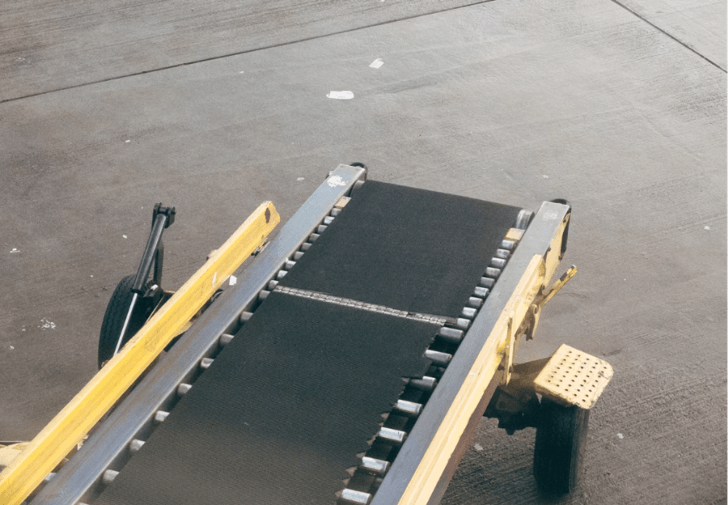
A better approach is to assess your operation before selecting equipment for production. See what you are carrying, how much it has to travel, and where the belt conveyor can be placed. Another thing that you should take into account is safety, maintenance, and future changes in production.
This gives the opportunity to choose a system that helps in reliable material flow, rather than forming another bottleneck.
These aspects simplify the process of finding a belt conveyor system that would suit your workflow and help to maintain homogeneous production. Five of these considerations can assist you in evaluating your choices before purchasing them.
1. Material Type and Load Requirements
Begin by analyzing the products or parts you have to move. Their size, shape, surface, and weight may affect the choice of conveyors. An appropriate belt conveyor system must offer a stable support system but not make the products move or get damaged.
Load capacity is of particular concern. Different conveyor models offer varying load capabilities, including systems designed for heavier loads. With a maximum load of 440.92 pounds, the TB40 is capable of accommodating smaller or medium-sized products. Thus, determine your average and maximum load and then choose a model. Another factor to consider is whether the products are moved singly, in batches, or continuously.
Product characteristics matter. Sensitive articles can be subjected to soft movements, whereas bigger items can be supported by broader bases. In the case of flat, light, or delicate products, specialized conveyor designs can be more suitable.
2. Conveyor Size and Available Space
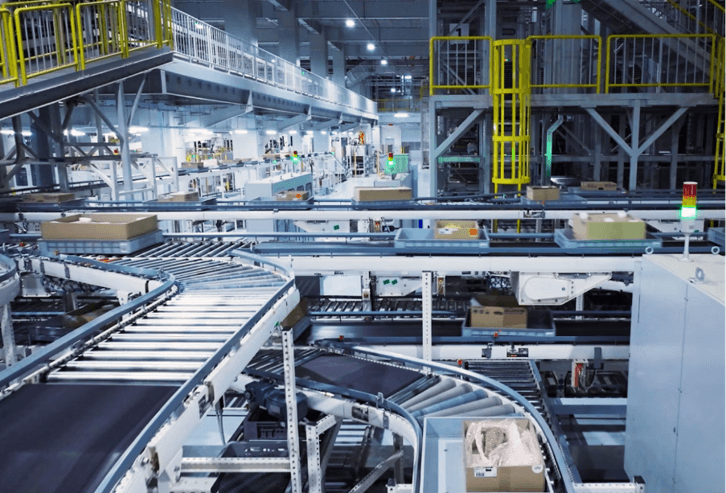
Next, measure the space where the conveyor will operate. Final configuration may be influenced by available floor space, work height, equipment in the area, and routes to access. Even a conveyor that fits on paper can still cause interference to operators or equipment after being installed.
Take width and length into account. The belt must offer a sufficient surface area on which the product moves without consuming a lot of space. Different conveyor series can accommodate varying product dimensions and installation requirements.
Consider access as well around the system. Operators might require space to inspect, clean, make adjustments, or maintain. A small design may help ease integration in small spaces. By planning early, expensive changes can be avoided.
3. Speed and Production Requirements
Conveyor speed should support your production process rather than simply being as fast as possible. Start with your required cycle time and calculate how quickly products need to reach each stage. Then consider product spacing and material volume.
A conveyor that runs too slowly can restrict production flow. However, excessive speed can create handling problems, product instability, or positioning difficulties. Therefore, the right speed depends on both output targets and product characteristics.
Some conveyor systems offer variable speed control for greater flexibility. Some conveyor systems offer adjustable conveying speeds and different drive options. This can help align movement with automated equipment, inspection stations, or assembly processes. Consider future production changes as well.
4. Belt Type and Operating Environment
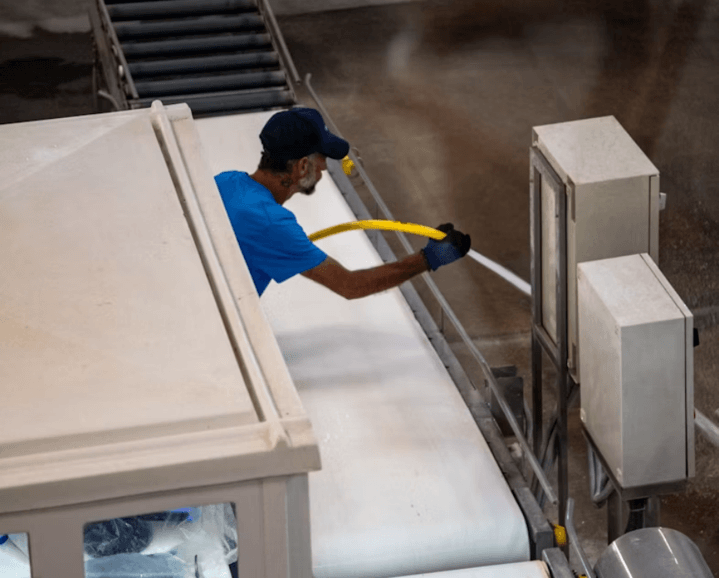
The working environment should influence your conveyor choice from the beginning. Standard belts may suit general production areas, but specialized conditions can require different designs. Consider temperature, moisture, dust, cleanliness, product sensitivity, and hygiene requirements.
For example, cleanroom production requires careful control of particles and contamination. Cleanroom belt conveyors are available for sensitive production areas, including medical, pharmaceutical, and electronics applications. Certain models have been tested and certified for specified ISO cleanroom classes.
You should also consider the product being transported. Lightweight films, cells, or delicate components may need gentle handling. Larger products may require wider or heavier-duty configurations. Matching belt construction to the environment supports reliable operation.
5. Maintenance, Safety and Long-Term Costs
The purchase price should not be your only financial consideration. Look at maintenance requirements, spare parts, energy use, downtime risks, and expected service life. A lower initial price may not be economical if frequent repairs interrupt production.
Safety should also be part of your evaluation. Consider moving components, operator access, emergency controls, guarding, and how the conveyor connects with other machinery. The complete system should support safe operation.
Finally, consider future needs. Modular conveyor systems can offer flexibility because components and configurations can be adapted as requirements change. Modular conveyor systems can provide greater flexibility with accessories and configuration options for different applications.
Spare parts are also available for existing conveyor generations. Planning for maintenance and future modifications can make your investment more practical over its working life.
Conclusion
A belt conveyor should be selected around your operation, not simply its purchase price or appearance. Start with load requirements, then assess available space, production speed, operating conditions, and long-term maintenance needs. These factors work together, so overlooking one can affect overall performance.
A careful assessment also gives you a clearer basis for comparing conveyor models and configurations. By considering current requirements alongside future changes, you can invest in equipment that supports dependable material flow and efficient production.
The goal is not simply to move products from one point to another. It is to create a conveyor setup that fits your process and remains useful as your business develops
Popular on OTW Right Now!
-
 Termite Control in Office Buildings: A Practical Guide for Keeping Workspaces Safe and Sound
-
 Operational Excellence in Community Living: The Architecture of Modern Condo Management
-
 From Concept to Completion: A Guide to Exhibition Stand Services by Stand Builders GmbH
-
 What’s Actually Included in AI Agent Development Services: Discovery, Build, Evals, and Handover?



About The Author

Gagan Bhangu
Founder of otechworld.com and managing editor. He is a tech geek, web-developer, and blogger. He holds a master's degree in computer applications and making money online since 2015.