
What is Ticket Scalping and How to Protect Against it in 2026
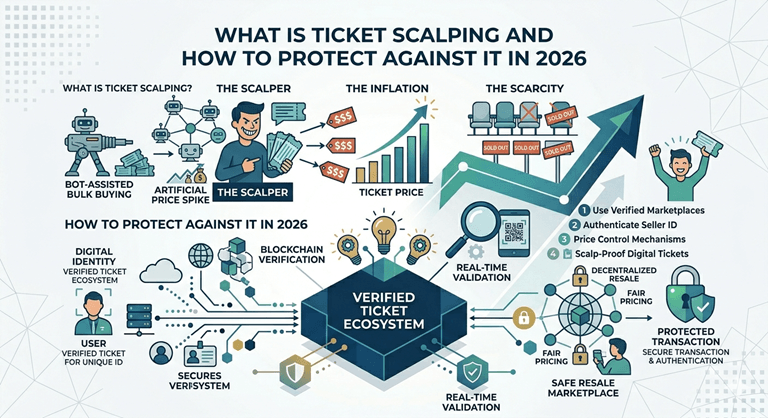
Ticket scalping involves buying tickets for events and reselling them at an inflated price. In the era of online ticket sales, the practice of scalping has grown exponentially, taking advantage of demand for popular and sold-out concerts, theatre shows, sports games, and more. Technology enables scalpers to purchase tickets in large volumes – often using bots – which is increasingly pricing genuine fans out of events. Scalping also has economic consequences by artificially inflating ticket prices and skewing the marketplace.
Global Sports Organization Targeted by Ticket Scalping Bots
In January 2026, a global sports organization came under attack by scalpers, who used automated bots to launch over 16 million malicious requests from millions of unique IP addresses. All these requests targeted the company’s checkout flows, trying to scalp tickets. The attack lasted for six days, with, at its peak, 133.63 requests per second being made by the bots. While this could have ended in disaster, the attack was disrupted by DataDome’s Galileo Threat Research team, blocking all the malicious requests without interrupting access for authentic users. After analyzing the attack patterns, the team deployed advanced detection mechanisms calibrated for the unique threat profile. As a result, no tickets were lost to scalpers, and fans were able to get their hands on the tickets they wanted at non-inflated prices.
How to Protect Against Ticket Scalping?
There are some tried-and-tested strategies you can use to protect your organization from the threat of ticket scalping. Deploying a combination of these methods is the best idea.
Limit How Many Tickets Can Be Purchased Per Transaction
Setting a per-person purchase limit is an easy but effective means of preventing bot-fuelled bulk buying. Many companies limit the number of tickers to four to six per buyer – this forces scalpers to set up multiple accounts to purchase at scale, making things much more difficult for them. As well as per transaction, consider implementing limits per email address, credit card, and IP address.
Use a Verified Fan Program
A verified registration program means fans need to register in advance to purchase tickets. During the registration process, collect information to help identify real fans from scalpers and automated bots, such as email address and phone number. A verified fan system also helps reduce the instances of bulk registrations because it requires unique identifiers and behavioral checks, something which is especially effective when used in combination with other bot protection techniques to filter suspicious activity before a sale takes place.
Deploy a Reliable Anti-Scalping Solution
One of the best – and easiest – means of guarding against ticket scalping and other automated bot attacks is to use a reliable anti-scalping solution, such as that offered by DataDome. This platform’s powerful detection engine assesses intent in real time to identify bots and shut down an attack before it gets started. Such a platform is now a vital element of any business’s cybersecurity policy, no matter the organization’s size or sector.
DataDome also offers a virtual waiting room solution, particularly useful for companies offering tickets to live events. Virtual waiting rooms help cope with traffic surges when there’s a rush to get tickets, and are an extra level of defence against ticket scalping and other nefarious bots.
Consider Dynamic Pricing
Dynamic ticket pricing adjusts the costs of tickets based on demand, buying patterns, and venue capacity. By getting rid of the price gap between the selling and reselling market, this effectively eliminates the profit incentive for scalpers. Think about introducing early bird offers to reward those fans who choose to buy ahead of time. A policy of dynamic pricing also allows you to make real-time adjustments if you spot suspicious buying activity, helping prevent automated bot-driven purchases.
Introduce an Official Ticket Resale Platform
Having a verified, official resale platform means that people can sell their tickets, and scalping is going to take them away from the customers, which means they can keep the ticket price down. If you want to allow resale, you might look at imposing price limits on resale tickets (or a little higher) and charging a fee for resale tickets done by approved resellers. The controlled resale platform includes features that help to keep the secondary market price from becoming inflated, since all ticket sales are authenticated. Clear and consistent fees, rules, and enforcement help ensure trust with fans and reasonable and sustainable ticket circulation.
Create and Enforce Clear Anti-Scalping Policies
Keep an eye out for suspicious activity by tracking sales in real-time, and regularly take a look at secondary markets, looking for tickets appearing at significantly increased prices. Other measures that can be implemented with an anti-scalping policy are checking the ID at the event against the name on the ticket and collaborating with your ticketing platform to ban scalpers’ accounts. Post your anti-scalping policies, and display them prominently on your sites or other platforms.
What is the Impact of Ticket Scalping?
Don’t let ticket scalping impact your bottom line. It not only consumes ticket inventory, but it also hurts customer trust, raises the ticket resale business, and brings regulatory scrutiny. But there are other dangers as well. Second-hand markets can be risky for those who are willing to pay high prices for tickets from scalpers, who are eager to sell fake tickets to unsuspecting buyers. And even when tickets are legit, the profits gleaned from the heavy mark-ups benefit the scalpers, rather than the organizers or the artists themselves.
In addition to roused fans and a loss of revenue, when there’s a lot of scalping going on, it can taint the overall experience of the event. If the fans are the real kind, they will be too expensive to attend, and the place may not have the same spirited atmosphere as when the real fans are in attendance. So, in the face of scalpers, it’s not simply about fighting and taking down bad guys; it’s protecting the integrity and access of live events for all.
Are There Different Types of Scalping Bots?
To make things even more challenging, there are many different types of scalping bots to guard against. Some of the most common are account bots, which automate the sign-up process to create hundreds – sometimes thousands – of accounts, and monitor bots, which continuously scan websites for new releases and restocks. Then there are semi-automated bots, specialized bots, and bots-as-a-service (BaaS). The latter are bots that users can rent, with renters only paying the provider if the scalping attempt successfully gets around the targeted website’s security processes.
Such tools are quickly changing, making it increasingly difficult for organizations to distinguish between the two, and therefore, requiring adaptive and advanced protection.
How to Choose an Anti-Scalping Solution
If you’re seeking an anti-scalping solution that’ll also protect your business from other malicious bots, there are several important things to look for:
- Accurate detection and minimal false positives so that you know it can block bad bots reliably and accurately—and not affect good visitors.
- An instant monitoring and analysis of each request to prevent scalping and other bots from causing issues.
- Adaptability and evolution with AI and machine learning to new threats and attack patterns.
- Global threat intelligence, shared information, and the latest botnets.
- API-first coverage to deliver comprehensive protection for high-value endpoints.
- Simple integration – meaning the solution can be rolled out seamlessly across apps, websites, and API.
- Clear reporting with easy-view dashboards containing information on trends and attacks, for better informed decision making.
- Scalability – Ensure that the solution can perform in a scalable way; it should be able to manage peak traffic without impacting actual users.
It’s Vital to Protect Fans from Ticket Scalpers in 2026
An effective strategy to prevent ticket scalping bots from taking advantage of genuine fans should involve a combination of smart policies, a strong bot protection solution, and transparent resale practices. These are just a few ways you can help protect your organization’s income, build confidence with users, and reserve event tickets fairly. By deploying reliable, advanced protection, you can be sure tickets reach real fans, rather than get into the digital hands of scalpers.
Popular on OTW Right Now!


About The Author

Gagan Bhangu
Founder of otechworld.com and managing editor. He is a tech geek, web-developer, and blogger. He holds a master's degree in computer applications and making money online since 2015.