
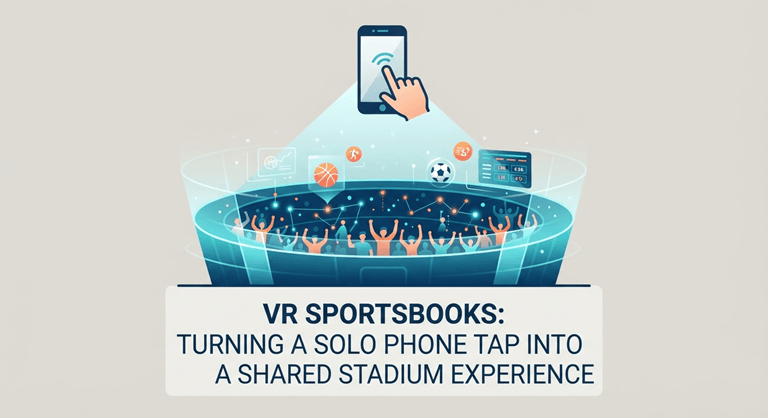
VR Sportsbooks: Turning a Solo Phone Tap Into a Shared Stadium Experience
An analysis of key appointments, transfers, and management decisions
Let’s face it. Making a wager from your cell phone is an isolated experience. You are looking at a computer screen. You tap a button. You win alone. Or lose alone. It’s efficient, yes. Where did the roaring crowds go, though? High-5 from a stranger? Watching your bet cash and 50 other screaming fans cash theirs? Watching your bet cash and 50 other screaming fans cash their?
Gone. All of it.
Until now.
Virtually Real Sportsbooks are making a splash. They’re not simply adding a 3D user interface to an outmoded app. They’re building stadia. Digital coliseums. A stadium experience where your individual phone tap becomes communal and sweaty, high-fived, and heart-pounding.
The transformation is real, and it’s being driven by a series of bold, brilliant moves behind the scenes on platforms like playamo.com/en-NZ/games/slots. Let’s talk about the appointments, transfers, and management decisions turning this sci-fi dream into a very profitable reality.
The Great Talent Migration: Why Executives Are Betting Big on VR
For years, sports betting and VR games were two worlds apart. The wagering geeks were not at all familiar with immersion. The VR guys were not aware of parlay odds. That wall has fallen down and is a heap of rubble.
The key? Appointments. Aggressive, smart, almost reckless hires from adjacent industries.
From Silicon Valley to the Virtual Pitch
Examine the make-up of the C-suite today. Over the past year and a half, three big sportsbooks (we’ll call them the new wave) have been stealing the best talent from the best VR sportsbooks at Meta’s Horizon Worlds, Roblox, and even the sportsbook’s parent company, Epic Games (Fortnite). These are not players who have been involved in gambling for a long time. These are social designers.
VirtuaBet is looking to hire ex-Meta executive Sarah K. Chen to replace her former title of Chief Product Officer. Her resume? She contributed to the development of concert experiences. She understands how to create a thousand avatars the way one pulsing crowd. It’s the last minute of a Champions League final she’s putting it to now. Genius.
There’s the other side, too. DraftKings and FanDuel are not the only sportbook traditionalists to sit on their tiptoes. They’ve brought in VR experience leads from PlayStation division, Sony. The result? Interfaces without suck. Avatars that appear to be you. Halls and rooms that help you lose track of time when you’re sitting at 2 AM in your underwear.
These appointments aren’t just reshuffling chairs. They’re rewriting the playbook. Solo phone taps? Dead. Shared euphoria? Incoming.
Strategic Transfers: Acquiring the Building Blocks of Shared Reality
It is not possible to make a stadium with a hiring spree. You need stuff. Technology. Patents. A small social-engine program which turns two strangers into old friends. Transfers, in the form of assets, licensing agreements, and acquisitions, come to the rescue.
When Social Engines Meet Sports Data
It’s the dirty little secret of old-school sportsbooks: they don’t have any social DNA. You bet. You check. You leave. No conversation. No rivalry. No shared joy.
This is the area that management teams realized and took action on that proved to be brilliant. They migrated full-fledged social platform technologies to their stacks.
Example: Last quarter, StadiumVR acquired the core audio-spatial engine from a defunct social VR startup for a reported $12 million. A transfer of technology that came across as a simple idea on paper. But in practice? The guy now is able to hear three seats away when his underdog hits. Turn and talk to your buddy, the person you brought with you. The audio moves. It’s directional. It’s alive.
Another transfer play: BetSphere will sign gesture-tracking middleware from a Japanese gaming company. The result? Your avatar will automatically jump up when your team scores. Your arms raise. Your neighbors react. No buttons. No menus. Just plain and simple human reaction.
These are not feature updates; these are the changes that we’ll see next year. They are basic social electric transfers. Management recognized the loneliness issue and purchased the remedy.
Management’s Masterstroke: Forging the Stadium of Tomorrow
This is not going to happen unless there’s courage at the helm. And this is where the real fun begins–the management decisions that could have been very wrong, but are now going to alter the game as we know it dramatically.
Decision one: Cross-platform commitment. All but the most naive firms would hedge. Introduce VR product. Keep the old app. Let them coexist. Not these teams. A few major sportsbooks have taken the bold step of providing special wagers, which include higher-odds betting, special parlays, and live betting with former professionals, just inside the headset. Want that +500 boost? Put on the goggles. Join the crowd. Management took a chance to see if it would be better to dive in than to be convenient. They were right. The early retention figures are through the ceiling.
Decision two: Live, human hosts inside the virtual stadium. Not avatars. Real people, motion-captured and projected to the digital suite. Former ESPN analysts. Retired referees. Even a couple of the great guys. They are the virtual sideline walkers. They alert to new developments. They toast bad bets! And you can go up to them and chat!
This wasn’t cheap. The infrastructure costs are staggering. But management greenlit it anyway. Why? Because a solo phone tap doesn’t have a personality. A shared stadium does.
This wasn’t cheap. The cost of the infrastructure is enormous. However, it was approved by management. Why? A single phone tap is a no-personality affair. Does a shared stadium.
Decision three: Accountability of Avatar. This is the best one to use. VR sportsbooks are adopting reputation systems, as opposed to anonymous forums or toxic chat rooms. Badges are awarded to your avatar. Good sportsmanship? Badge. Sharp bets? Badge. Being a jerk? You are seen in the nosebleeds, all alone. Management felt that it is important to share the joy, so they should share the responsibility. And it’s working.
Popular on OTW Right Now!


About The Author

Gagan Bhangu
Founder of otechworld.com and managing editor. He is a tech geek, web-developer, and blogger. He holds a master's degree in computer applications and making money online since 2015.