
Turning PDF Product Sheets Into Interactive Shoppable Catalogs Online
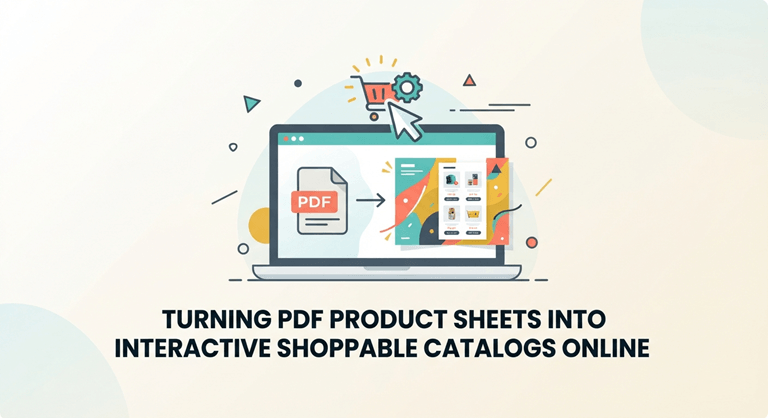
You turn a PDF product sheet into a shoppable catalog by uploading it to a digital catalog platform that overlays clickable hotspots on each product, linking every item to its price, details, and buy button. The PDF stays visually intact, but every product in it becomes tappable, so a viewer can move from browsing the page to reaching the checkout without leaving the catalog. The whole process usually takes minutes per file rather than a rebuild from scratch.
The reason this matters is that a plain PDF is a dead end. Someone opens it, sees a product they like, and then has to hunt for that item on your website, which is exactly where intent leaks away. Research into online buying behavior has repeatedly linked every extra click between discovery and purchase to higher drop-off, and interactive hotspots collapse several of those clicks into one tap.
Why a PDF Alone Loses Sales
A PDF was built for print, not for buying. It looks polished, it prints cleanly, and it carries none of the data a shopper needs to act. No price updates, no stock status, no path to a cart. The viewer is admiring a picture, not shopping.
The friction shows up in the numbers. If a product sheet requires them to remember a SKU, navigate to your site and look for the product, most people don’t bother. The ecommerce industry is full of statistics on why e-commerce funnels tend to drop off at every stage of the process, and a static PDF is a good way to drop a few. You paid for the pictures and layout and then gave the shopper something that can’t sell anything.
An update issue exists as well. A printed or PDF catalog is a ‘snapshot’ of your prices and inventory as you export, and doesn’t change regardless of updates. 2 weeks later, if a product is discontinued or the price is raised, the sheet will be lying to anyone who opens it. An Internet-based interactive version may be used instead to keep the catalog current without a manual reissue and preserve its integrity.
How the Conversion Actually Works
Its mechanics are not as complicated as most people would think. Your existing PDF is uploaded into a digital catalog app, and each page is presented as a browsable, zoomable spread which maintains the original form and design. You then add hotspots (small markers that sit on top of each product), a link, price, and product name for each of the hotspots.
With a hotspot, you can achieve several things depending on how you set up the hotspot. It could take the viewer to a product page with an add to cart button, link them directly to a matching page in your store, or open up into a gallery of additional photos. A styled room shot with a sofa, lamp,p and side table will include three individual hotspots on one image, each of which will launch a separate product.
Timeframes are short. With only a few to a dozen products, you can tag one sheet of information in well under an hour with a little knowledge of the tool, and bulk upload lets you go through an entire season’s worth of product sheets in an afternoon. Many bands of cost. The prices of entry-level plans start in the 30-50 dollar per month range for smaller businesses, and higher-dollar plans (hundreds of pages per month) include analytics and multiple catalogs.
What to Look for in a Catalog Platform
There are some tools that are not as adaptable as others when it comes to dealing with PDFs, so the first thing to consider is exactly how well it maintains the original format. Some platforms take the design as is or re-flatten it; then what was the point of doing all that editorial photography if you’re putting it back into the square? You want one that doesn’t change the appearance of the page from the file that you uploaded, but overlays the interactive layer on top.
You can tell analytics apart from the “features for the aesthetic appeal” ones. A good platform provides you with insight into what products in a spread are tapped a lot, how far people scroll in the catalog, and where they drop off, making your catalog not just a sales tool, but a research tool as well. For a retailer trying to decide whether the switch is worth it, a clear starting point is this look at how a browsable online catalog works, which shows how the hotspot placement and click-tracking side fits together. But that click data isn’t so easy to come by in a PDF, and it’s a good indicator of what to include next season.
The other factor that makes the difference is inventory sync. Platforms that are connected to your store will automatically update the price and stock of your store as well, so if you have an item which is sold out, it will grey out on the other platform without requiring any action. If a tool doesn’t depend on manual hotspot updates, then expect to spend a lot of admin effort as unnoticed price changes keep getting out of date. Mobile rendering is equally important – and a significant proportion of catalogs are now viewed on mobile devices – a spread that functions well on desktop is losing the majority of its viewers.
Which Businesses Get the Most From This
The amount of money that you can get depends quite a bit on what you’re selling. Furniture, home goods, and fashion brands see the greatest lift as they have catalogs that are already aspirational and their shoppers are looking for ways to be inspired by products they see in action instead of just in a white space. A lookbook that’s tappable is just this kind of thing.
There are different benefits to wholesale and B2B sellers. Their product sheets are typically very “spec” in nature, and allowing the user to interact with them allows a buyer to skip a line item and get to a reorder or quote request without having to go through an email sales cycle. But a line sheet that’s 200 pages long can make a document the buyer didn’t like into one that they can actually use.
But it is also important that smaller businesses and sole entrepreneurs reap benefits, and they must do so at a cost of effort. If you’re only producing one catalog per year, then the manual tagging time is real, and the bulk features and sync are important so that this week is not consumed in maintenance. A brand that’s regularly releasing new seasonal collections, on the other hand, will get many returns on its investment in the analytics roller coaster – if they know what shoppers are tapping on this season, they can be confident in what to offer in the next season.
One more wrinkle into this occurs at the regional selling level. If you are selling products in more than one language and currency then you need to find a platform that supports multiple language and currency variants of the same catalog. If you serve a list of products in one country in one language in one currency, and a different country in a different language and a different currency, then a shopper in one country will not see the other country’s relevant pricing without you rebuilding the entire catalog. That’s a distinction between tools for scale and tools for one storefront.
What you’re going to see as you’re setting this up is video. From still pages to moving content, shoppable video and live shopping are achieving the same interactive magic, and the brands that are getting the most out of it are already taking the same interactive approach as they did with photos—dubbing them with tags. If this is your platform for the quarter, say so and try to pick one that supports video hotspots or ones that are about to become available, so that the catalog you’re creating now is in line with how people will be shopping a year from now.
Popular on OTW Right Now!



About The Author

Gagan Bhangu
Founder of otechworld.com and managing editor. He is a tech geek, web-developer, and blogger. He holds a master's degree in computer applications and making money online since 2015.