
The Growing Demand for Flexible CDL Staffing in Modern Logistics
Introduction
The logistics industry is moving faster than ever. Rising consumer expectations, same-day delivery demands, and ongoing supply chain disruptions have pushed transportation companies to rethink how they manage their workforce. For businesses that rely on commercial drivers, maintaining a stable and responsive staffing strategy has become a major operational priority.
Meanwhile, trucking continues to experience a lack of qualified CDL drivers. As seasonal demand, unplanned employee turnover, and freight volume shifts complicate the logistics industry and cause more strain on internal teams, the ability to maintain operations smoothly without extra stress is difficult. Older recruitment techniques are not always suitable in the fast-changing recruitment landscape.
This is leading to the adoption of flexible staffing solutions by more businesses, which enable them to source trained drivers when they need them. This provides a cost-effective solution to maintaining the efficiency of the company while also lowering the stress within the company’s operations. Flexibility of the workforce is no longer a choice in today’s transportation world. It’s now a big component of long-term logistics planning.
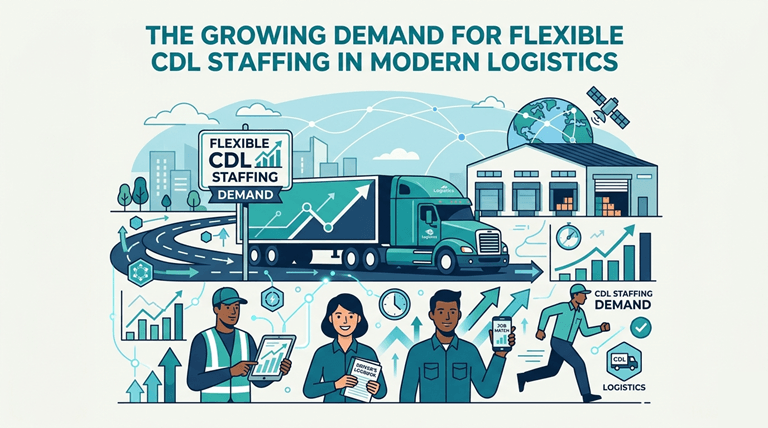
Why CDL Driver Shortages Continue to Affect Logistics Operations
Qualified CDL drivers have been one of the major issues in the logistics sector for years now. There are a lot of older drivers who do not want to give up, and a decreasing number of younger drivers on the road. This has led to staffing shortages impacting all levels of transportation companies.
In the case of logistics companies, the lack of drivers can result in delayed deliveries, missed schedules, and frustrated customers. Businesses that are doing well in recruiting may have trouble holding on to employees during peak seasons. The changes in seasonal demand and the economy are just more stressors on the situation.
To address these challenges, businesses are increasingly adopting workforce models that allow them to scale staffing levels based on operational needs. Services such as Customized driver staffing for logistics companies help organizations respond more effectively to changing transportation demands without compromising service quality or compliance standards.
Flexible staffing also allows companies to find experienced drivers with a knowledge of commercial transportation regulations and safety protocols. This saves time when onboarding employees and facilitates everyday operations.
The Shift Toward Flexible Workforce Strategies
Today’s logistics firms are giving up on “stiff” personnel models and going for “flexible” people approaches. Flexibility can prove helpful in an industry that is constantly changing, with customers’ demands and delivery dates evolving constantly, so that businesses can react rapidly without compromising on efficiency.
Unpredictability of freight demand is one of the major reasons for this change. Unexpectedly high transport requirements can occur during retail seasons, adverse weather, disruption of supply chains, nd changes in regional markets. For many businesses, it may not be feasible – or even cost-effective– to maintain a big, full-time driver staff throughout the year.
The flexible staffing model is a more equitable approach. Businesses can boost the number of drivers in their fleets during peak times and free up assets they don’t need during the slow season. This can also help to prevent employee burnout as it helps distribute workloads.
An additional benefit is the ability to hire specialized drivers for regional routes, special contracts, or temporary projects. Companies can hire needed talent quickly and still deliver a consistent service level and productivity.
Workforce flexibility is becoming a key element to supply chain stability, as transportation networks become more complex. Quickly adapting companies are likely to better sustain their performance and uphold customer relationships.
How Flexible CDL Staffing Supports Business Growth
Logistics companies are expanding more flexibly with the help of flexible staffing solutions. Whether a company is expanding into new markets, servicing the additional deliveries, or accommodating quick growth, the need to access dependable drivers is essential to ensure day-to-day business continues.
With flexible CDL staffing, companies can quickly fill their loads without having to go through the lengthy hiring and training period. Companies can hire the right drivers in no time and can continue to operate without any disruption in their operations instead of spending weeks time in recruiting drivers within their companies.
This also helps in the better use of resources. Staffing can be adjusted as per the requirements and workload of the business, thus helping to boost productivity and also manage costs. Flexible staffing can also help businesses expand or cope with a shortfall of drivers when operating in multiple locations.
Another one of the significant advantages is the reduction of administration time. It can be a time-consuming and resource-intensive process to manage the recruitment, scheduling, licensing, and compliance process on your own. With staffing support,t these tasks are simplified, and logistics teams can concentrate on bigger tasks.
Flexibility among employees is becoming increasingly important in today’s fiercely competitive transportation industry, and is a trait that helps companies adapt, expand, and consistently deliver what customers are looking for.
The Importance of Compliance and Driver Readiness
Ensuring safety and compliance are always critical in the transportation industry. There are strict rules that govern CDL drivers, and companies must ensure that drivers adhere to all regulations in order to comply with all requirements of transporting goods.
In other cases, businesses may need to hire workers in a hurry, which can result in a higher risk to the operation of the business. This pressure can be reduced through flexible staffing solutions, where access to pre-qualified drivers is available who are already licensed and meet safety standards.
However, being CDL qualified is just the start of driver readiness. Practiced drivers know how to plan, la d ,and unload, manage an electronic logging device, and know what to do on a daily basis to ensure safe operations. A company that can rely on drivers who are trained and ready to go will have a smoother operation and minimize any interruptions.
This is because flexible staffing can also ensure that the business is covered when drivers are away for various reasons, such as seasonal demands or emergencies. It is particularly critical for companies with stringent delivery schedules or a heavy transportation load.
The logistics industry is constantly evolving, and customer needs are constantly rising – logistics companies will require staffing solutions that can adapt to changing regulations while maintaining smooth operations. One of the most practical ways to achieve both of these goals is by flexible CDL staffing.
Conclusion
Workforce flexibility is playing a significant role in the logistics industry’s fast-paced transformation and ensuring seamless operations. With the ongoing crisis of CDL driver shortages, shifting freight needs, and growing customer expectations, companies are reevaluating their hiring methods.
Logistics firms can maintain their efficiency, scalability, and responsiveness, especially in a fierce market, with flexible CDL staffing solutions. When companies need qualified drivers, they can enhance their operations, alleviate internal stress, and ensure reliable service throughout their transportation networks.
Flexible workforce strategies offer more than just immediate staffing solutions – they also contribute to long-term growth and stability. Adaptable companies are more likely to be ready to deal with disruptions in the supply chain, fluctuations in demand, and emerging industry regulations.
With the ongoing transformation of modern logistics, investing in smarter staffing solutions holds significant benefits for businesses looking to address upcoming logistics needs while ensuring optimal performance and customer satisfaction.
Popular on OTW Right Now!




About The Author

Gagan Bhangu
Founder of otechworld.com and managing editor. He is a tech geek, web-developer, and blogger. He holds a master's degree in computer applications and making money online since 2015.