
The Future of AI in Car Dealership Operations
Artificial intelligence has emerged as the most important technology that currently shapes the automotive retail business. Dealerships face growing operational efficiency demands because customer expectations change and digital tools progress. The standard operations of car dealerships depend on manual tasks and the use of unconnected systems and lengthy communication processes, which create delays for their business activities. The dealership uses AI technology to resolve its operational problems by implementing workflow automation and data analysis and bettering its entire decision-making process. As a result, AI for car dealerships is emerging as a critical tool that enables automotive retailers to adapt to a rapidly changing marketplace and remain competitive in the years ahead.
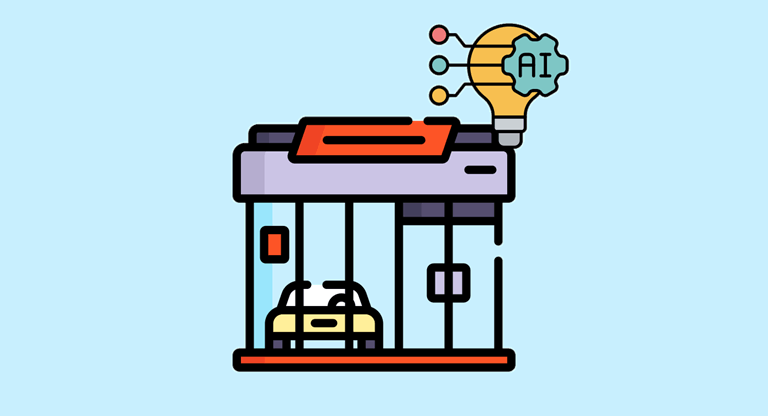
The Changing Landscape of Automotive Retail
The automotive buying process has changed drastically over the last ten years. Today the customers use the internet to do their research before they go to a dealership because they can find information about vehicles, customer reviews, and prices on many different sites. The majority of buyers now complete most of their buying process through online channels before they visit the physical store.
The automotive industry requires dealerships to create new operational methods that help them build customer relationships. Automotive sales departments must handle web inquiries in a timely manner while delivering customized product recommendations and monitoring customer interest across different online platforms. The dealership requires effective inventory control systems, which will enable them to fulfill their business needs while maintaining operational excellence in service and marketing departments.
Artificial intelligence allows car dealerships to automate their operations because it enables businesses to handle repetitive work while utilizing essential customer data to solve their operational challenges. The adoption of artificial intelligence technology enables car showrooms to improve their operational efficiency while delivering the digital experiences that customers demand.
Automating Lead Management and Customer Engagement
The first advantage that dealerships gain from using AI technology in their daily activities comes from its capacity to handle lead tracking and customer communication tasks without human intervention. Dealerships are approached by various channels such as websites, online marketplaces, social media sites, and phone calls. It becomes difficult for the sales team when they try to manage leads from various sources, as they are not able to cope with the growing pressure.
AI-powered engagement tools can automatically respond to customer inquiries in real time. The systems provide solutions to inquiries about vehicle availability, pricing, and financing options, and appointment scheduling. AI provides immediate support to potential buyers who need help because it operates outside normal business hours.
AI for car dealerships also helps organize and prioritize leads. The system uses artificial intelligence to track customer activities and assess which potential customers will become paying clients. Sales representatives receive high-intent leads through direct assignment, and automated systems proceed to develop early-stage prospects. The method enables sales teams to concentrate their efforts on revenue-generating opportunities.
Enhancing Inventory Management
Inventory management presents dealerships with their most difficult operational challenge. Dealerships must learn how to balance vehicle inventory by analyzing market demand, seasonal patterns, and local consumer preferences. Excess vehicle inventory prevents businesses from utilizing their financial resources, while insufficient stock of in-demand products results in lost revenue from potential sales.
Dealerships use artificial intelligence to create predictive analytics which result in better inventory management decisions. The AI systems go through previous record sales, present market patterns, and online activities of consumers to figure out which car will have the highest sales velocity.
AI solutions for car dealerships can suggest the ideal levels of inventory, flag up inventories that have a lower than average sales rate, and recommend potential pricing changes to maximize turnover. They provide greater insights into sales trends, enabling car dealerships to manage their inventory and sales prices to increase profitabilit
Improving Sales Team Productivity
Sales professionals at dealerships help customers with their needs, yet they must spend time on administrative duties, which prevent them from building customer connections. The tasks involve three activities which need to be performed by sales personnel: they must update CRM systems, they need to schedule follow-up appointments, and they have to answer basic questions. Sales teams can achieve better results because AI systems will handle basic tasks, which frees up time for essential customer interactions. The AI system enables businesses to monitor client activities while it creates alerts for follow-up tasks and suggests optimal times to contact prospective clients. The system generates alerts to sales representatives when a customer shows interest in a specific vehicle through multiple online searches and uses the financing tools on the website. The intelligence enables sales teams to approach customers at the precise moment when they begin making choices about what to purchase. The AI system helps car dealerships by cutting down on administrative tasks, which enables salespeople to work better and provide customers with customized service.
Delivering Personalized Customer Experiences
Personalization now stands as the key factor that determines purchasing choices in contemporary retail. Automotive buyers expect dealerships to understand their preferences and provide recommendations tailored to their needs.
Dealerships can provide personalized service because artificial intelligence technology enables them to handle customer requests throughout their operations. AI systems analyze customer data, which includes browsing activity, vehicle preferences, budget ranges, and geographical location, to create specific recommendations for customers.
A shopper who frequently searches for fuel-efficient vehicles will receive recommendations for hybrid or electric models. The customer who researches family-friendly SUVs will receive product recommendations that depend on safety features and cargo capacity.
AI for car dealerships enables businesses to develop customized customer interactions through their websites, email marketing campaigns, and online advertising efforts. The customized experiences help customers to experience complete comprehension and essential assistance throughout their buying journey.
Transforming Marketing Strategies
Digital channels have become essential for developing automotive industry marketing strategies, which have undergone substantial transformation since their first implementation. The traditional advertising approach enables campaigns to reach wide audiences, yet it fails to establish links with potential buyers who actively search for vehicles.
Dealerships use artificial intelligence to develop marketing campaigns that provide more accurate customer targeting and better campaign performance. AI tools analyze consumer behavior to identify which marketing channels produce the highest quality leads.
AI systems use their capabilities to determine which advertising channels effectively reach different buyer groups through their search engine advertisements and social media promotions. The marketing team uses these insights to make better budget distribution decisions according to their marketing needs.
AI for car dealerships also supports automated marketing campaigns that adjust messaging in real time based on customer engagement. The adaptive marketing method enhances performance while maintaining relevant promotional content for every audience group.
Optimizing Service Department Operations
The service department delivers essential support to dealerships to drive their profitability and maintain customer loyalty. Most customers visit dealerships more often for service appointments than they do for making vehicle purchases.
Service departments can increase their operational efficiency through artificial intelligence because it enables them to automate scheduling tasks and forecast maintenance requirements while enhancing their customer communication capabilities. AI-powered systems conduct service history analysis and vehicle data assessment to calculate the optimal maintenance appointment times.
The automated system sends customers notifications about their vehicle maintenance needs which include oil changes and tire rotations. The reminders assist customers with vehicle maintenance tasks and they also motivate customers to return to the dealership for service.
Car dealerships use AI technology to enable service managers to distribute technician work duties in a better way which helps them to keep their appointment schedule running smoothly while decreasing customer wait times.
Data Driven Decision Making
The sales transactions, customer interactions, and inventory systems and marketing campaigns of dealerships create massive data volumes. The majority of this data remains unused because organizations lack the ability to analyze it through advanced analytics tools.
Artificial intelligence enables dealership leaders to use their unprocessed data by transforming it into operational intelligence, which drives their decision-making process. The AI platforms can evaluate performance metrics, which include lead conversion rates and marketing effectiveness, and sales cycle duration.
AI demonstrates that particular marketing campaigns produce high lead generation but result in low actual sales. Dealership managers can use this information to refine their marketing strategies and focus on channels that produce stronger results.
AI for car dealerships provides leaders with real-time data, which enables them to develop better strategic plans and enhance their business operations.
Integration with Digital Retail Platforms
The future of dealership operations will be impacted by the existing trend, which combines artificial intelligence technology with online sales platforms. Customers today want to complete vehicle purchasing tasks through online channels, which enable them to handle financing applications, payment calculations, and trade-in assessments.
Artificial intelligence enhances these digital retail experiences by guiding customers through each step of the process. The AI-powered assistants provide answers to customer inquiries while recommending vehicles and assisting buyers in their search for financing solutions.
The combination of AI systems with dealership CRM and inventory systems creates a unified link that enables customers to research online and then visit dealerships. The sales teams acquire essential information about customers’ online behavior which enables them to have more informed discussions with customers.
The AI system used by car dealerships provides support for customers during their entire purchasing process through online platforms and face-to-face interactions.
The Road Ahead for AI in Dealership Operations
As AI continues to transform dealership operations, businesses must also stay aware of evolving transportation trends and legal considerations affecting consumers. Consulting experienced rideshare accident lawyers can help individuals understand their rights when accidents involving app-based transportation services occur.
The future of artificial intelligence in automotive retailing presents a range of exciting possibilities. As technology proceeds to advance, artificial intelligence systems will reach greater levels of understanding customer behavior and market trend forecasting abilities.
The implementation of voice-driven customer support systems, together with advanced predictive analytics and vehicle data connectivity, will create more efficient operational processes for car dealerships. Artificial intelligence will enable dealerships to predict customer requirements before customers start their vehicle search process.
The AI technology will establish tighter connections with dealership management systems, digital retail platforms, and service departments. The system will establish a complete interconnected network that enables businesses to manage all customer interactions throughout their buying process.
Car dealerships that choose to implement artificial intelligence solutions at present will gain superiority over their competitors through improved ability to adapt to upcoming changes.
Conclusion
AI technology currently transforms the complete operations of car dealerships. The dealership experience undergoes a complete transformation through AI technology, which streamlines customer engagement processes, enhances inventory control methods and improves marketing activities and service delivery systems.
AI technology enables car dealerships to run their operations more effectively while providing customized services which fulfill the needs of contemporary customers. Dealerships use AI-generated insights to make better business choices and build stronger ties with customers and they use these insights to make their complicated operations more efficient.
The automotive industry will continue to develop its dealership operations through artificial intelligence because this technology enables businesses to function better and customers to experience greater satisfaction. Intelligent technology will determine how dealerships operate in the future by providing businesses with tools that enable them to deliver superior customer service.
Popular on OTW Right Now!



About The Author

Gagan Bhangu
Founder of otechworld.com and managing editor. He is a tech geek, web-developer, and blogger. He holds a master's degree in computer applications and making money online since 2015.