
Rackmount GPU Servers Powering High Performance AI, Data Analytics, and Enterprise Computing
As artificial intelligence, machine learning, big data, and high-performance computing continue to reshape modern industries, businesses require infrastructure capable of handling increasingly demanding workloads. Traditional server architectures often struggle with computationally intensive applications, leading organizations to adopt rackmount GPU servers as the preferred solution for accelerated computing.
From training large language models to processing real-time analytics and rendering complex 3D graphics, rackmount GPU servers provide the processing power, scalability, and efficiency required for today’s most demanding enterprise environments. Their standardized rack-mounted design also makes them ideal for data centers that prioritize space optimization, centralized management, and future expansion.
This article explores what rackmount GPU servers are, how they work, their benefits, industry applications, deployment considerations, and why they have become an essential part of modern IT infrastructure.
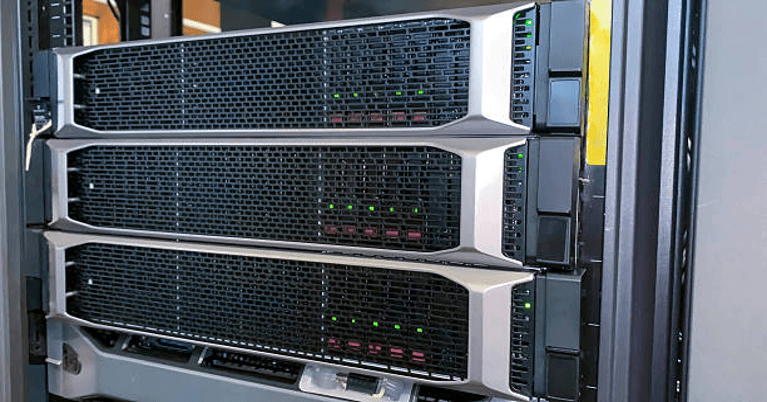
What Are Rackmount GPU Servers?
Rackmount GPU servers are enterprise-grade servers designed to house one or multiple Graphics Processing Units (GPUs) inside a standardized rack enclosure. Unlike conventional servers that rely primarily on CPUs for processing tasks, these systems use GPUs to accelerate workloads involving massive parallel computations.
A rackmount design allows multiple servers to be installed vertically inside a standard server rack, maximizing computing density while simplifying cable management, cooling, maintenance, and scalability.
These servers are commonly used for:
- Artificial intelligence
- Machine learning
- Deep learning
- Scientific simulations
- High-performance computing
- Data analytics
- Computer vision
- Video rendering
- Financial modeling
- Virtual desktop infrastructure (VDI)
Their ability to process thousands of operations simultaneously makes them significantly faster than CPU-only systems for parallel computing tasks.
Why GPUs Matter in Enterprise Computing
A Central Processing Unit (CPU) is designed to execute sequential tasks efficiently. While CPUs remain critical for operating systems, databases, and business applications, they are not optimized for the enormous mathematical calculations required by modern AI and data-intensive workloads.
GPUs contain thousands of processing cores capable of executing many calculations at the same time. This parallel architecture dramatically accelerates workloads involving matrix multiplication, image processing, neural networks, and scientific computing.
For example, training an AI model that might require several weeks on CPU infrastructure can often be completed in a fraction of the time using rackmount GPU servers.
This improvement translates into:
- Faster innovation
- Reduced development costs
- Improved resource utilization
- Higher productivity
- Better business outcomes
Key Components of Rackmount GPU Servers
Understanding the hardware inside rackmount GPU servers helps organizations choose systems that match their workload requirements.
Enterprise GPUs
The GPU is the heart of the server.
Modern enterprise GPUs include features such as:
- Thousands of processing cores
- Tensor acceleration
- Large onboard memory
- High memory bandwidth
- Error correction support
- Optimized AI performance
Multiple GPUs can often work together inside a single server, dramatically increasing computational capacity.
High Performance CPUs
Although GPUs perform accelerated computing, CPUs remain responsible for:
- Operating system management
- Data preparation
- Storage operations
- Network communication
- Resource scheduling
Balanced CPU performance ensures GPUs operate at maximum efficiency.
Large System Memory
Many AI and analytics workloads involve enormous datasets.
High-capacity RAM enables faster preprocessing and prevents memory bottlenecks during computation.
High Speed Storage
Enterprise rackmount GPU servers typically use NVMe SSD storage because it provides:
- Rapid data loading
- High throughput
- Low latency
- Faster application startup
Quick storage access minimizes GPU idle time.
Advanced Networking
Organizations often connect multiple GPU servers together into clusters.
High-speed networking technologies support:
- Distributed AI training
- Parallel simulations
- Large-scale rendering
- Big data analytics
Fast networking becomes increasingly important as GPU clusters expand.
Efficient Cooling Systems
GPU hardware generates considerable heat under continuous workloads.
Rackmount servers include advanced cooling technologies such as:
- High airflow chassis
- Optimized fan configurations
- Intelligent thermal monitoring
- Liquid cooling in high-density deployments
Proper cooling improves hardware reliability and maintains peak performance.
Benefits of Rackmount GPU Servers
Organizations across industries continue investing in rackmount GPU servers because they provide significant operational advantages.
Exceptional Computing Performance
GPU acceleration dramatically reduces processing times for complex computational tasks.
This enables organizations to:
- Train AI models faster
- Process larger datasets
- Perform real-time analytics
- Complete simulations more efficiently
High Density Deployment
Rackmount systems maximize available data center space.
Instead of deploying numerous standalone workstations, businesses can centralize computing resources within standard server racks.
This improves:
- Space utilization
- Infrastructure organization
- Maintenance efficiency
- Expansion flexibility
Improved Scalability
As workloads increase, organizations can simply install additional rackmount GPU servers into existing racks.
This modular approach simplifies long-term growth without requiring complete infrastructure replacement.
Better Resource Sharing
GPU resources can be shared among multiple users, departments, or virtual machines.
Examples include:
- AI development teams
- Engineering departments
- Data scientists
- Researchers
- Designers
Shared infrastructure improves return on investment.
Enterprise Reliability
Rackmount GPU servers are built for continuous operation.
Features often include:
- Redundant power supplies
- ECC memory
- Remote management
- Hardware monitoring
- Hot-swappable components
These capabilities reduce downtime and simplify maintenance.
Common Applications of Rackmount GPU Servers
The flexibility of rackmount GPU servers makes them suitable for many enterprise workloads.
Artificial Intelligence and Machine Learning
AI development requires enormous computational resources.
GPU servers accelerate:
- Model training
- Neural network optimization
- Hyperparameter tuning
- Large language models
- Image generation
- AI inference
Organizations developing intelligent applications depend heavily on GPU infrastructure.
Deep Learning
Deep learning models involve millions or billions of parameters.
Rackmount GPU servers significantly shorten training cycles, allowing researchers to experiment with more sophisticated architectures.
Data Analytics
Businesses collect vast amounts of operational data every day.
GPU acceleration enables:
- Predictive analytics
- Customer behavior analysis
- Fraud detection
- Business intelligence
- Market forecasting
Faster insights improve decision-making.
Scientific Computing
Research organizations rely on GPU servers for:
- Climate modeling
- Molecular dynamics
- Drug discovery
- Genomics
- Astrophysics
- Engineering simulations
Accelerated computing helps researchers solve problems that would otherwise require weeks or months.
Video Rendering
Animation studios and production companies use rackmount GPU servers to render:
- Movies
- Visual effects
- Architectural visualization
- Product animations
- Commercial advertising
Parallel rendering dramatically reduces production timelines.
Computer Vision
Computer vision applications include:
- Medical imaging
- Autonomous vehicles
- Manufacturing inspection
- Security monitoring
- Facial recognition
GPU servers process high-resolution images with exceptional speed and accuracy.
Industries That Depend on Rackmount GPU Servers
Many industries have integrated GPU infrastructure into their digital transformation strategies.
Healthcare
Hospitals and research institutions use GPU servers for:
- MRI analysis
- CT scan interpretation
- Medical image recognition
- Drug research
- Personalized medicine
Accelerated AI supports faster diagnosis and treatment planning.
Financial Services
Banks and investment firms rely on GPU computing for:
- Risk analysis
- Algorithmic trading
- Fraud detection
- Portfolio optimization
- Market forecasting
Real-time processing improves operational efficiency.
Manufacturing
Manufacturers deploy GPU-powered infrastructure for:
- Predictive maintenance
- Automated quality inspection
- Industrial robotics
- Process optimization
- Supply chain analytics
AI-powered automation improves productivity.
Education and Research
Universities utilize rackmount GPU servers for:
- AI research
- Scientific computing
- Engineering education
- Data science
- Computational biology
Shared GPU clusters provide cost-effective access for students and researchers.
Media and Entertainment
Creative industries use GPU servers for:
- Animation
- Rendering
- Virtual production
- Game development
- Streaming optimization
Accelerated rendering reduces project completion times.
Rackmount GPU Servers Versus Tower GPU Workstations
Organizations often compare rackmount servers with traditional GPU workstations.
| Feature | Rackmount GPU Servers | Tower GPU Workstations |
| Deployment | Data center racks | Individual desks |
| Scalability | Excellent | Limited |
| Remote Management | Yes | Limited |
| Cooling | Optimized for dense deployments | Local airflow |
| Multi-User Access | Yes | Usually single user |
| Enterprise Reliability | High | Moderate |
For growing organizations, rackmount GPU servers typically provide better long-term value and flexibility.
Cloud GPU Infrastructure Versus Rackmount GPU Servers
Cloud GPU services have become increasingly popular, but many businesses continue investing in on-premises rackmount GPU servers.
Advantages of Cloud GPU Services
Cloud platforms offer:
- No hardware purchase
- Flexible scaling
- Quick deployment
- Global availability
- Managed infrastructure
These benefits suit temporary or unpredictable workloads.
Advantages of Rackmount GPU Servers
On-premises GPU infrastructure offers:
- Full hardware ownership
- Lower long-term operating costs
- Greater security
- Regulatory compliance
- Low-latency access
- Predictable performance
Organizations handling sensitive data often prefer local infrastructure.
Best Practices for Deploying Rackmount GPU Servers
Proper planning ensures successful deployment.
Evaluate Workload Requirements
Understand whether your workloads involve:
- AI training
- AI inference
- Scientific simulations
- Rendering
- Analytics
- Virtualization
Workload analysis guides hardware selection.
Plan for Future Growth
AI workloads continue expanding.
Choose rackmount GPU servers with room for:
- Additional GPUs
- More storage
- Increased memory
- Network upgrades
Planning ahead reduces future infrastructure costs.
Optimize Cooling
High-density GPU installations require careful thermal planning.
Best practices include:
- Hot aisle and cold aisle layouts
- Airflow monitoring
- Environmental sensors
- Regular maintenance
Proper cooling extends hardware lifespan.
Monitor Resource Utilization
Continuous monitoring identifies bottlenecks.
Organizations should track:
- GPU utilization
- CPU performance
- Memory usage
- Storage throughput
- Network traffic
- Temperature
Performance data supports proactive optimization.
Challenges Associated with Rackmount GPU Servers
Despite their advantages, GPU servers present certain operational considerations.
Initial Investment
Enterprise GPU infrastructure represents a significant capital expense.
However, improved productivity often offsets initial costs over time.
Power Consumption
High-performance GPUs consume considerable electricity.
Organizations should evaluate:
- Power availability
- UPS capacity
- Cooling infrastructure
- Energy efficiency
Technical Expertise
Managing GPU clusters requires specialized knowledge.
Experienced IT teams help maximize infrastructure performance and reliability.
Software Optimization
Applications should be optimized to leverage GPU acceleration effectively.
Organizations benefit most when software is designed for parallel processing.
Future Trends in Rackmount GPU Servers
GPU technology continues advancing rapidly.
Several emerging trends are shaping the future of enterprise computing.
Higher GPU Density
Manufacturers continue increasing the number of GPUs supported within a single rackmount server.
Greater density enables more computing power without increasing rack space.
AI Optimized Hardware
Future GPU architectures will deliver:
- Faster AI training
- Improved inference
- Greater energy efficiency
- Higher memory bandwidth
These improvements will support increasingly sophisticated AI models.
Liquid Cooling Adoption
As GPU power consumption rises, liquid cooling is becoming more common.
Benefits include:
- Better thermal management
- Lower operating temperatures
- Increased hardware lifespan
- Improved energy efficiency
Edge Computing
Organizations are deploying compact rackmount GPU servers closer to where data is generated.
Examples include:
- Manufacturing plants
- Hospitals
- Telecommunications networks
- Retail stores
Edge deployment reduces latency and improves real-time decision-making.
Sustainable Infrastructure
Energy-efficient GPU servers are becoming a priority for enterprises pursuing sustainability goals.
Manufacturers continue improving performance while reducing power consumption and environmental impact.
How to Choose the Right Rackmount GPU Servers
Selecting the ideal system depends on several factors.
Consider:
- Number of GPUs required
- AI model size
- Available rack space
- Cooling capacity
- Budget
- Network infrastructure
- Storage requirements
- Future scalability
Working with experienced infrastructure providers helps organizations match hardware to both current and future computing needs.
Conclusion
As artificial intelligence, machine learning, high-performance computing, and advanced analytics become central to business success, rackmount GPU servers have emerged as one of the most valuable investments an organization can make. Their ability to deliver exceptional processing power, support demanding workloads, and scale efficiently makes them an ideal solution for enterprises, research institutions, healthcare organizations, financial services, manufacturing, and media production. By choosing the right hardware configuration and implementing best practices for deployment, organizations can build a reliable computing environment that supports innovation, improves productivity, and prepares for future growth. To learn more about selecting the right rackmount GPU servers for your infrastructure needs, contact us.
Popular on OTW Right Now!
-
 Multi-Tier Supplier Mapping for Manufacturers: How to Get Tier 2 and Tier 3 Data
-
 Termite Control in Office Buildings: A Practical Guide for Keeping Workspaces Safe and Sound
-
 A Facility Manager’s Guide to Sizing and Selecting Oil Water Separators
-
 Construction Estimating Services: Why Accurate Cost Planning Is the Foundation of Successful Construction Projects



About The Author

Gagan Bhangu
Founder of otechworld.com and managing editor. He is a tech geek, web-developer, and blogger. He holds a master's degree in computer applications and making money online since 2015.