
How to Select Low On-Resistance MOSFETs for Hard to Find IC Chips
Every electronics engineer knows the sinking feeling of designing around a critical IC chip, only to discover it’s backordered for months or discontinued entirely. In today’s volatile supply chain environment, component scarcity has become one of the most persistent headaches in hardware development, forcing engineers to rethink designs mid-project and hunt for viable alternatives.
MOSFETs, particularly those with low on-resistance, sit at the heart of nearly every modern power management circuit. Whether you’re regulating voltage, switching loads, or managing battery power, the right MOSFET can mean the difference between an efficient, thermally stable design and one that wastes energy and overheats. When hard-to-find IC chips force a redesign, understanding how to select an appropriate low-resistance MOSFET becomes even more critical.
This article is designed to help electrical engineers navigate that challenge with confidence. You will have explicit advice on the critical parameter that characterizes MOSFET behavior, realistic techniques of obtaining specifications at a detailed level, and a course of action when you can no longer find the parts you originally planned. The idea is to provide you with the means to make smart, informed decisions without stalling out on your project.
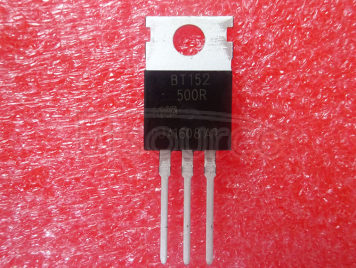
Understanding MOSFETs and Their Role in Power Management
A MOSFET, or Metal-Oxide-Semiconductor Field-Effects Transistor, is a voltage-controlled switch device that is the building block of current-day power management circuits. With a voltage on the gate terminal, engineers can regulate current in between the drain and source, making it easy to accurately regulate the delivery of power over a broader spectrum of applications, such as DC-DC converters, motor drivers, and battery management systems.
MOSFETs are available in two main types: N-channel and P-channel. In an N-channel MOSFET, the current through the drain to source is in a positive direction when the gate voltage is positive and the current through P-channel devices flows in the negative direction relative to the source. In the majority of power management applications, N-channel MOSFETs are used. Their conduction mechanism is based on electrons, so they have a lower on-resistance than their P-channel equivalents of the same die size, which directly translates into lower conduction losses and improved thermal characteristics.
MOSFETs in power switching circuits can be used to convert energy efficiently by moving between fully on and fully off quickly, reducing the time in the resistive transition region where energy is wasted. Such switching efficiency is what makes them essential in any application that needs a variable output voltage, like synchronous buck converters or boost regulators, where the duty cycle varies dynamically to adjust the output.
A less than routine MOSFET selection process can be encountered when hard-to-find IC chips require a redesign of the mid-project design, or when the project is a critical design. Replacement of a controller IC can change the characteristics of the gate drive, switching frequency, or logic thresholds, any of which can directly determine which MOSFET will work well in the new circuit. Knowing the basic use of MOSFETs will make sure that engineers can make intelligent adjustments and not just change part numbers and hope.
Key Parameters for Selecting Low On-Resistance MOSFETs
Choosing the right MOSFET goes well beyond matching voltage ratings. When a hard-to-find IC chip forces a redesign, engineers need to evaluate several interdependent parameters to ensure the replacement component performs reliably within the revised circuit constraints.
Why On-Resistance Matters in Power Efficiency
The most important parameter, perhaps the most important in the selection of a power MOSFET, is Rds(on), the on-resistance between the drain and the source. In the on-state of the device, when the current is passing through it, this resistance will provide heat based on P = I2Rds(on). Even a difference of milliohms can result in large power loss at high currents. To illustrate, 10A of current flowing through a MOSFET with 10mOhms on-resistance results in 1W power loss, and 5mOhms reduces this loss by half. The N-channel MOSFETs always outperform their P-channel counterparts in this case since the electron mobility is approximately twice as high as that of holes, allowing a lower resistance with a similar silicon die size. This efficiency is particularly high in synchronous buck converters and high-frequency switching circuits where the low-side switch has long duty cycles.
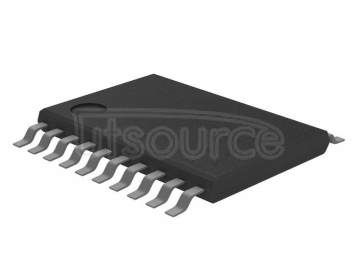
The next parameter that needs close consideration is gate charge (Qg). It dictates the amount of power that the driver circuit gate needs to provide to turn the MOSFET on and off. The device with a small Rds(on) and a large gate charge can have a higher overall loss at high switching frequencies since losses on the gate driving are proportional to frequency. The figure of merit is the product of Rds(on) by Qg, providing a convenient single-number comparison of competing devices, with a lower number indicating a better overall switching efficiency.
Careful margin planning is needed on the voltage ratings. The maximum circuit voltage should be at least 20-30 times the drain-to-source breakdown voltage (Vds), and this is because of the voltage spikes due to inductive loads or layout parasitics. Equally, the gate-to-source voltage rating (Vgs) needs to be able to accept the gate drive of the replacement IC, as some controllers will run at logic-level values of 2.5- 3.3V instead of the standard 10V drive. To calculate the loss properly, it is important to choose a MOSFET with a fully enhanced Rds(on) at the actual drive voltage at the gate, rather than at the rated maximum voltage. Lastly, ensure that the continuous drain current rating (IDC) and pulsed current capability can comfortably meet the peak load requirements of the application with sufficient thermal headroom.
How to Access Detailed Specifications for Component Selection
The first step to locating the correct MOSFET is having the correct, complete specifications in hand, and knowing where to find them makes locating them much quicker. The electrical parameters you require are in the authoritative datasheets of manufacturers. There are searchable libraries of datasheets on the websites of most major MOSFET manufacturers, such as Infineon, ON Semiconductor, Vishay, and STMicroelectronics, where you can download datasheets directly. Looking through a datasheet, be especially careful when reading the graphs of Rds(on) vs. gate voltage and junction temperature, as these plots will help you understand how the device will actually perform in your unique operating environment and not just at the test points where the device is rated.
Parametric search engines such as those at Digi-Key, Mouser, and Arrow provide you with a chance to filter MOSFETs by Vds, Rds(on), gate charge, package type, and current rating all in one search. These are particularly useful in finding substitutes to hard-to-find IC chips, since you can quickly sift through thousands of parts on hand and reduce them to a shortlist that you can easily manage and that is a perfect fit to your specifications. Digi-Key and Mouser also show real-time stock and lead times, which will provide you with an instant view of the availability of components before you decide on a design path. Distributors like UTSOURCE may also be helpful during this phase, especially when it comes to finding those parts that are tricky to find or outdated and are no longer available in large quantities by the mainstream distributors.
To perform cross-referencing and equivalents, there are tools such as SiliconExpert, PartSim, and manufacturer-specific parametric comparison pages, which enable comparison of competing devices side-by-side. Such engineering forums as EEVblog and the Texas Instruments E2E community are also useful sources when it comes to actually tested and proven substitutions and compatibility problems that a datasheet would never tell you about. In assessing a possible replacement, download the datasheet of your replacement controller IC, the datasheet of your MOSFET, and directly compare the level of gate drive voltages, timing constraints, and threshold compatibility. The combination of the two documents, into cross-referencing each other, helps to avoid guesswork and costly prototype failures due to the mismatch of specifications.
Practical Steps to Find and Select MOSFETs for Hard-to-Find IC Chips
As the supply chain disruptions compel the redesign around the unavailable IC chips, a planned selection process will avoid costly errors and will ensure the projects continue to operate. The next strategy splits that process into manageable steps, such as defining what you really need, to making sure that your selected MOSFET works in hardware.
Step-by-Step Guide to Sourcing and Validating Components
Define your circuit requirements before searching. Begin by capturing the electrical requirements your new MOSFET to meet: maximum operating voltage, peak and continuous current, replacement controller-supplied gate drive voltage, switching frequency, and thermal budget. When replacing the original IC chip, take both the original and replacement controller datasheets and compare the strength of the gate drives, logic levels, and timing properties at the same time. Here, any variation has a direct impact on the MOSFET to be used with reliability. Note down your lowest and highest acceptable values of Rds(on), Qg, Vds and Id prior to opening any search tool- this helps to avoid spec creep during the search process.
Use parametric search tools to build a shortlist. Go to the MOSFET filter page of Digi-Key or Mouser and key in your specified constraints. Filter initially by Vds with your 2030 safety margin, and then by maximum Rds(on), and finally by type of package to fit your PCB footprint. Rank remaining results by gate charge or by Rds(on)Qg figure of merit to select the most switching-efficient ones. Target five to ten components with at least two or three different suppliers to hedge against a stock-out at one supplier during a production run.
Evaluate availability and lead times honestly. Live inventory on distributor websites is just part of the story- verify whether the inventory available is distributor inventory or broker inventory, as the components acquired through the brokers have a greater chance of being counterfeited. Use direct contact with manufacturer representatives when it comes to high-volume needs or longer lead times. Official distributors may have the ability to offer planned delivery assurances or factory stock information that is not reflected in the inventory of the websites. In case of a critical design, getting a second-source similarity with another manufacturer before it is a crisis in production.
Download datasheets and validate compatibility on paper first. With each shortlisted MOSFET, verify that the fully enhanced Rds(on) is known at your actual gate drive voltage, rather than only at 10V. Make sure that the threshold voltage (Vgs(th)) is at a low level to drive your controller. Check the body diode reverse recovery time (trr) when the device will be used in a synchronous topology, as a slow recovery will cause shoot-through current and heat. Use the real datasheet curves, and not just headline spec values, to calculate the expected conduction and switching losses at your operating point.
Prototype and validate in hardware. Build a small test circuit using your top two or three candidates under realistic load conditions. Measure junction temperature rise using a thermal camera or thermocouple, verify switching waveforms with an oscilloscope, and confirm efficiency at multiple load points. If one candidate runs noticeably cooler or shows cleaner switching transitions, that data overrides datasheet comparisons. Document your validation results thoroughly—this record becomes invaluable if you need to justify the substitution to a customer or certifying body later.
Designing Resilient Power Circuits in a Scarce Component Landscape
One of the challenges of modern hardware engineering is to navigate component scarcity without losing design integrity. On-resistance MOSFETs are not commodity products: they are fine-tuning parts, and their behavior varies, depending on a close match of Rds(on) and gate charge with the voltage limits and drive characteristics of your controller IC. A parallel process is even more consequential when the redesign required by the hard-to-find chips is in the middle of the project.
The plans in this category will provide you with a repeatable pattern of making those decisions with confidence. Begin with a search based on well-defined electrical requirements. Create a realistic shortlist with the help of parametric tools, check compatibility with a deep analysis of the datasheet, and never rely on your choice in hardware before making the final decision. The next strategy that is equally significant is to create supply chain resiliency in your component strategy. Qualifying second-source equivalents across multiple manufacturers will cushion your project against the next downturn before it hits.
Use these techniques on your next design, and you will realize the shortage of components is annoying, but it need not put a project on its knees. The right MOSFET exists–you just have to find the right process to get it.
Popular on OTW Right Now!




About The Author

Gagan Bhangu
Founder of otechworld.com and managing editor. He is a tech geek, web-developer, and blogger. He holds a master's degree in computer applications and making money online since 2015.