
How Data Analytics Is Transforming Modern Business Applications
These days, companies produce huge volumes of data through their websites, mobile applications, customer relationships, and other daily activities. Yet, data by itself is not valuable unless it is analyzed and transformed into insights that can lead to actions. That’s why data analytics is considered one of the main building blocks of business applications today.
To make insights more accessible, many companies are slowly adopting embedded analytics software that integrates dashboards, reports, and visualizations directly into business applications to such an extent that users can now access real-time data without switching between multiple tools. As a result, they can make faster and more informed decisions.
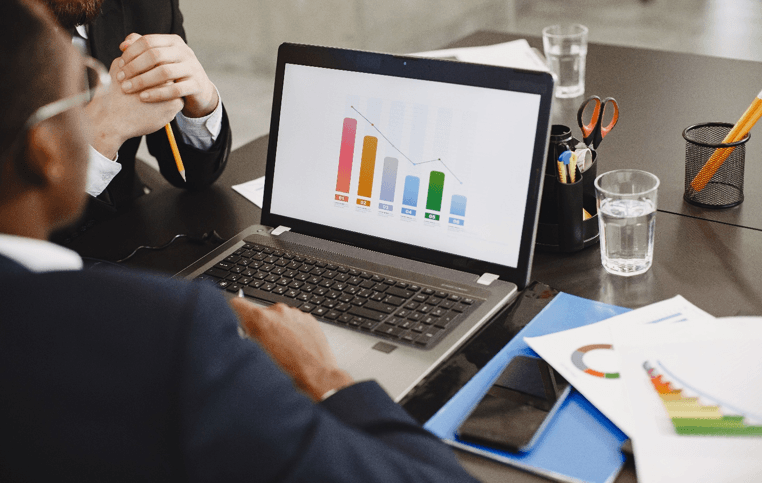
In the digital transformation journey, analytics has become a major factor in assisting businesses to provide improved customer experiences, streamline operations, and gain a competitive advantage.
Key Benefits of Data Analytics
Some of the key benefits of using data analytics are as follows:
- Making decisions based on current data
- Deepen customer insight and personalization
- Enhance work productivity
- More accurate forecasting and planning
- Efficiently tracking performance
- Quickly spotting business opportunities
With the help of these benefits, companies can be flexible and meet the challenges of an increasingly competitive market.
Enhancing Customer Experiences
Analyzing data plays a key role in elevating customer experiences. When companies grasp customers’ behaviors and preferences by analyzing data, they can deliver more targeted products, services, and marketing communication.
Here are some examples: E-commerce platforms look at a buyer’s order history to recommend items.
- Streaming platforms serve you content that fits your taste.
- CRM applications enable salespeople to pinpoint the needs and opportunities of customers.
By studying the data, companies get a better understanding of their customers, nd in turn, they can connect with them in a better way, resulting in greater customer loyalty.
Improving Operational Efficiency
Data analytics also assist organizations in optimizing their internal processes. Modern-day business applications offer transparency into workflows, resource utilizations, and performance metrics so that teams can spot inefficiencies and carry out improvements.
Businesses can use analytics to:
- Track productivity and project performance
- Cut down on operating costs
- Optimize inventory and supply chain management
- Identify process bottlenecks
By having a greater understanding of their operations, businesses can make more intelligent decisions and improve their overall efficiency.
Supporting Smarter Decisions
Making smart decisions is crucial for the success of a business. Thanks to data analytics, companies can stop guessing and start basing their decisions on real facts. Through data analytics, management can track changes, analyze performance indicators, and discover new avenues for expansion with enhanced assurance.
Advanced analytics tools are also capable of identifying potential risks, spotting irregularities, and revealing hidden patterns that might influence business results. Using analytics, one can get the necessary insight to make strategic decisions, whether assessing marketing campaigns, streamlining supply chains, or handling financial performance.
The Growing Role of Real-Time Analytics
Nowadays, the business environment is changing so fast that waiting for a report for days or weeks is simply not an option. Real-time analytics makes it possible to gain immediate access to critical information, which means companies can react quickly to changes, whether they are new opportunities or challenges.
For example, businesses can:
- Keep an eye on website traffic and user engagement continuously
- Follow up on sales performance when transactions take place
- Detect system problems before they affect customers
- Evaluate customer feedback on the spot
Such a degree of responsiveness enables companies to be agile and competitive in the face of fast-changing markets.
To Wrap-Up
Data analytics is a driving force behind business applications of the future by converting raw data into meaningful insights. Analytics help companies, big or small, in numerous ways, like upgrading customer experiences, boosting operational efficiency, and facilitating well-informed decision-making. With ongoing technological advancements, companies adopting data-centric approaches will find themselves in a more capable position to innovate, compete, and succeed in the long run.
Popular on OTW Right Now!



About The Author

Gagan Bhangu
Founder of otechworld.com and managing editor. He is a tech geek, web-developer, and blogger. He holds a master's degree in computer applications and making money online since 2015.