
The Rise of Smart Data Infrastructure- How AI and Cloud Analytics Are Transforming Business Decisions
Introduction
Data is becoming one of an organization’s most important strategic assets in the digital economy. Every transaction, client engagement, and operational activity produces large amounts of information, but gathering data alone is no longer sufficient. Firms have to convert raw information into usable knowledge that can facilitate faster, smarter, and more accurate decision-making.
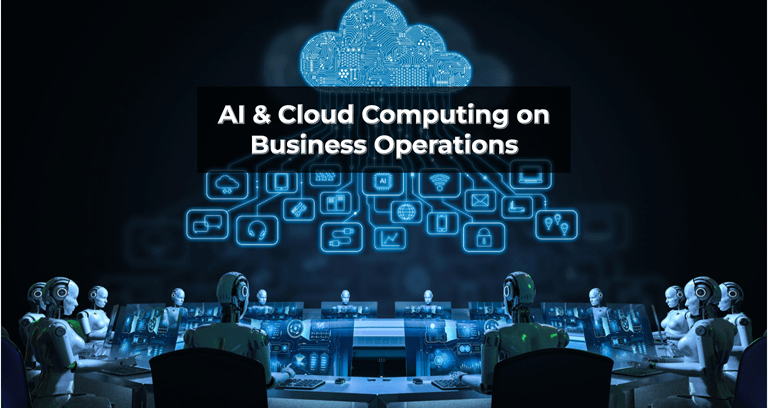
A new technological structure is the Smart data infrastructure, which integrates artificial intelligence, cloud services, and advanced analytics by generating the necessity to manage, process, and analyze the large volumes of data in real time to detect trends automatically and to produce predictive information, in contrast to traditional IT systems. As AI-based data infrastructure becomes the heart of strategic planning, business transformation into digital enterprises is driven by operational effectiveness and competitive advantage.
Understanding Smart Data Infrastructure
Smart data infrastructure is an integrated data storage system that combines processing technologies, analytics platforms, and intelligent automation tools that work together effectively to manage and analyze data.
Traditional data infrastructure was largely based on manual data processing and on-premises servers. These systems are often not well-suited to real-time analysis, complex data, or scalability. Modern intelligent infrastructure, on the other hand, unites cloud-based systems, data pipelines with automated data collection, and artificial intelligence algorithms to help companies process and examine enormous volumes of information very quickly.
Important elements of smart data infrastructure consist of:
- Platforms for cloud computing.
- Models of artificial intelligence and machine learning.
- Tools for big data analytics.
- Pipelines for automated data.
- Frameworks for data protection and management.
These capabilities influence strategic decisions of organizations by turning raw data into meaningful insights. Companies use professional software solutions such as EaseUS Partition Master Professional and EaseUS Data Recovery Professional to effectively manage and protect enterprise data, including disk management, backup, and recovery.
The Function of Artificial Intelligence in Data Infrastructure
Artificial intelligence is key to transforming traditional data systems into intelligent decision-support platforms. AI can process large datasets, identify patterns, and make predictions without requiring much human involvement.
One of the largest advantages of AI to data infrastructure is automation. Therefore, it is possible to conduct automated data processing, predict anomalies, and generate recommendations for business executives using AI-driven platforms. This feature accelerates the processing of complex data sets, enabling companies to react quickly to shifts in the market.
With the assistance of machine learning algorithms, future demand can be predicted based on customer behavior, purchase trends, and demographic factors. Retailers use this data to enhance customer satisfaction, tailor marketing operations, and manage stock. Similarly, AI-driven analytics is used in financial organizations to detect fraud, assess credit risk, and improve investment portfolio management.
Cloud Computing as the Foundation of Modern Data Systems
Cloud computing provides the platform on which massive data processing can be done, whereas artificial intelligence provides analytical intelligence. Companies can manage and archive a vast amount of information in cloud systems without needing to buy costly physical systems.
Cloud-based data infrastructure has several benefits, such as;
- Scalability is based on the data requirements of the organization, which can either expand or reduce its computer resources, enabling companies to process huge datasets with reduced infrastructure costs.
- Cost-effectiveness allows companies to utilize cloud services on a subscription or pay-as-you-use model instead of having costly on-premises data centers.
- The accessibility of cloud technologies facilitates remote work and international cooperation by enabling workers to access data and analytics tools from any location.
- High processing power enables more sophisticated analytics software, machine learning applications, and real-time processing functions, which conventional systems can hardly handle and are aided by cloud environments.
Big cloud service providers such as Google Cloud, Microsoft Azure, and Amazon Web Services offer integrated platforms that combine AI, analytics, and storage into a single ecosystem.
Cloud Analytics and Real-Time Business Intelligence
Cloud analytics is the act of processing data and deriving insights with the help of cloud tools. Such systems allow businesses to handle massive amounts of data and visualize trends using dashboards, reports, and prediction models.
One of the key values of cloud analytics is real-time data processing, so companies do not have to wait days or weeks for analytical reports. Instead, they can check performance indicators immediately and adjust their strategies accordingly.
E-commerce firms such as Amazon, eBay, and Tesco rely on real-time consumer browsing behavior research to provide product recommendations to maximize pricing strategies and increase conversion rates. In the same way, cloud analytics help logistics organizations to measure shipments, track networks of suppliers, and calculate delivery delays. Real-time insights enhance operational efficiency by enabling managers to make informed decisions quickly, reducing uncertainty.
Smart Data Infrastructure and Data-Driven Decision Making
Evidence-based decision-making is taking on greater relevance in contemporary business to ensure that businesses stay competitive in a business environment. It allows business organizations to integrate data from different sources, like customer databases, social media platforms, operational systems, and market research data, through the application of intelligent data infrastructure.
The combination of different data sets enables businesses to gain profound insight into consumer preferences, market trends, and operations.
The following instances of data-driven decision-making processes include:
- Predicting consumer demand using machine learning models.
- Identifying unproductivity in operations via analytics dashboards.
- Client segmentation data for marketing strategy optimization.
- Predicting financial risks using predictive algorithms.
These understandings can help organizations reduce uncertainty and make empirically supported strategic choices.
Business Applications of Smart Data Infrastructure
Smart data infrastructure is transforming how organizations make decisions.
- Retail firms use AI-powered analytics to manage inventory by estimating customer demand and tailoring customer experiences.
- Healthcare facilities use patient data analysis to improve diagnosis, track treatment efficacy, and generate personalized medical solutions.
- A financial firm employed data analytics to develop algorithmic trading tools, analyze risk, and detect fraud.
- Manufacturers use predictive analytics to monitor equipment performance and avoid manufacturing errors, which increases supply chain efficiency.
- Digital marketers analyze customer behavior data to build targeted advertising campaigns that maximize marketing ROI.
Challenges in Implementing Smart Data Infrastructure
Although smart data infrastructure has many benefits, it also has several obstacles to overcome, such as;
- Data Security and Privacy features enable businesses to safeguard confidential information against online attacks and ensure compliance with privacy laws.
- Integration Complexity can be technically challenging when combining data from many systems and formats.
- Data science, machine learning, and cloud architecture experts are in short supply in many organizations.
- High initial investment by businesses may still require investments in system integration, data migration, and training, even when cloud platforms reduce infrastructure expenses.
Strong data governance guidelines, knowledgeable staff, and safe technology frameworks are needed to address these issues. Strong data protection is crucial, which makes organizations employ products such as AOMEI Backupper Professional to effectively secure, back up, and restore sensitive data while adhering to privacy requirements.
The Future of Smart Data Infrastructure
Smart data infrastructure will continue to grow and become more sophisticated with technological advancement. Some of the new trends are given as;
- AI-driven autonomous data administration systems.
- Quick processing of data through edge computation.
- Platforms for automated machine learning.
- Utilization of advanced predictive analytics for strategic forecasting.
- The combination of Internet of Things devices with cloud analytics.
These advancements enable organizations to make confident strategic decisions through rapid data analysis and precise forecasting of future trends.
Conclusion
The emergence of smart data infrastructure represents a fundamental shift in businesses to handle and use data. In this way, modern firms can transform raw data into powerful strategic insights by combining advanced analytics, cloud computing, and artificial intelligence with scalable and accessible datasets. These capabilities enable organizations to respond more swiftly to changing market conditions by making faster, more informed decisions.
Businesses that invest in smart data infrastructure will be better positioned to innovate and enhance efficiency by acquiring a sustainable competitive advantage in an increasingly data-driven world. Thus, intelligent data ecosystems will serve as the foundation for future business strategy and digital transformation in AI and cloud analytics.
Popular on OTW Right Now!



About The Author

Gagan Bhangu
Founder of otechworld.com and managing editor. He is a tech geek, web-developer, and blogger. He holds a master's degree in computer applications and making money online since 2015.