
How a 12,000 Watt Gasoline Generator Powers Canadian Homes and Farms
Across the Canadian Prairies and the forested interior of British Columbia, an ice storm or a downed line can cut electricity for hours or days, often when temperatures sit well below freezing. An extended outage could be a problem for rural homes on Saskatchewan roads, for livestock operations in Alberta, and for remote worksites in Northern Ontario—an outage is not an inconvenience. A high-output unit such as a 12,000 watt gasoline generator is one of the most common ways Canadians keep essential systems running when the grid fails, and understanding how this technology works helps owners use it safely.
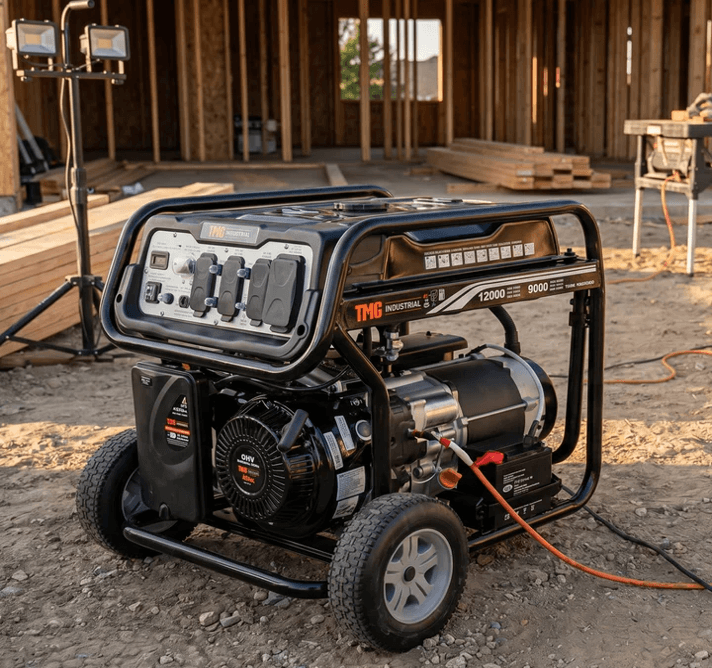
How a Gasoline Generator Produces Electricity
Portable Generators are an internal combustion engine coupled to an alternator. The driving force is the engine that spins a rotor in the alternator, and voltage is induced in a set of stationary coils. Because sensitive electronics are involved, it is important to keep the engine speed around a fixed value and thus the output frequency constant. The larger ones have several outlet types and various voltages to supply standard house wiring as well as heavier equipment.
Efficiency, Safety, and Productivity
There are two figures usually used to describe output: one higher than the other to value the initial transient when the motors start up, and one lower to value steady loads. These ratings help match your actual needs with the unit to avoid overloading and safeguard devices connected to it. A sizing that is correct will last longer on each tank and will emit less per useful unit of work.
Take a look at a mixed grain and cattle farm in Brandon, Manitoba. When power goes out for two days in January, the operator will operate a furnace blower, a well pump, freezers, and barn lighting, one at a time and in sequence, to not overstress the engine. This common practice saves fuel and cools the equipment.
Technical Foundation and Performance Factors
Several factors shape real performance in the field:
- Cold starting, helped by an electric start and fresh fuel.
- Altitude and air density, which affect combustion.
- Fuel quality and the use of stabilizer during storage.
- Load balance across the available circuits.
Oil becomes thicker in cold conditions, and batteries lose power in extreme cold, making a motor block that is kept above the coldest temperature more likely to start up. Owners in colder climates tend to cover the unit from the wind and keep it away from any enclosed areas.
Safe Operation and Maintenance
The most serious hazard is exhaust gas. The toxic (but colourless) gas generated by the generator should always be drawn on the outside, remote from doors, windows and air intakes. An alarm system in the house that is in working order provides additional security for the entire family. The machine is also maintained in good condition through other practices:
- Refuel only after the engine has cooled.
- Change the oil at the intervals the maker specifies.
- Inspect cords for cracks before each use.
- Never back-feed a building without a proper transfer switch.
A licensed electrician installs a transfer switch, which can disconnect the house from the electric grid in case of repair, protecting the electrician working on the grid and reducing the risk of dangerous feedback.
Choosing Outlets, Tools, and Accessories
Extra features such as heavy-gauge extension cords with the appropriate load rating and a wheel kit for snow or gravel movement, a weather cover for storage, and a grounding rod if local regulations mandate it are also helpful. Twist-lock outlets are used for larger appliances, while standard outlets are used for lights and small tools.
What Buyers Should Weigh
Before buying, owners should add up the running demand they actually use on the circuits they buy and then make sure that the running rating is higher than that, with some margin. All of these, including the number of hours per tank, noise level, ease of cold starting, service parts availability, etc., have meaning over the lifetime of the machine. Increasing the size of a unit by a bit more than it’s currently required makes room for expansion.
With the extreme storms that Canadian winters have become more frequent with, and as more rural homes install electric heating and water systems, having dependable standby power is a must-have. Cleaner combustion, quieter operation, and smarter load management point to where the technology is heading in the years ahead, and buyers can explore the full range of gasoline generators from the manufacturer to compare specifications, runtime, and outlet options for their own region and budget.
Popular on OTW Right Now!


About The Author

Gagan Bhangu
Founder of otechworld.com and managing editor. He is a tech geek, web-developer, and blogger. He holds a master's degree in computer applications and making money online since 2015.