
Choosing the Right 3D Printing Materials and Filaments: A Guide for Enthusiasts and Makers
Consumer-grade 3D printing has been rising in the world dramatically over the past few years. What used to be a niche activity in which the engineers and designers were the only ones in Barbie making them accessible to the students and hobbyists, the artists, and even the professionals. The type of material is one of the most significant choices that a 3D printer owner can make, whether they are a beginner or has more skills. Having an impressive range of alternatives at your disposal, it is possible to learn the distinctions between the filaments and the influence they have on the way the prints will be made, to enhance the process and the final product of your projects.
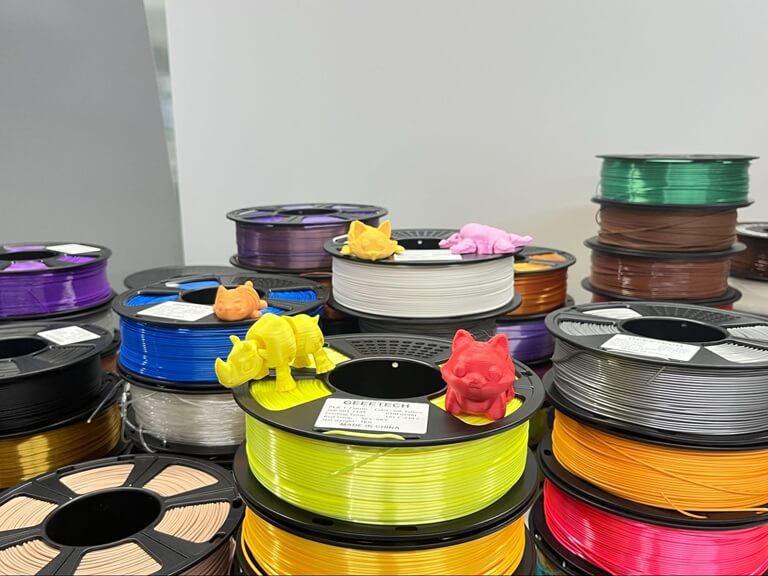
The material of 3D printed objects is at the center of everything. In Fused Filament Fabrication (FFF) and Fused Deposition Modeling (FDM) 3D printing, which are the most used in consumer applications, objects are printed through an additive process using a hot filament, which melts and hardens into the required shape. This renders the choice and quality of 3D printer filament extremely important in terms of producing high-quality and reliable prints.
We will discuss the matter of the selection of the appropriate filament, the advantages and disadvantages of various materials, and make you realize the reasons why some types of filaments will suit specific tasks.
Understanding 3D Printer Filament
The feedstock of the FDM printing is a thermoplastic material that is continuously fed into the printer and is called 3D printer filament. These filaments are usually in spools, and they are available in a variety of materials, diameters (usually 1.75 mm and 2.85 mm), and a variety of colors. You can print with parts of varying mechanical properties, surface finishes, flexibility, and heat resistance, depending on the kind of filament you select.
The choice of materials is very diverse, as one can pick between basic plastics (PLA and PETG), specialty filaments (wood or metal composites), and advanced engineering materials (nylon and ASA). All belong to the toolbox of the maker, and it is all too frequent to find a decision between printability, performance, and aesthetics.
PLA Filament: Beginner-Friendly and Versatile
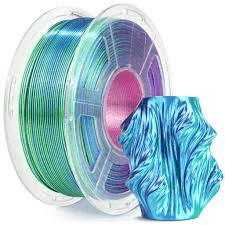
PLA filament is the most popular of the numerous varieties of filament, used, particularly by beginners. PLA or polylactic acid is a biodegradable plastic and is a renewable resource based on cornstarch or sugarcane. The environmental friendliness, low printing temperature, and the low level of warping make it a good place to begin 3D printing.
Why is PLA so popular? There are several reasons:
Ease of Printing: PLA melt is lower than most other plastics, and so it does not take much heat to extrude, and is expected to stick to the print bed. This is why it is ideal on printers with open frames or that do not have sophisticated bed-leveling systems.
Surface Finish: PLA creates sharp edges and lines in a clean and natural glossy finish. It is a great selection of decorative products, prototypes, toys, and models where the visual appeal counts.
Less Odor: PLA is reputed to have a relatively mild smell when printing in comparison to other plastics, so it is a better material to work with in the classroom or home set-up.
And in case you want to come with a high-quality PLA in your projects, here is a selection of PLA filament.
PLA has a lot of aspects that would be classified as easy to use and pleasing to the eye, but PLA has shortcomings. PLA parts do not stand as heat-resistant as some other materials, and therefore can deform when kept in high temperatures (such as inside a hot car). Neither is it perfect as far as functional components that need to flex or be mechanically resistant when stressed.
Beyond PLA: Exploring Other Filament Types
As soon as you are acquainted with PLA and feel relaxed enough to begin to research, the world of filaments is even broader. Underneath is an image of some exact options and what they offer:
ABS Acrylonitrile Butadiene
ABS is printed to produce many functional components, including brackets and enclosure parts. Nonetheless, it normally needs a heated bed and a sealed print space to minimize the levels of warping and may produce stronger fumes during printing. It is advisable to have good ventilation.
Specialty Filaments
An additional new product in the filament market today is composite blends that have particles of wood, metal, and carbon fiber. These lamps are capable of producing prints of distinct outlooks and superior qualities. An example is that printed parts can be finished with a wood-like finish with wood-filled filaments, and carbon fiber filaments can be used to make technical parts safer and more rigid.
Tips for Filament Selection and Storage
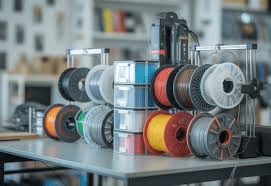
The sphere of 3D printing as the everyday use has increased significantly in recent years. What was once a hobby reserved for engineers and designers is now accessible to students, hobbyists, artists, and even professionals. The type of material to use is one of the most significant decisions a 3D printer user may take when he or she is only beginning or has some experience in the field. When there are a lot of choices, it is possible to know the variations of different filaments and their influences on the final print to make the entire process easier and the results more rewarding.
At the heart of every 3D printed object is the material used.
In Fused Filament Fabrication (FFF) and Fused Deposition Modeling (FDM), which is the most popular process adopted by a home user, objects are created in layers through a heated filament that melts and solidifies into the required form. As such, the quality and type of filament you use may have very significant effects on the quality of your prints.
In this guide, we will discuss the choice of the right filament, the advantages and disadvantages of various materials, and help you see why this or that filament is the best in this or that use.
Exploring Other Filament Types
When you get used to PLA and want to try other options, there are many other filaments to consider. It is often used to make practical parts such as supports and enclosures. Though it usually requires a heated bed and a closed production area to reduce glitches such as alteration.
It is harder to print than ABS and has better mechanical properties than PLA. PETG is also less sensitive to heat and chemicals, thus it is applicable in the production of containers and other hardy parts.
TPU Thermoplastic Polyurethane and Flexible Filaments
Plastic filaments like TPU can empower you to create parts that can flex and bounce. They are ideal for making custom gaskets, phone cases, or items to be worn. They are also softer, thus making them harder to print and requiring low print speeds.
Specialty Filaments
In the modern market, there are composites of filaments, which include wood, metal, and carbon fibers. They are capable of making prints of distinctive appearance and superior quality. As an example, using wood-filled filaments can make your prints look like wood, whereas carbon fiber filaments can be used to make your components stronger and firmer to use in technical applications.
Guidelines to Selecting and Storing Filament
The selection of the appropriate filament is an initial thing; another issue is how you store it and the way you handle it.
Choose Based on Purpose
PLA or PETG are excellent choices to begin with – prototyping and learning.
– To be functional and have strength: PETG, ABS, or reinforced filaments can be better.
– To be used as flexible applications: TPU or other elastic materials.
– Special projects or aesthetics – Apply composite filaments to special appearances.
Correct storage is used to preserve filament.
Air may contain moisture that will be absorbed by the filaments, leading to poor print quality, bubbles, or the blockage of the nozzle.
When not in operation, it is best to store filament spools in a dry box or an airtight box with desiccant packs to facilitate the storage and handling.ht filament is just the entry part of things, and the storage and handling also count.
Prototyping and learning: PLA or PETG is a good place to start.
Useful machineries and resistivity: PETG, ABS, or compound filaments may be more beneficial.
Elastic applications: TPU or other elastomers.
Visual effect: Visual effect filaments.
Check Printer Compatibility
Make sure that your printer is compatible with the filament. Not every imprinter is talented at reaching the high temperatures necessary to work with some filaments, and others do not have the hardware essential to work with flexible materials.
Adequate Filament Life Increases Proper Storage.
Dampness in the air is absorbed by the filaments and may damage print excellence or cause the spout to clog. When not in use, it is better to keep the filament reels in a dry box or hermetic ampule and use desiccant cartons.
Optimizing Print Settings for Best Results
Recommended filament may still have poor prints when the print settings are not done properly.
Print Temperature: Begin at the center of the range and change when required.
Bed Temperature: Beds are heated to aid adhesion, particularly of such materials as ABS and PETG. PLA is a filament that is not always difficult to adhere to without a heated bed, but can take advantage of gentle heating.
Print speed: Lower speeds enhance detail and adhesion between layers, particularly when using specialty or flexible filaments.
Cooling: PLA enjoys the use of active cooling fans so as to solidify layers within a short time. Some other materials, like ABS, might need a lower cooling to avoid cracking.
These settings are experimented with, and a record of what works is kept, which will allow you to tune the best settings on each type of filament.
The Future of Consumer Filament Materials
Filament material innovation has been increasing in technology and sustainability. Researchers and manufacturers are preparing biodegradable and recycled filaments, high-performance polymers applicable in engineering, and customized materials to particular industries such as healthcare, automotive, and aerospace.
To the common producer, it implies being able to print functional components, artistic objects, and prototypes that previously were reserved to industrial machines. The first time, or the most complicated project with exotic filaments, knowing your material is the main secret to success.
Final Thoughts
It does not need to be so complicated to select the appropriate filament when you want to do a 3D printing venture. Begin with easy-to-use alternatives such as PLA filament, and later uncover other, more specialized ones. Market: Before printing any material, think about the intention of printing, the abilities of your printer, and how to handle it to obtain the best output.
Popular on OTW Right Now!




About The Author

Gagan Bhangu
Founder of otechworld.com and managing editor. He is a tech geek, web-developer, and blogger. He holds a master's degree in computer applications and making money online since 2015.