
CEX vs. DeFi Yield: Which Option Is Better for Stablecoin Holders?
Stablecoins have become an important part of the cryptocurrency ecosystem, offering users a way to hold digital assets with reduced price volatility compared to cryptocurrencies like BTC or ETH. When the adoption rate increases, many investors are seeking opportunities to make money on their idle stablecoins by using yield-bearing products.
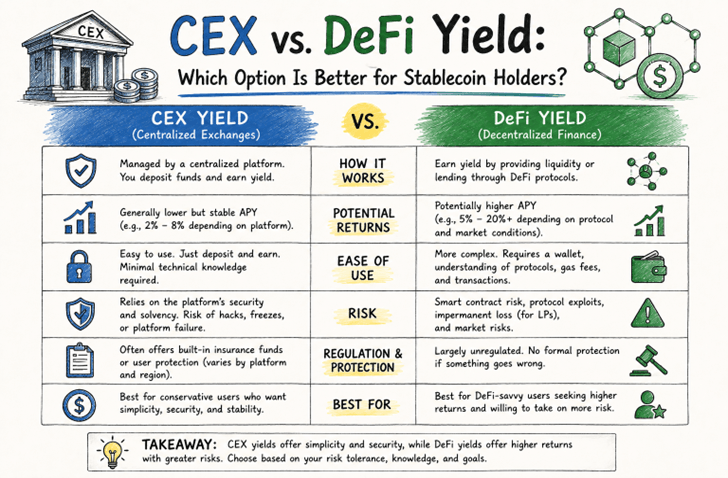
There are two popular strategies: centralised exchange (CEX) savings products and decentralised finance (DeFi) protocols. The pros, cons, and dangers of every model vary in accordance with the user preferences and experience levels.
Why Stablecoin Yield Has Become Popular
There are a variety of stablecoins, like USDT, that are widely employed for trading, payments, and portfolio management. But many users don’t wish to have their assets languishing for extended durations.
This has heightened the demand for products offering the ability to keep buying assets that are pegged to the dollar, but also potentially collect yield.
For beginners, especially, stablecoin-earning products are often viewed as a more accessible introduction to crypto passive income strategies compared to active trading or highly volatile investments.
What Is a Centralized Exchange (CEX) Yield Product?
Centralized exchanges have saving and earning products with managed platforms. Users place their assets in exchange-controlled accounts, and the platform operates exchange- or lending-related functions for providing liquidity, lending structures,s or other yield-generating processes.
Products such as CoinEx Flexible Savings are examples of centralized earning solutions designed to support users looking for stablecoin yield opportunities.
Many users prefer centralized platforms because they generally offer:
- Simplified interfaces
- Customer support
- Easier onboarding
- Streamlined account management
- Familiar exchange ecosystems
For users seeking flexible crypto savings, centralized products often provide a more beginner-friendly experience.
What Is DeFi Yield?
DeFi Yield Products work without intermediaries and on smart contracts.
Lenders, liquidity providers, or yield seekers can directly interact with the decentralized protocols to lend assets, supply liquidity, or engage in yield-generating strategies. Generally, popular DeFi ecosystems are constructed on networks like Ethereum, BNB Chain, or Solana.
The appeal of DeFi often comes from:
- Non-custodial asset control
- Greater transparency
- Permissionless access
- Direct blockchain participation
Some risks of DeFi platforms, however, include greater technical difficulty and wallet management and security requirements.
Comparing Accessibility
CEX Platforms
Centralized exchanges tend to be more user-friendly for newbies. Most platforms provide:
- Standard account registration
- Password recovery
- Customer support
- Mobile apps
- Integrated wallets
This simplicity makes centralized products attractive to users exploring crypto savings for beginners.
DeFi Platforms
DeFi protocols usually require:
- Self-custody wallets
- Blockchain transaction knowledge
- Gas fee management
- Smart contract interaction
The features are great for advanced crypto users, but can be a bit tricky for beginners.
Custody and Control
One of the largest differences in the CEX vs DeFi yield debate is custody structure.
Centralized Custody
In the case of CEX products, users are putting their assets on the exchange platform. Both users and the platform conduct the operations and generate yields from the platform.
This provides convenience, but also adds counterparty risk on the platform.
Self-Custody in DeFi
DeFi protocols will usually enable users to keep control of their wallets and private keys.
This leads to greater independence and also puts all the responsibility for security into the users’ hands. If you lose your private keys or if you have your wallet is compromised, you will not be able to recover the funds.
Yield Stability and Variability
Both CEX and DeFi yields can fluctuate depending on:
- Market demand
- Liquidity conditions
- Borrowing activity
- Protocol incentives
The yields of DeFi coins can go up and down depending on the market’s activity level.
There might be more predictable or streamlined earning opportunities in centralized platforms, but pay is still determined by market factors.
Users looking to earn interest on USDT should understand that APY figures in both systems are dynamic rather than guaranteed.
Risk Considerations
Neither approach is risk-free.
Risks Associated With CEX Products
- Platform insolvency risk
- Custodial risk
- Regulatory uncertainty
- Withdrawal restrictions during market stress
Risks Associated With DeFi
- Smart contract vulnerabilities
- Protocol exploits
- Impermanent loss in some products
- Wallet security risks
No matter which platform you pick, reputation, transparency, and security measures are crucial to take into account.
Which Option Is Better for Stablecoin Holders?
There is no one standard answer, as other users value different criteria.
A CEX May Suit Users Who:
- Prefer convenience
- Want simpler interfaces
- Need customer support
- Are new to crypto savings products
DeFi May Suit Users Who:
- Prefer self-custody
- Want direct blockchain participation
- Have technical experience
- Value decentralization
Some investors even use both strategies as a diversified yield strategy.
Final Thoughts
Stablecoin earning products have been gaining in popularity, providing users with more opportunities to make money from their idle digital assets. Stablecoins have also found several avenues for engaging in yield-generating ecosystems, whether it’s through a centralized exchange or a decentralized finance protocol.
For users seeking simplified access to flexible crypto savings, products like CoinEx Flexible Savings represent one approach within the broader crypto savings landscape.
In the end, the decision between CEX and DeFi yield products will rely on an individual’s experience, liquidity requirements, security considerations, and risk tolerance.
Popular on OTW Right Now!



About The Author

Gagan Bhangu
Founder of otechworld.com and managing editor. He is a tech geek, web-developer, and blogger. He holds a master's degree in computer applications and making money online since 2015.