
Bookkeeping Essentials Every New Business Should Know
Many new business owners struggle to keep track of money and bills. Good bookkeeping helps you see income, expenses, and cash flow. This post explains basic terms, shows how to set up a system, and points out common mistakes to avoid.
Read on for clear steps.
Key Bookkeeping Basics for New Businesses
Key accounting basics are critical for new businesses. Understanding how to manage your money will help you succeed.
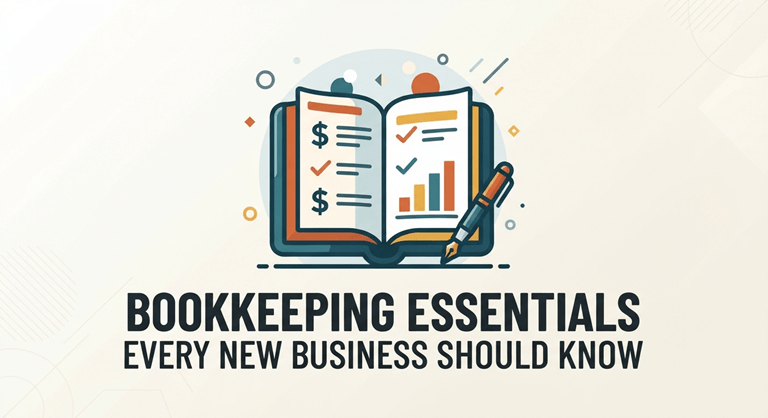
Understanding Assets, Liabilities, and Equity
Assets are things your business owns that bring future value, like cash, equipment, inventory, and accounts receivable. Liabilities are debts you owe, such as loans, credit card balances, and unpaid bills.
Equity shows the owner stake after you subtract liabilities from assets on the balance sheet.
Good record keeping tracks transactions that affect assets, liabilities, and equity. Accounting software makes this tracking faster and helps produce income statements and cash flow reports.
A clear balance sheet helps you manage expenses and improve financial reporting for taxes and lenders. Next, compare single-entry and double-entry bookkeeping to pick the right method for your small business.
Single-Entry vs. Double-Entry Bookkeeping
After learning about assets, liabilities, and equity, pick the bookkeeping style that fits your needs.
| Topic | Single-Entry Bookkeeping | Double-Entry Bookkeeping |
| Definition | Records one side of each transaction. Uses simple ledgers or spreadsheets. | Records two sides for every transaction. Uses debits and credits. |
| Complexity | Easy to learn. Minimal bookkeeping training required. | More complex to set up. Staff need basic accounting knowledge. |
| Records Required | Tracks cash receipts and payments. Often uses a single cash journal. | Tracks assets, liabilities, equity, income, and expenses. Uses a chart of accounts. |
| Accuracy | Acceptable for very small operations. Errors can go unnoticed. | Provides internal checks. Errors often surface through trial balances. |
| Best For | Very small sole proprietors and simple cash businesses. Low transaction volume fits well. | Growing firms, companies with inventory, and businesses seeking lenders. Complex operations benefit most. |
| Examples | A local market stall using a notebook. A hobby seller tracking cash sales. | A small manufacturer tracking inventory. A service firm preparing financial statements. |
| Cost | Low setup cost. Often free or low-cost spreadsheet use. | Higher initial cost. Software or accountant fees may apply. |
| Tax Preparation | Simpler for basic returns. May lack detail needed by tax preparers. | Provides detailed reports. Eases preparation of profit and loss and balance sheets. |
| Error Risk | Higher risk of missed entries. Fraud can be harder to detect. | Lower risk due to balancing checks. Discrepancies are easier to find. |
| Software Compatibility | Works with basic spreadsheet tools. Simple accounting apps also fit. | Supported by full-featured accounting software. Integrates with payroll and inventory modules. |
Cash Basis vs. Accrual Basis of Accounting
Choose the accounting basis that matches your business needs.
| Aspect | Cash Basis | Accrual Basis |
| Definition | Cash records income when you receive payment. | Accrual records income when you earn it. |
| Timing | Cash logs expenses when you pay bills. | Accrual matches expenses to the related revenue. |
| Pros | Cash is simple for small firms. | Accrual shows a fuller financial picture. |
| Cons | Cash can mislead about future obligations. | Accrual needs more record keeping. |
| Tax Impact | Cash often delays taxable income. | Accrual may accelerate tax reporting for earned revenue. |
| Best For | Cash suits very small or service businesses. | Accrual fits growing firms with inventory or credit sales. |
| Example | Freelancer records a client payment when received. | Retailer records a sale when the product ships. |
Next, set up your bookkeeping system to record transactions correctly.
Setting Up Your Bookkeeping System
Setting up your bookkeeping system is essential for tracking your finances. Start by opening a business bank account and record all financial transactions clearly.
Opening a Business Bank Account
Opening a business bank account is crucial for new businesses. A financial checklist can also help new business owners stay organized with essential tasks such as separating finances, tracking expenses, and preparing for tax season.
- Choose the right bank. Look for one that offers good services for small businesses. Compare fees, interest rates, and features.
- Gather required documents. Most banks need your business license, tax ID number, and identification. These documents help verify your business identity.
- Fill out an application form. Submit it at the bank in person or online. Be sure to provide accurate information to avoid delays.
- Make an initial deposit. Banks may require a minimum amount to open the account. This can range from $25 to $100, depending on the bank’s policies.Many entrepreneurs find that investing time in startup bookkeeping early on can save them from larger financial headaches later.
- Set up online banking access. Online tools simplify tracking cash flow and managing transactions regularly.
- Order checks and debit cards for your business account. These items are essential for making payments or receiving funds easily.
- Keep track of all transactions made through this account regularly; this helps in managing expenses effectively.
- Use the account exclusively for business-related income and expenses; this practice simplifies record keeping during tax season.
A dedicated business bank account aids in organized financial management and ensures clear reporting on your income statement and balance sheet over time.
Recording Financial Transactions
Recording financial transactions is key to good bookkeeping. This keeps track of all money coming in and going out of your business.
- Always document every transaction. Use receipts, invoices, or bank statements as proof.
- Enter transactions into your ledger on the same day they occur. This prevents forgetting important details.
- Classify each transaction correctly. Separate income from expenses for better tracking.
- Use clear descriptions for each entry. This helps you understand the purpose later.
- Monitor cash flow regularly. Knowing when money comes in and goes out is vital for managing funds.
- Review your entries weekly. Regular checks catch errors early and ensure accuracy in records.
- Backup your records frequently. Keep digital and physical copies to avoid loss of data.
- Use accounting software to simplify the process. Programs can automate many tasks, making it easier to manage finances.
- Train employees on proper recording methods. Everyone involved should know how to enter transactions accurately.
- Conduct audits occasionally. This ensures everything matches up and helps maintain accurate financial reporting.
Using Accounting Software
Using accounting software can make managing your finances easier. These tools help you organize your records, track expenses, and generate reports like income statements and balance sheets.
Many options are simple to use, even for new business owners. They save time by automating tasks such as invoicing and payroll.
Accounting software also helps with tax compliance. You can quickly access financial data when needed. This way, you stay organized all year long. Setting up a system early on ensures smoother bookkeeping down the road.
Next comes the best practices for effective bookkeeping.
Best Practices for Effective Bookkeeping
Keep track of your expenses and review them often to maintain a clear view of your finances. Good organization helps you spot issues early.
For more tips on effective bookkeeping, keep reading!
Categorizing and Tracking Expenses
Tracking expenses helps you manage your finances better. Categorizing these expenses can save time during tax season.
- Identify the types of expenses. Categories might include office supplies, travel costs, and utilities. This helps organize spending clearly.
- Use accounting software for easy tracking. Many tools allow you to input and categorize expenses quickly.
- Keep receipts for all business purchases. Receipts provide proof of expenses in case of audits or tax questions.
- Update records regularly. Daily or weekly updates keep your financial information current and accurate.
- Set a budget for each category. This practice prevents overspending and helps control costs.
- Analyze spending trends monthly. Review where money goes to find areas for saving or improvement.
- Separate personal from business expenses completely. Mixing them can lead to confusion and tax issues later on.
- Use labels for digital records. Proper labeling makes it simple to find specific transactions when needed.
Categorizing and tracking expenses is vital for effective financial management in any small business. Proper organization ensures smooth operations and prepares you for growth.
Reconciling and Balancing Accounts Regularly
Reconciling and balancing accounts regularly is crucial for any new business. It helps maintain accurate financial records.
- Compare your bank statements with your accounting records each month. This ensures all transactions are recorded correctly and highlights any discrepancies.
- Check each deposit and withdrawal against your ledger. This verifies that all money coming in and going out matches your records.
- Match invoices to payments received. Doing this helps track outstanding payments and manage cash flow more effectively.
- Review credit card statements alongside your recorded expenses. This prevents overspending and keeps expense management on track.
- Adjust errors promptly when found during reconciliation. Early correction reduces the risk of larger issues later, making financial reporting smoother.
- Keep detailed notes of any adjustments made during balance checks. This adds transparency to your record keeping and provides clarity if questions arise later.
- Use bookkeeping software to help streamline the reconciling process. Many programs offer features that simplify tracking transactions and identifying mismatches.
Staying organized with these practices promotes better financial management in your small business. Regularly reconciling accounts leads to more accurate income statements, cash flow statements, and balance sheets essential for growth and success.
Building a Realistic Budget
A realistic budget helps keep a business on track. Start by listing all expected income sources, like sales or services. Next, identify fixed and variable expenses. Fixed costs stay the same each month, such as rent or salaries.
Variable costs can change, like utilities or materials.
Review your past financial data for guidance. Use this information to make informed estimates about future spending. Include savings for emergencies and unexpected expenses too. A good budget is flexible; adjust it as needed based on cash flow changes or new business goals.
Monitoring these figures will improve financial management and assist with profit planning over time.
Common Bookkeeping Mistakes to Avoid
Mixing personal and business finances is a big mistake. It can cause confusion and make tracking expenses harder. Waiting until tax season to update records can lead to stress and errors.
Stay on top of your bookkeeping throughout the year for better results.
Mixing Personal and Business Finances
Mixing personal and business finances can lead to trouble. It makes tracking money difficult for your small business. Without clear boundaries, you risk losing control over cash flow and expenses.
This can impact your income statement and balance sheet.
Use a separate bank account for your business. Ensure all financial transactions related to the business go through this account only. Keeping records organized will assist during tax season, too.
Clear separation aids with budgeting and financial management overall.
Waiting Until Tax Season to Update Records
Updating records only at tax time is a mistake. This habit can lead to confusion and errors. If you wait, important details may slip through the cracks. Keeping your financial transactions current helps you see where your money goes.
It allows for better cash flow management.
Regular updates also ensure accurate reporting on income statements and balance sheets. You’ll find it easier to meet tax compliance needs this way. Organizing expenses throughout the year saves time and stress during tax season as well.
By staying organized, you promote better financial management for your small business.
Conclusion
Bookkeeping is key for new businesses. It helps you manage money and stay organized. Knowing the basics lays a strong foundation. Avoid common mistakes to keep your finances in order.
Good bookkeeping leads to success and growth for your business.
Popular on OTW Right Now!
-
 Why Traditional Risk Management Fails Modern Businesses and How to Fix It
-
 How Businesses Scale Successfully in the Beauty Industry Without Losing Quality
-
 Cloud Migration Strategies: What Every Growing Business Should Know in 2026
-
 What AI Consulting Actually Does for a Business (And Why It’s Harder Than It Looks)



About The Author

Gagan Bhangu
Founder of otechworld.com and managing editor. He is a tech geek, web-developer, and blogger. He holds a master's degree in computer applications and making money online since 2015.