
Amazon Restock Trackers and Auto Purchase Tools: How Shopping Automation Works
Online shopping usually follows a simple pattern: find a product, check its price, see whether it is available, and place the order. That process becomes much less straightforward when a product is difficult to find. Popular gaming hardware, collectibles, trading cards, electronics, and limited releases can disappear from Amazon quickly and return without much warning.
This is where shopping automation starts to become useful. An Amazon restock tracker is designed to answer one basic question: Is the product available again? An automated purchasing tool goes one step further by asking whether the available listing matches conditions that the shopper has already defined.
That distinction matters. A product coming back in stock does not automatically mean it is a good purchase. The price may be too high, the seller may not be acceptable, or Amazon may only have a limited quantity available. Modern monitoring tools can bring these conditions together, allowing shoppers to move from simply detecting a restock to taking action when a qualifying offer appears.
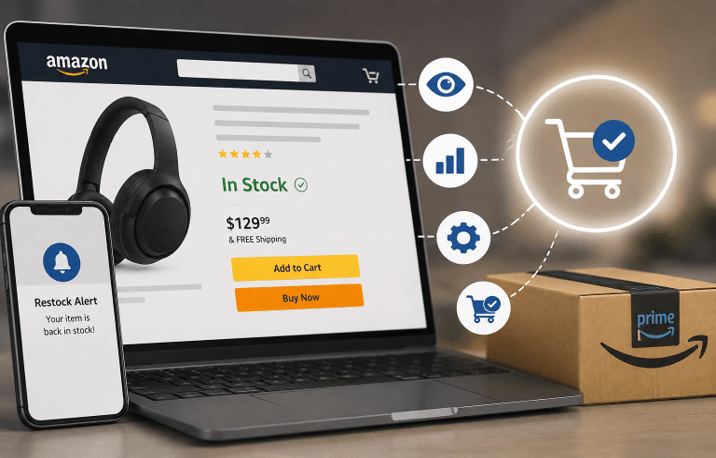
Restock Tracking Is About Detection
At its simplest, restock tracking watches a product and looks for a change in availability. Instead of repeatedly opening an Amazon product page and refreshing it, monitoring software checks the listing in the background while the monitoring session remains active.
This can be particularly useful for products that are frequently unavailable. A shopper may know exactly which console, collectible, accessory, or electronics product they want but have no idea when another unit will become available. Checking manually every few minutes is inconvenient, and checking only once or twice a day can easily miss a short availability window.
An automated tracker changes that process by making product availability something that software watches continuously rather than something the shopper has to remember to check.
What a Restock Tracker Actually Watches
Amazon product monitoring does not necessarily stop at an in-stock or out-of-stock label. A useful monitoring system can look at the current offer and determine whether there is a buyable listing that fits the shopper’s requirements.
Price is one obvious condition. Availability is another. Depending on the tool, seller preferences and quantity controls can also become part of the purchasing rules.
Why Manual Restock Checking Has Limits
Manual checking works reasonably well for ordinary products. If an item stays available for several hours, there is little pressure to react immediately.
High-demand products are different. A limited release can become available while someone is working, sleeping, commuting, or doing something completely unrelated to shopping. By the time the product page is checked, the opportunity may already be gone.
The problem is not necessarily that shoppers lack information. It is that information arrives at the wrong time.
An Amazon restock tracker addresses that problem by reducing the need for constant human attention. Instead of remembering to check a page, the shopper establishes what to monitor and allows the software to keep watching.
Auto Purchase Adds a Second Layer
Restock tracking answers when something becomes available. Automated purchasing addresses what happens next.
The idea behind an Amazon auto purchase system is not simply to buy every product the moment it appears. Instead, the shopper establishes conditions in advance. When an available listing satisfies those conditions, the software can begin the purchasing process automatically.
This changes the role of automation. The software is no longer only observing Amazon. It is also responding to information according to instructions supplied by the shopper.
Detection and Action Are Different
Think of restock monitoring as a security camera. Its job is to notice what is happening.
Automated purchasing is closer to an alarm system connected to a predefined response. It does not simply notice that something changed; it can take the next permitted action when the required conditions are satisfied.
This distinction helps explain why combining the two functions can be useful. A restock alert still leaves a reaction gap. Someone has to see the alert, open Amazon, confirm the listing, check the price and seller, and then begin checkout.
When availability lasts only briefly, every step adds time.
The Conditions Come First
A responsible automated purchasing setup starts with rules rather than the product becoming available.
A shopper may decide that a particular item is acceptable only when:
- The product is genuinely available.
- The total price is below a chosen maximum.
- The seller meets the shopper’s preference.
- The configured quantity and order limits allow the purchase attempt.
- Automatic checkout has been enabled.
These rules create a boundary around the purchase. Instead of making a rushed decision when a restock appears, the shopper decides beforehand what qualifies as an acceptable offer.
That is one of the more practical aspects of Amazon shopping automation. The software handles repetitive monitoring, while the shopper remains responsible for defining the purchasing conditions.
How AmaBot Combines Monitoring and Purchasing
AmaBot is an example of an Amazon restock tracker that combines product monitoring with optional automated checkout. Its monitoring system checks individual products every few seconds while monitoring is running, and users can configure buying rules for the products they are watching.
The basic workflow is straightforward. A shopper selects an Amazon product, defines the acceptable conditions, and starts monitoring. When a qualifying offer appears, the application can either notify the shopper or begin the automated purchasing process, depending on the selected settings.
Monitoring Multiple Products
One advantage of automated monitoring is that shoppers do not have to dedicate their attention to a single product page.
AmaBot states that each individual product is checked every few seconds and that adding additional products does not make the monitoring interval for existing products slower. That makes the approach practical for shoppers following several possible restocks at once, such as different trading-card products, gaming accessories, electronics, or collectible releases.
This is different from opening several browser tabs and trying to refresh them manually. The
software can keep the monitoring process running while the shopper focuses on something else.
Price, Seller and Quantity Rules
Availability alone is rarely enough to make a purchasing decision.
A product might return at $100 after previously selling for $60. A third-party seller could also become the first available seller, even though the shopper only wants to buy directly from Amazon.
Quantity can create another limitation, particularly when a product is subject to purchase limits.
AmaBot allows users to define a maximum price, quantity and seller preferences for individual products. AmaBot evaluates the complete price, including shipping, against the maximum price configured for the product.
This turns restock monitoring into a more selective process. The goal is not simply to detect inventory but to identify inventory that matches the buyer’s predefined requirements.
When Automated Checkout Becomes Useful
Automated checkout is most relevant when timing has a meaningful effect on the buying experience.
Consider a popular gaming product that has been unavailable for several days. A small batch becomes available without a major announcement. The listing may remain purchasable for only a short period before inventory disappears again.
A shopper relying on manual checking has to notice the restock first. A notification-based system can shorten that process, but the shopper still needs to respond. If the product becomes available and meets the user’s predefined price, seller and quantity requirements, AmaBot can automatically begin the purchasing process within seconds when automatic checkout is enabled.
That does not mean an automated tool can control the outcome. Amazon inventory can change during checkout, prices can change, sellers can change, and additional verification may be required.
AmaBot itself states that a checkout attempt is not a guarantee of a successful order.
Trading Cards and Collectibles
Collectibles are a natural example of why restock monitoring can matter.
Trading-card products may have unpredictable availability, with popular releases returning in limited quantities. Someone who wants a particular product may already know the maximum amount they are comfortable spending.
In that situation, constantly checking Amazon does not add much value. The shopper already knows what they want and what they are willing to pay. The difficult part is being aware of a qualifying listing when it appears.
Automated monitoring can take over that repetitive observation.
Gaming Products and Electronics
Gaming hardware can create a similar situation. A console, graphics-related accessory, controller, or other popular device may remain unavailable for an extended period before a new batch appears.
Electronics can also involve changing sellers and prices. A restock from one seller may be attractive while another listing is not.
That makes multiple conditions more useful than a simple stock alert. The shopper can establish the acceptable price, seller and quantity before the product becomes available rather than making those decisions under time pressure.

Why the Difference Matters
The distinction between detection and action may seem minor, but it changes how shopping automation works.
A traditional restock tracker effectively says:
“The product is available again.”
An automated purchasing system can operate more like:
“The product is available, the price is acceptable, the seller matches my requirements, the configured quantity rules are satisfied, and I have allowed automatic checkout.”
The second approach is more selective because availability is only one part of the decision.
This is also why automation should not be confused with an AI shopping agent. AmaBot is not an AI shopping agent making independent purchasing decisions. Users define the purchasing conditions themselves, and the software acts when those configured conditions are satisfied.
Keeping the Shopper in Control
Automation does not have to mean handing over every shopping decision.
The most useful approach is often the opposite: the shopper makes the important decisions first and allows software to handle repetitive execution.
For example, someone might decide that they want one unit of a particular product, will not pay more than a specific amount, and only want an acceptable seller. Those preferences can be established before monitoring begins.
The software then has a clear boundary. If the listing does not meet the requirements, there is no reason to begin the purchase process.
This can also reduce the need to make purchasing decisions at the last moment. Instead of seeing a scarce product suddenly appear and immediately wondering whether the price is reasonable, the shopper has already established the answer.
The Computer Still Needs to Be Running
There is also a practical limitation to desktop-based monitoring.
Because AmaBot runs locally, the computer, internet connection, and application session need to remain active while monitoring or automated checkout is enabled.
That is an important consideration for anyone expecting continuous monitoring. Automation can reduce the need for constant attention, but it does not eliminate the technical requirements of running the software.
Automation Does Not Guarantee an Order
It is easy to misunderstand what an automated checkout tool actually promises.
Detecting a qualifying listing is one event. Starting checkout is another. Successfully completing an order is a third.
Inventory may disappear between those stages. Amazon may change the listing, require additional verification, apply quantity limits, or otherwise prevent the order from completing. AmaBot can reduce the manual reaction time between detecting a qualifying offer and beginning a checkout attempt, but it cannot guarantee a successful purchase.
That distinction should remain clear whenever shopping automation is discussed.
The value of the technology is primarily in reducing repetitive monitoring and shortening the reaction time between a qualifying opportunity and a purchase attempt.
The Future of Amazon Product Monitoring
Shopping automation is gradually changing the role of the consumer from active page checker to rule setter.
Instead of spending the day watching an Amazon listing, a shopper can establish what they want, how much they are willing to pay, which sellers they will accept, and how many units they need.
Monitoring software can then watch for an opportunity that fits those rules.
That model is particularly relevant as online shopping becomes more competitive and product availability becomes less predictable. The technology does not remove scarcity, and it cannot guarantee that every purchase attempt will succeed. What it can do is reduce the amount of manual work required to participate in fast-moving online sales.
For ordinary products, manual shopping may still be the simplest option. For products with unpredictable restocks and short availability windows, however, combining Amazon restock monitoring with automated purchasing can make the process considerably more responsive.
Conclusion
Restock tracking and automated purchasing solve two different problems.
Restock tracking is detection. It tells the shopper when a product becomes available again. Automated purchasing is action based on predefined rules. It determines whether that available listing meets conditions such as price, seller, quantity and availability before beginning the purchasing process.
AmaBot combines these functions through a desktop monitoring and auto-checkout system. It monitors individual products every few seconds, allows shoppers to establish their own purchasing conditions, and can begin checkout when those conditions are satisfied.
The important point is that automation does not make the purchasing decision for the shopper. The shopper defines the rules first. The software then handles the repetitive monitoring and can respond when a qualifying opportunity appears.
For high-demand trading cards, collectibles, gaming products and electronics, that difference can matter. When inventory is available only briefly, reducing the delay between detection and action can be more useful than simply receiving another restock notification.
FAQs
What is an Amazon restock tracker?
An Amazon restock tracker is a tool that monitors selected product listings and detects when a product becomes available again. Depending on the tool, it may also monitor price, seller and other conditions.
What is Amazon auto purchase?
Amazon auto purchase refers to automatically beginning the purchasing process when a product meets predefined conditions. These conditions can include availability, maximum price, seller preferences and quantity.
Does AmaBot automatically buy every product that comes back in stock?
No. AmaBot can be configured with specific purchasing conditions. A product must meet the relevant rules before an automatic checkout attempt begins.
Can AmaBot monitor multiple Amazon products?
Yes. AmaBot allows users to monitor multiple products and configure different purchasing rules for them. The company states that each individual product continues to be checked every few seconds even when multiple products are being monitored.
Does AmaBot guarantee a successful purchase?
No. A checkout attempt does not guarantee an order. Inventory can disappear, prices or sellers can change, Amazon can apply restrictions, and additional verification may be required.
Popular on OTW Right Now!




About The Author

Gagan Bhangu
Founder of otechworld.com and managing editor. He is a tech geek, web-developer, and blogger. He holds a master's degree in computer applications and making money online since 2015.