
AI Voice Agents for Distributors and Wholesalers: Handling Inbound Order Calls
An AI voice agent for distributors can answer inbound order calls, identify customers, capture order details, answer routine product questions, check basic account information, and route complex requests to sales or customer service teams. The biggest opportunity is not simply answering more calls; it is turning repetitive phone conversations into structured order and customer data.
For wholesalers, this matters because phone orders often contain information that must eventually reach an ERP, CRM, inventory system or order-management platform. A voice agent becomes significantly more useful when it can pass that information into the systems employees already use.
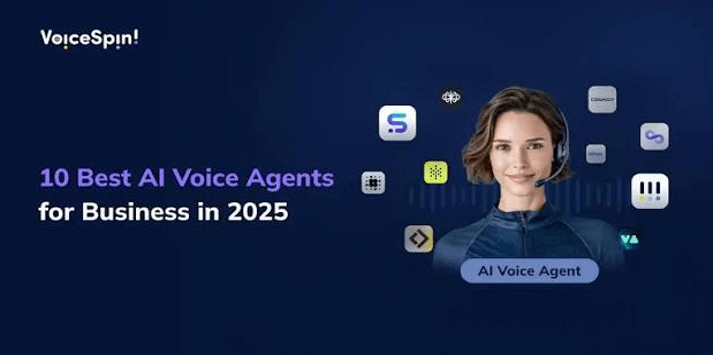
Ai voice agent for distributors
An AI voice agent for distributors is a conversational phone system that can interact with customers and sales accounts without requiring an employee to answer every call.
A distributor might use one to handle requests such as:
- “I need to reorder the same filters as last month.”
- “Do you have this part in stock?”
- “What is my account balance?”
- “Can you send me a quote for 50 units?”
- “Where is my order?”
- “Can I change tomorrow’s delivery?”
- “I need to speak to my account manager.”
The agent can collect the customer’s identity, account number, product information, quantity, delivery requirements and other relevant details before either completing the workflow or transferring the conversation.
The important distinction is between an AI voice agent and a conventional automated phone tree. A phone tree directs callers through predefined menus. A conversational agent can understand natural-language requests and determine which workflow should happen next.
For distributors, that makes voice AI particularly useful for repetitive inbound calls where customers already know what they want.
What is an ai voice agent?
An AI voice agent is software that can have a spoken conversation with a caller, interpret what the caller wants, retrieve or collect information, and take predefined actions.
Unlike a traditional IVR, an AI voice agent does not necessarily require callers to navigate a rigid menu. Modern voice-agent platforms combine speech recognition, language models, text-to-speech and business integrations to create a conversational workflow.
A distributor could therefore configure an agent to recognize an intent such as “place an order,” then ask for the customer number, product, quantity and delivery requirements.
The agent can then either:
- Complete the transaction through an integrated system.
- Create an order or sales opportunity for an employee to review.
- Transfer the caller to the appropriate department.
- Schedule a callback.
The fourth option is particularly useful when the AI cannot safely complete the transaction.
What are ai voice agents?
AI voice agents are conversational software systems that use voice as the primary interface for completing business tasks.
For distributors and wholesalers, the most useful applications tend to fall into four categories: order taking, customer service, sales qualification and routing.
Order-taking agents can capture repeat orders and routine purchases. Customer-service agents can answer delivery, account and product questions. Sales agents can qualify new accounts before sending them to a salesperson. Routing agents can determine whether a caller belongs with sales, customer service, accounts receivable, logistics or technical support.
This means distributors do not necessarily need one AI agent to handle every call. Separate workflows can be created for different call types, with clear rules about which actions the AI can perform.
What are conversational ai voice agents?
Conversational AI voice agents are voice systems designed to understand natural-language conversations rather than simply recognize keypad selections or fixed commands.
For a wholesaler, that difference is important because customers rarely phrase requests exactly the same way.
One caller might say, “I need another 20 cases of the blue ones,” while another might say, “Can you reorder what we bought last Tuesday?” A useful agent needs enough context and system access to determine what those requests mean.
The AI should not guess when important information is missing. It should ask a clarifying question or transfer the call.
For example, if a customer asks for “the usual order,” the system should identify the relevant account and previous order but confirm the products and quantities before creating a new order.
That confirmation step is essential for wholesale businesses because an apparently small transcription or quantity error can become an expensive fulfillment problem.
What is typical ai voice agent pricing?
Typical AI voice agent pricing varies significantly depending on whether the service charges by minute, call, usage, agent, or a combination of subscription and usage fees.
The underlying economics usually include several components:
- Monthly platform subscription
- Voice minutes
- Phone numbers
- Speech-to-text and text-to-speech usage
- AI model usage
- Integrations
- Call recording or storage
- Human-agent transfer
- Custom development
For a distributor, the most useful number is therefore not the advertised monthly subscription. It is the cost per successfully handled business interaction.
Suppose a wholesaler receives 2,000 inbound calls per month. If an AI agent can reliably resolve 40% of routine calls, the company needs to evaluate the cost of handling those 800 calls against the employee time that would otherwise be required.
The calculation should also include failed calls, transfers and orders requiring human correction.
A cheap voice agent that frequently misunderstands SKUs is not cheaper if employees have to repair its work.
What is the best ai voice agent platform?
The best AI voice agent platform for a distributor is one that can connect conversations to the company’s existing systems.
Platforms such as Vapi, Retell AI, Synthflow and Bland AI are examples of products that can be evaluated for voice-agent workflows, but they differ in how much development, integration and configuration they require.
Vapi is particularly developer-oriented and provides APIs and infrastructure for building voice agents with control over models, tools and integrations. Retell AI similarly focuses on building and deploying conversational voice and phone agents.
Synthflow is more oriented toward building voice workflows with less traditional coding, while Bland AI focuses on phone-based AI agents and automated calling.
For a distributor, however, platform reputation should come after integration requirements.
Before selecting a platform, determine whether it can connect to:
- ERP
- CRM
- Inventory system
- Order-management system
- Customer database
- Shipping system
- Calendar
- Knowledge base
- Human phone system
If the agent cannot access the information needed to answer the caller, it may become little more than an expensive automated answering service.
What is the best ai voice agent for business?
The best AI voice agent for business depends on the task being automated, but distributors should prioritize accuracy, integration and escalation over conversational novelty.
A good wholesale implementation should know which customers are authorized to order, which products they normally purchase, which information can be disclosed, and when an employee needs to intervene.
For example, the agent could handle a repeat order by identifying the account, confirming the product and quantity, checking relevant business rules and submitting the order.
But a request for a large new purchase, special pricing or an unusual product should be routed to sales.
This creates a useful division of labor: AI handles high-volume, predictable interactions while employees handle exceptions, negotiations and decisions requiring judgment.
What is the best ai voice agent for small business?
The best AI voice agent for a small distributor is usually the one that can be deployed without requiring a large development team.
A smaller wholesaler may not have dedicated engineers to maintain a sophisticated voice infrastructure. A platform with visual workflow tools, prebuilt integrations and straightforward phone setup can therefore be more valuable than a highly customizable developer platform.
Start with one repetitive workflow instead of attempting to automate the entire phone system.
Good candidates include:
- Reordering frequently purchased products
- Order-status requests
- Business-hours questions
- Delivery-status questions
- Appointment or pickup scheduling
- Basic lead qualification
- Routing callers to the correct employee
Once the system consistently handles that workflow, add additional capabilities.
How do I choose an ai voice agent agency?
Choose an AI voice agent agency based on its ability to understand your order process and integrate with your business systems, not simply on the quality of its demo voice.
Ask an agency to demonstrate a realistic scenario using your actual workflow.
For a distributor, the demonstration should ideally show a caller identifying themselves, requesting a product, specifying a quantity, asking about availability, and then either placing the order or being transferred appropriately.
Ask what happens when:
- A SKU is unclear.
- The requested quantity is unavailable.
- A customer is not recognized.
- A caller requests a special price.
- The customer changes the order.
- The AI cannot understand the caller.
- The caller asks for a human.
- The customer disputes an order.
A credible implementation should have explicit answers to each scenario.
Also ask who owns the integration, who monitors failed conversations and how changes are made when products, pricing or business rules change.
How does a retail ai voice agent help stores?
A retail AI voice agent can help stores answer product questions, provide opening hours, check order information, schedule services and route customers to staff.
The same concept applies to distributors, but the underlying data is usually more complex.
A retail caller might ask whether a product is available. A wholesale customer may need to know whether a particular SKU is available for their account, what quantity can be shipped, whether contract pricing applies and when the order can be delivered.
That means distributors need deeper integrations than a typical retail phone agent.
The opportunity is also greater because wholesale calls often contain structured business information that can be reused downstream. An AI agent that correctly captures account, SKU, quantity and delivery information can reduce the amount of manual re-entry required by sales or customer-service employees.
What should distributors automate first?
Distributors should automate the highest-volume, lowest-risk inbound calls first.
Repeat orders are an obvious candidate because the customer often already has an established account and purchase history. Order-status requests are another because the answer can frequently be retrieved from an existing system.
Product availability questions can also work well when inventory data is accessible and sufficiently current.
Avoid starting with complex negotiations, unusual orders or calls requiring significant judgment. Those interactions are better used to test the AI’s escalation process before giving it greater autonomy.
The goal is not to make the AI handle every call. The goal is to make sure every routine call gets an immediate, useful response while employees spend their time on exceptions and higher-value customer interactions.
Connect the voice agent to the order workflow
An AI voice agent becomes strategically useful for a distributor when it does more than answer the phone.
Start by identifying the ten most common inbound call types. Measure their volume, average handling time, business value and error tolerance. Then choose one or two workflows where the AI can reliably collect information or complete an action.
Connect those workflows to the ERP, CRM or order-management system where possible. Define exactly when the AI can act and when it must transfer the call.
Finally, monitor completed orders, transfers, failed calls and corrections rather than judging the system by call-answering rates alone.
For distributors and wholesalers, the real value of voice AI is turning inbound phone demand into structured, actionable business processes. The closer the agent is connected to ordering, inventory and customer systems, the more valuable it becomes.
Popular on OTW Right Now!


About The Author

Gagan Bhangu
Founder of otechworld.com and managing editor. He is a tech geek, web-developer, and blogger. He holds a master's degree in computer applications and making money online since 2015.