
Is Your Dog Bored at Home? 7 Signs They May Need More Activity and Social Time
Even if they’ve got a nice bed, a full bowl, and loads of toys, their day can still be rather quiet. They need more than just a safe place to be. They need time to sniff around, time to move about, time to work out little problems and time with people. If they don’t get that, then their behavior can be affected.
For owners who work long hours, arranging a more interesting daily routine can be difficult. Some families consider dog daycare as one way to add supervised activity and company during the day. Facilities such as Sweet Paws Retreat may be worth discussing as part of that plan, but the right choice depends on the dog’s personality, health, and comfort around other animals.
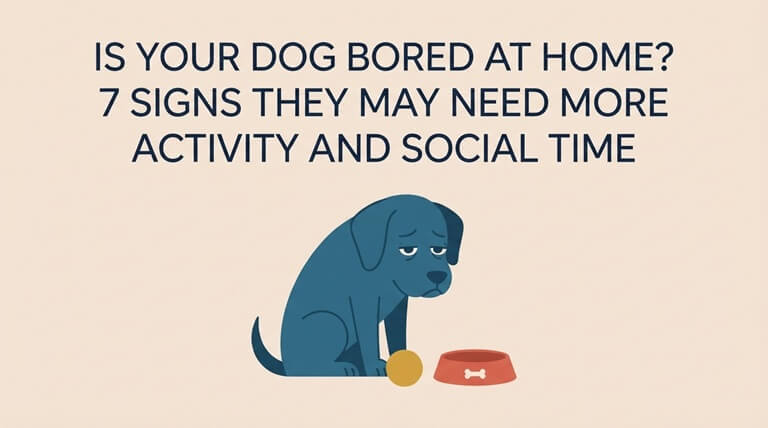
Boredom manifests in such diverse ways in different dogs. One dog may be chewing on the rug, another will be following you around the house, and yet another will spend hours just staring out of the window. Try to spot the pattern, consider the possible medical or emotional reasons, and alter your day-to-day routine before the little thing becomes a habit.
1. Your Dog Keeps Finding Things to Chew
If you find a chewed-up cushion or a chewed-up shoe, it can seem like your dog is being naughty. In fact they may just be trying to amuse themselves. Chewing is absolutely normal, particularly in young dogs and is more common when they have nothing else to do.
Pay attention to when the damage occurs. Is it typically during those long, quiet afternoons? Does your dog skip their normal toys and start looking for things that have a different texture or smell? Those could be the signs that your dog needs a better way of using their energy.
Give your dog safe chew toys of the right size and swap them out rather than leaving all the toys out at the same time. Food puzzles can be a good way to make snack time more interesting. If your dog is predominantly a chewer when left on their own (and they seem rather panicked and will actually try to get out of the room), then you should be having a chat with your vet or a behaviorist about separation issues rather than just thinking they’re bored.
2. They Follow You Everywhere and Demand Constant Attention
Some dogs just love being near their people. If, however, your dog is constantly pawing at you, nudging you, barking at you, or dropping their toys in your lap, then it could be that they simply don’t have enough to do on their own.
Before you sit down to focus, give your dog something to do. Scattering some of their food about for a sniff is one thing, practicing a few simple commands is another, or you could give them a puzzle feeder. Remember to reward them for being calm and independent rather than just for playing.
Having a regular schedule is also a big help. If your dog knows when to expect their walk, when to eat, when to be trained, and when to rest, they’re far less likely to be asking for attention all the time. If your dog suddenly becomes very clingy, it could be a sign of discomfort, of aging, or of anxiety, so be on the lookout for any other changes.
3. Small Sounds Set Off Long Barking Sessions
If your dog is barking for several minutes when a delivery van goes past, or a neighbor shuts a car door, the noise may genuinely be exciting or worrying them. If they’re spending a lot of time looking out of the window, then it can quite easily become their thing to do all day.
Try to minimize what sets your dog off when you can. Close the curtains or move their bed away from a busy window. Give them other things to do, like a short scent game or a training exercise that rewards them for looking at you.
Not every bark is a ‘do we need more exercise’ bark. Your dog may be barking out of fear, as a means of defending their space, at strange noises or just because they’re not comfortable. It’s far more useful to work out what the barking is actually in response to than simply to try and exhaust them.
4. They Seem Restless Even After a Walk
Your dog may just wander around the house, pick up a toy and drop it repeatedly or simply be unable to settle down after a walk. A walk may give them some exercise but not necessarily any mental stimulation.
Think about the difference between a quick walk around the block and a more leisurely walk where your dog can get properly sniffing. For a lot of dogs, sniffing is a big part of the outing. You can also introduce some variety with a short training game or by hiding some treats at home rather than just doing another long walk.
Restlessness can also be a sign that your dog is in pain, needs to go out, is too hot or too cold or has some other health issue. If it’s new, if it’s ongoing, or if it’s accompanied by panting, changes in appetite, or any other symptoms, then you should call your vet.
5. Their Play Gets Rougher as the Day Goes On
Some people will find their dog is a bit more mouthy, jumpy or wild in the evening. They might be grabbing at your sleeves, running around the house, not listening to you at all. That can be down to the day having been a bit dull, but it can also just be the dog being tired.
Rather than just trying to ‘cure’ every burst of energy with more exercise, think about your dog’s whole day. Have they had sufficient opportunities to move and explore? Have they also had sufficient opportunity to rest? Puppies in particular need more rest than you might think, even if they appear to be full of energy.
If your dog enjoys being with other dogs, then a well-run daycare can provide them with a whole new kind of activity. You need to find out how the staff group the dogs for play, watch their body language, give them breaks, and assist if one dog is getting a bit too much. More social time isn’t necessarily better for every dog. Some dogs would much prefer a bit of quiet time or to have one-on-one attention.
6. They Lose Interest in Their Usual Toys
It may seem like a basket of toys would keep your dog well occupied. If, however, the toy is always in the same spot and never changes in any way, then your dog may well lose interest in it. They’ll probably sniff it, walk away, and just sit and wait for something more interesting.
You don’t need to buy any new toys to keep things interesting. You can simply put some of the toys away for a few days and then bring them out again. Hide one of your favorite toys for a simple hide-and-seek game. Use part of your dog’s meal as a treat for a simple training exercise. Just pick something that’s appropriate for your dog’s ability and always keep an eye on them with anything they might have a go at chewing or swallowing.
If your dog suddenly stops playing altogether (and in particular if they’re also looking a bit tired, withdrawn and less interested in food), then you should seek veterinary advice. A loss of interest is a sign of illness rather than a sign that they just need more stimulation.
7. They Seem Uncomfortable With Ordinary Social Situations
A dog that’s never really met many new people or seen much of a different environment can find it very difficult when the normal routine is altered. They may be absolutely thrilled to see another dog, they may just hide behind their owner, or they may pull right on to go and meet the other dog.
These reactions don’t mean your dog needs to be in a big play group. You need to be very selective about the social experiences you provide, bearing in mind your dog’s age, their previous experiences, and their body language. For some dogs, a quiet walk near other dogs or a brief, relaxed visit with someone they know is quite sufficient and preferable to group play.
Before you sign up for dog daycare, find out if they do a temperament test and how they introduce the new dogs. Places like Sweet Paws Retreat will be able to tell you all about their routine and their level of supervision, but you need to make sure the place is suitable for your own dog.
Build a Better Day Without Filling Every Minute
You don’t need a complicated routine. Start with a few solid things: a walk with time to sniff around, a bit of training, a safe chew and some quiet time. Just change one element of the schedule at a time to see what makes the most difference.
If you’re unable to provide your dog with constant company or activity during the day, then look at the options that would be appropriate for your dog. That could be a dog walker you know and trust, a small group situation or in some cases even structured care. When you get in touch with Sweet Paws Retreat or any other such place, ask them about supervision, rest times, health rules, and how they deal with dogs who like a bit more space.
Most importantly, you’re looking for a dog that can have a good day and then settle down. Scratching furniture and barking at the window isn’t necessarily a sign of boredom and in many cases simply adding more activity isn’t the answer. By looking at what the behavior is actually responding to, you can make the right choices to enable your dog to be at ease in the long term.
Popular on OTW Right Now!
-
 How Roll-Off Service Keeps Roofing Cleanup Under Control
-
Planning AC Replacement Around Long-Term Homeownership and Changing Household Comfort Needs
-
 Why Shopping at a Furniture Store Makes Room-by-Room Design Easier and More Organized
-
Understanding Mobile Crushers and Mobile Crusher Plants: A Complete Guide



About The Author

Gagan Bhangu
Founder of otechworld.com and managing editor. He is a tech geek, web-developer, and blogger. He holds a master's degree in computer applications and making money online since 2015.