
Why Modern Gaming Laptops Are Replacing Traditional Desktop Workstations
People used to imagine a pro workstation as a big metal tower under the desk, complete with a raft of monitors and loads of cables. In the old days, laptops just weren’t up to the power or cooling of a big desktop. That’s all changed with the new mobile processors and graphics cards. Portable devices are now vastly more powerful. With the move towards more flexible working, there’s a growing demand for high-performance machines that you can take with you.
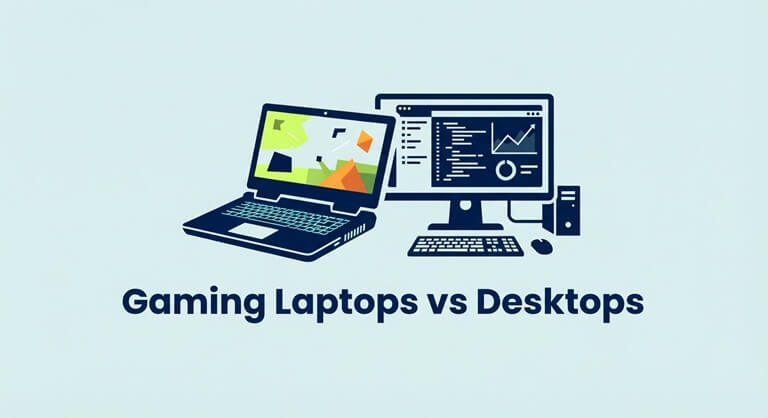
High-performance computing is moving on quite rapidly, actually. Mobile hardware is so powerful that laptops are now effectively replacing desktops. For the pro who also games, there’s very little reason to have a separate device for work and play. When evaluating the best gaming laptops Australia has to offer, modern buyers are increasingly looking for systems that completely eliminate the need for a secondary desktop rig.
The Financial Case for Consolidating Devices
The move to dual-purpose laptops is driven by broader economic trends and the ease with which you can source parts. In the current global hardware market, buyers want to get the most for their money. Major research firms are observing these trends closely, noting that worldwide PC shipments are forecast to decline alongside an increase in average selling prices due to component constraints, leading to shifts in the global PC market.
Hardware prices are rising, and as a result, both consumers and pro users are changing how they buy PCs. Rather than go for a basic laptop and a separate desktop, people are increasingly opting for a single, high-quality portable. The Australian PC market (about A$5.11bn) is growing as people want a powerful, flexible machine for working from home. The move to one device also eliminates the need to pay for two sets of software and to have two separate maintenance regimes.
What Makes Modern Laptops Desktop Equivalents?
The performance gap between desktop and mobile hardware has narrowed drastically over the last few years. Current-generation processors and mobile graphics architectures now deliver massive increases in rendering power at highly efficient power budgets. Furthermore, the inclusion of high-bandwidth memory ensures that data bottlenecks are kept to an absolute minimum during intensive tasks.
To truly replace a dedicated workstation, these modern portable machines rely on several key technological advancements:
- Dedicated AI hardware: New processors now have Neural Processing Units (NPUs) built in to handle the complex AI workloads on the laptop itself. That in turn saves battery and means you don’t need to go to the cloud.
- Advanced thermal management (vapor chamber cooling, liquid metal compounds etc.) means that the slim laptops can deal with high power without the resultant overheating or throttling. Performance stays consistent throughout long rendering sessions.
- High-speed storage: The best laptops these days will have a large PCIe NVMe SSD. That’s the kind of storage you need for smooth gaming and fast 4K video transfers.
- Professional Aesthetics: The leading brands have moved on to very sleek, minimalist designs. They’re the sort of laptop that looks great in a meeting and can also be used for gaming when you get home.
Navigating the Local Market for Dual-Purpose Machines
The creative and cultural sectors have a real demand for reliable, high-end hardware. Creative agencies, engineering firms and digital production houses all need the power of rendering. More and more of them are opting for portable laptops rather than workstations, as the laptops deliver the graphics you need at a much lower price point. Architects and engineers can now do real-time 3D walkthroughs for their clients on site (as opposed to having to go back to the office to do that).
Recent data indicates that many Australian businesses now use AI tools. Having a portable laptop with the requisite Tensor Cores for AI work is a massive advantage. The specialist hardware in these gaming laptops lets professionals using demanding software (3D animation, video editing, CAD, etc.) get their work done much faster.
If you are considering making the transition away from a bulky desktop tower, understanding what to look for when choosing a mid-range gaming laptop is crucial to ensure you get the right balance of GPU and CPU performance for your daily workflow. The key is to find a machine that offers high-color-accuracy displays alongside high refresh rates, ensuring the screen is as capable of color-grading a professional video project as it is of tracking fast-paced competitive matches.
The divide between pro workstations and gaming laptops is effectively non-existent now. With prices still very high and parts occasionally difficult to source, it’s entirely sensible to go with one very powerful machine for all your work. The current generation of top laptops have absolutely blistering graphics, AI features and superb cooling so they can cope with the most demanding jobs that modern professionals have to do.
Popular on OTW Right Now!



About The Author

Gagan Bhangu
Founder of otechworld.com and managing editor. He is a tech geek, web-developer, and blogger. He holds a master's degree in computer applications and making money online since 2015.