
How to Choose Noise-Cancelling Earbuds for Sleeping With a Snoring Partner
At a glance
- Fit first: Side-sleep comfort and a stable seal matter more than any single noise feature.
- Match the snore: Steady low rumble calls for sleep-focused ANC plus isolation. Changing peaks need adaptive snore masking.
- Mixed bedrooms: Snoring plus HVAC or traffic often needs isolation, ANC, and masking together.
- Side sleepers: Look for a low-profile shell, soft contact surfaces, and multiple tip and wing sizes.
- Honest limit: Purpose-built sleep earbuds can reduce disruption from light-to-moderate snoring. They do not erase every snore.
When you share a bed with someone who snores lightly or moderately, noise cancelling earbuds for sleeping help most when they stay comfortable all night. Comfort and a good seal are the key things to look at first, then you can match the earbuds to your particular noise pattern. This guide will walk you through how to select the right features, how to check the fit for side sleeping, a simple checklist to use and how to compare your own requirements to those of earbuds specifically designed for partner snoring and overnight use.
Note: This content is for informational purposes only and is not intended as medical advice. Individual results may vary. If you experience chronic sleep issues, consult a healthcare professional.
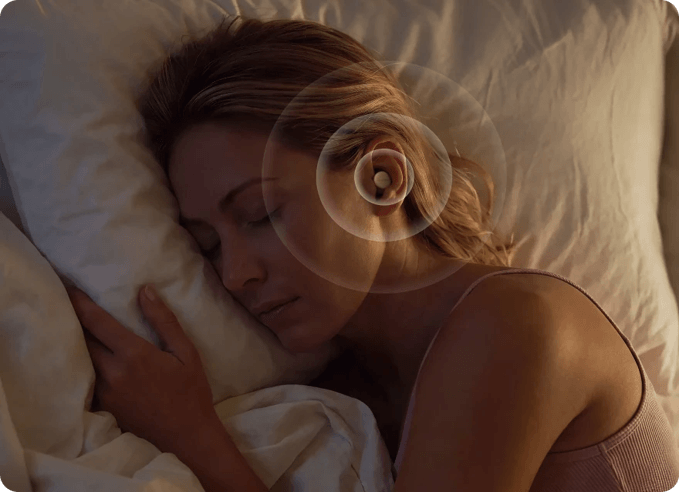
Key buying factors for sleeping with a snoring partner
Use the table below as a first pass. Pick the row that sounds closest to your nights, then check the buying points before decide what to buy.
| Use case | What the noise does | Prioritize | Buying check |
| Steady, continuous low snoring | Volume and rhythm stay fairly stable | Sleep-focused ANC plus passive isolation | Low-frequency handling, seal stability, real-mode battery life |
| Snoring that rises and falls | Sudden peaks and irregular gaps | Adaptive snore masking plus isolation, with ANC as needed | Response to changing snore patterns, night controls, all-night comfort |
| Snoring mixed with HVAC, traffic, or room hum | Steady background plus intermittent peaks | Isolation, ANC, and masking used together | Whether the three methods work in one routine, mode switching, seal under pillow pressure |
| Mostly side sleeping | Pillow presses sideways on the earbud | Low-profile shell, soft contact, stable fit | Shell height, tip and wing options, seal after you roll over |
A short noise log helps more than guessing from memory. Note whether the sound stays even, jumps in volume, or rides on top of an air conditioner or street noise. That pattern, plus how you sleep, should drive the feature list. Purpose-built sleep earbuds are made for overnight seal and bedroom noise, so use that category when daytime buds keep pressing into the pillow or slipping after you roll.
ANC, adaptive snore masking, and passive noise isolation
Passive noise isolation
Passive isolation is simply blocking the noise out physically with the right tips, wings and a good fit in the ear. A good seal will keep out more of the outside noise. The first thing you’ll usually notice when you have the right tip size is a reduction in the soft bedding noise and the sharper elements of a snore.
If the seal is poor you’ll have both sound leaks and comfort problems. If the tip feels tight but you still have noise leakage then it’s likely the wrong size. Don’t just push the earbud in further to try and get a better seal.
Active noise cancellation for sleep
ANC (active noise cancellation) works by using mics and processing to cancel out some of the incoming sound. It’s at its most effective at night with the constant low frequency type of noise (traffic, appliance hum, the constant sound of snoring etc).
ANC doesn’t cope well with sudden loud noises. If the snoring changes in volume or timing then the ANC may reduce the background noise but won’t stop the sharp bursts. That’s why you typically need masking in addition to ANC and isolation.
Adaptive snore masking
Adaptive snore masking plays a soothing audio that tracks the changes in snoring so the irregular sound is less likely to be noticed. It is not white noise in any sense and is not a medical treatment for snoring or sleep apnoea. If the snoring is extremely loud or is accompanied by apnoeas, gasping or significant daytime sleepiness then that should be treated as a health issue to be investigated first rather than simply turning up the masking. [Source: NHLBI, nhlbi.nih.gov, Sleep Apnea]
Good masking should be just loud enough to take the edge off the difference between snoring and silence. If you’re finding yourself concentrating on the masking then try reducing the volume or switching to a different track.
What side sleepers should look for in sleep earbuds
Pillow pressure is a common reason why day time earbuds don’t work so well at night. A tall earbud will press into your ear and a tip that fits when you’re sitting up may well have come loose when you’ve rolled onto your side.
Look for a low profile, soft surfaces and sufficient tip and wing sizes to be able to adjust each ear. Get the tip size that gives the best seal and then use the wings to keep the earbuds in place. A wrong tip size will be no good at all with a tight wing.
Run a simple fit test before you judge the noise features:
- Fit one ear on its own. Left and right typically require different tip sizes.
- Sit up properly long enough to confirm you have a light, stable seal without any sharp pressure.
- Lie on each side for about 10 minutes on your usual pillow. Check for shell contact, tip slip and seal change after you’ve rolled.
- Change one variable at a time: adjacent tip size, insertion angle or pillow contact.
Comfort is down to your ear shape, the firmness of your pillow and what’s right for you. There’s no one sleep earbud that will fit every side sleeper in the same way.
Noise-cancelling sleep earbuds buying checklist
Remember your snore pattern from the buying factors table. An earbud is a good option if it ticks most of the boxes in that list during the night:
- Side pressure: after about 10 minutes on your normal pillow the earbuds should be stable and not be digging sharply into your ear.
- Seal options: Tips and wings will give you a light seal even after you’ve rolled over. If you’re down to just one size then that’s a red flag.
- Noise methods: the earbuds should have the range of features you need to cover the mix of passive isolation, sleep noise reduction and adaptive snore masking etc. depending on your nights.
- Battery: The stated sleep or overnight modes will cover your time in bed (not just your daytime listening time).
- Night controls: you should be able to use the alarms or sleep audio without having to go and unlock your phone every time you go to bed.
- Aftercare: make sure the cleaning is easy, that you can source replacement parts and that there’s a clear return policy in place before you buy.
For a wider feature walkthrough after this checklist, see noise-cancelling earbuds for sleeping.
A purpose-built sleep earbuds option for a snoring partner
Anker soundcore Sleep Earbuds 4 is built for the same reader this guide targets: someone sharing a bed with light-to-moderate partner snoring, sleeping on their side, and needing overnight noise control that stays usable after lights out.
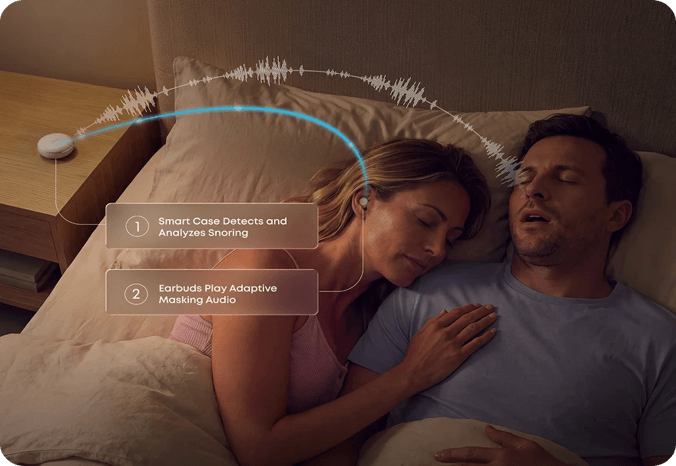
Fit decides whether those tools still work after you roll onto a pillow. Tailored comfort for side sleepers uses a layered comfort-and-fit design meant to reduce common pressure points during overnight side sleep, so the seal that supports isolation and masking is less likely to fail when the pillow presses sideways.
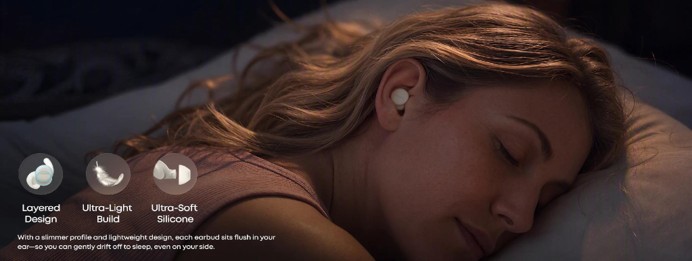
Before you buy, take a look at the overnight features as they’ll make your routine so much easier. The Soundcore app has a built in audio library (no additional subscription required) so you can use all the relaxing sounds without having to pay for another app. There’s a personal alarm which will gently wake you in your ear rather than a harsh phone alarm. You can stream any audio you like via Bluetooth 6.0 and of course there’s wireless charging so your case is always ready for the next night.
Conclusion
When it comes to selecting noise cancelling sleep earbuds for a snoring partner you need to ensure they are comfortable and will actually form a good seal over the ear during the night. Then you need to match the type of bedroom noise (steady, changing or a mix of both) to the appropriate level of isolation, ANC and adaptive snore masking. This is all good advice for light to moderate snoring. If you have very loud snoring or any health concerns at all then you should see a doctor rather than simply go out and buy some new earbuds.
If you’re after a sleep focused option then give the Anker Soundcore Sleep Earbuds 4 a go and see if their fit and noise cancellation are any good in your actual nights.
Frequently Asked Questions
Can noise-cancelling earbuds block out snoring completely?
No. Don’t expect earbuds to totally eliminate snoring. The aim is to reduce the number of times you wake up from light to moderate snoring as a result of good seal, good isolation, good ANC and good masking working in concert. If the snoring is really bad or you’re experiencing any breathing issues then you need to reconsider your approach rather than simply turn the volume up.
ANC or adaptive snore masking: which should I prioritize for a snoring partner?
Start with the feature that matches the sound that wakes you up with. If your nights are predominantly low rumbles then go for the sleep focused ANC once you’ve got a good seal. If it’s the sudden peaks that wake you then try the adaptive snore masking first. Always have isolation on as a poor seal will render both of those features pretty much useless.
What should side sleepers check before trusting overnight comfort claims?
Don’t just go on how the earbuds feel when you’re sitting or on the marketing photos. During the return period, test them out lying on your side with your normal pillow, check for pressure points when you roll and make sure you’re using the tip and wing sizes that give you a good seal without any pinching. If they only feel good when you’re upright then the overnight comfort claim hasn’t been validated for you at all.
Can regular wireless earbuds replace purpose-built sleep earbuds?
You can try regular wireless earbuds for a short time, but they’re usually not made for sleeping. They often don’t handle pillow pressure, long wear, sleep audio, or in-ear alarms well. If you notice discomfort, battery issues, or awkward controls at night, switch to earbuds made for sleep instead of using your regular pair.
Popular on OTW Right Now!




About The Author

Gagan Bhangu
Founder of otechworld.com and managing editor. He is a tech geek, web-developer, and blogger. He holds a master's degree in computer applications and making money online since 2015.