
How Local IT Support Helps Businesses Stay Secure and Productive
Technology has now become a crucial component of virtually all organizations.Employees use computers, cloud computing applications, email, network systems and other elements of technology in carrying out their activities. In so far as all these activities proceed well, there is a guarantee that there will be no interruption of activities from the part of employees and thus provision of services without any hindrances.
This explains why many companies have understood that they cannot afford to remain with reactive IT support but instead need proactive technology management.
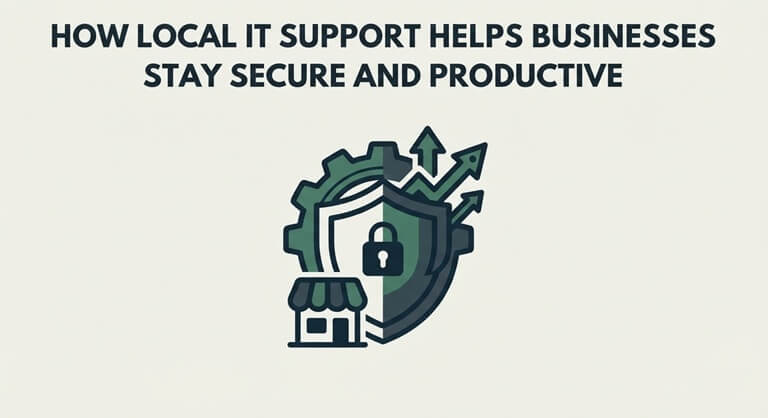
Why Reliable IT Support Matters
Businesses can lose precious time when their workers cannot access programs, connect to networks, retrieve their files, or even contact customers.
Constant technical issues will put extra stress on the employees within a company, especially if they are already extremely busy.
IT support services allow companies to create a better technological infrastructure that includes maintenance, updates, monitoring, back-ups, and troubleshooting.
However, the goal is not only to fix computers. IT environment should help with the business itself, secure data, and leave space for future development.
The Value of Local IT Expertise
Sometimes, location is an important aspect when choosing an IT service company. Companies may need local presence sometimes to get on-the-spot help with any issue related to their hardware, network, infrastructure, or some other issue that cannot be solved remotely.
Partnering with an IT company White Plains A local IT company could not only help companies remotely but could also understand their needs more than others because of the geographical location of both.
For example, Cloud 9 claims that their services in White Plains include managed IT, helpdesk support, network management, cybersecurity, data backup, disaster recovery, and IT consulting.
Managed IT Services and Proactive Monitoring
A key difference between conventional break/fix services and managed IT services lies in the prevention aspect.
In contrast to break/fix services which require end-users to identify an issue first before contacting the service provider, the managed service providers have the ability to monitor the system and infrastructure consistently. This gives them the chance to detect problems early and address them without causing major disruptions.
Some of the actions that can be taken through proactive management include software updating, patching, network monitoring, performance testing, backup management, and maintenance among others.
Cybersecurity Should Be Part of the IT Strategy
There is also the issue of cybersecurity, which is very vital to any organization. There is daily handling of customer data, financial data, employee data, corporate documents, and many other kinds of information.
A good cybersecurity policy can incorporate things such as endpoint protection, email security, firewall, access control, cybersecurity monitoring, training of employees, and updating regularly. The need for backups and disaster recovery is also vital since security issues can at times lead to lack of access to files and other systems.
White Plains IT services provided by Cloud 9 include cybersecurity, backups, disaster recovery, and networking among others.
Supporting Employees More Effectively
Employees are not always equipped with the technical expertise that would enable them to solve all IT problems on their own. Sometimes, even trivial problems could take up a lot of time if employees try to sort them out without help.
A specialized help desk enables employees to go to one place for reporting any technical problems. The IT experts could then either investigate the problem, give instructions, perform remote access of systems, or come down for on-site service.This could prove helpful for technical support.
IT Support for Growing Businesses
Technology requirements evolve as an organization evolves. Organizations can hire more people, build another office location, adopt new software, go cloud, or increase their cybersecurity requirements.
IT partners will help organizations plan for these technology requirements rather than plan on making these requirements at the last minute. Strategic IT consulting might involve technology infrastructures, technology roadmaps, budgets, clouds, and security.
The scalability of the technology solutions is especially significant since a solution that might work with a smaller group will not necessarily work when an organization has grown.
Boston Businesses Also Need Consistent Technology Management
Such issues are applicable to businesses involved in business technology sectors as well. Businesses require dependable networking, a secure system, efficient technical assistance, and a technology approach that is in line with their requirements.
An IT services provider Boston company in Boston for a business to consider will provide managed services that focus on monitoring, cybersecurity, troubleshooting, and technology planning.
According to TrnDigital, its Boston managed IT services encompass proactive IT management, cybersecurity, local support, and consultation by technical specialists and solution architects. The company’s service model highlights predictable monthly cost and management.
Industry-Specific Technology Requirements
Every business does not need the same IT needs. The IT needs of one healthcare company might be different from that of a manufacturing company. There could be other industries like financial services, professional services, and non-profits with different IT needs too.
This means IT support should consider the industry type, manpower, infrastructure, software applications, and security considerations of the organization.
TrnDigital says that the IT services it offers in Boston cover businesses within various industries including healthcare, biotech, and life sciences.
Remote, On-Site, and Hybrid Support
Modern IT support does not necessarily have to include a physical visit by IT specialists. Indeed, many problems can be fixed without any physical presence in the office.
Yet there are cases when a specialist should come to the place of work. It can be hardware installation or other technical problems that need direct intervention of the engineer.
A blend of remote monitoring and physical assistance if necessary will provide companies with some kind of flexibility.
Planning for Business Continuity
Unexpected events may occur at any point in time. It may be an issue with hardware, software, cyber attacks, power failure, or any other event, which may not allow access to vital technology by the employees.
The concept of business continuity planning is useful for getting ready for such events. Having dependable backups, recovery processes documented, having a redundant system in place, and conducting tests regularly can help recover from such events.
It is not about expecting such an event to not take place. It is rather preparing oneself for such an event in case it takes place.
Choosing an IT Partner
Before choosing an IT service, businesses should ask themselves many questions. What kind of service do they provide Is there any support during office hours Do they have a cybersecurity and backup system Is it possible for the service to scale up as a company develops Is there any on-site service.
It would be helpful to know how communication, monitoring, maintenance, security, and emergency support work. Service structure might give companies some clues about their future cooperation with the IT department.
Final Thoughts
Technology that is reliable is now imperative to any business in the contemporary world, where everything from daily assistance to employees to cybersecurity and cloud services, network management, and disaster recovery falls within the scope of influence of IT infrastructure.
Regardless of whether a business is situated in White Plains, Boston, or some other business hub, proactive IT management may help to develop a more stable and organized environment of technology.
The correct approach in terms of technological support should account for both current requirements and the potential changes of the future.
Popular on OTW Right Now!


About The Author

Gagan Bhangu
Founder of otechworld.com and managing editor. He is a tech geek, web-developer, and blogger. He holds a master's degree in computer applications and making money online since 2015.