
What PhotoGPT AI Pose Generator Solves: The One-Shot-to-Many Problem in Ecommerce Photography
Every ecommerce product page faces the same structural tension: the buyer needs to see the product from multiple angles, in multiple contexts, and at multiple scales — but the seller can only afford to photograph a fraction of those views. This gap between what the buyer needs and what the seller can produce is the fundamental problem that limits conversion rates across online retail. PhotoGPT AI Pose Generator addresses this directly: it takes a single product image. It produces a set of variations showing the item from different angles, in different poses, and in different contexts. PhotoGPT AI Pose Generator changes the cost structure of image variety, making thorough visual coverage economically feasible.
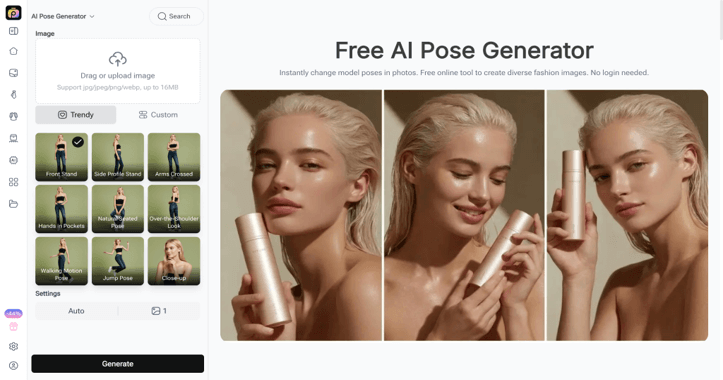
Defining the One-Shot-to-Many Problem
The one-shot-to-many problem refers to the difference between the number of different visual representations a product page requires and the number that a seller can practically create. It is caused by three crossed constraints. Cost per image: In-house photography, an agency, or freelance; each image angle only costs a little bit more, which adds up over hundreds or thousands of SKUs. Time per shoot: each photography setup involves setting up, light adjustment, and test shots, which takes days, and during which time the products are not live and aren’t generating revenue; with 100 products and 6 angles, you get days for each angle. Model availability: when models are needed for certain categories, shooting schedules are based on talent availability, creating scheduling conflicts that make it impossible to accelerate production even if budget permits.
Why Missing Angles Cost Sales
If there are just two or three pictures displayed on a product page, the buyer has less than full information upon which to make a purchase decision. The product images enable the buyer to respond to an entire string of unspoken questions: What does it look like from the front? From the side or back? What is its size relative to a person? How does it look when it is being used? What is it made from? How is it made? What is the texture of it? An unanswered question cannot be an opportunity to be optimistic. For ecommerce, a lack of confidence results in page abandonment or going to another listing that provides more answers. A 3-image page on a product has fewer questions answered than a 7-image page on a product. There is a measurable and, in most categories, significant difference in the number of people converted.
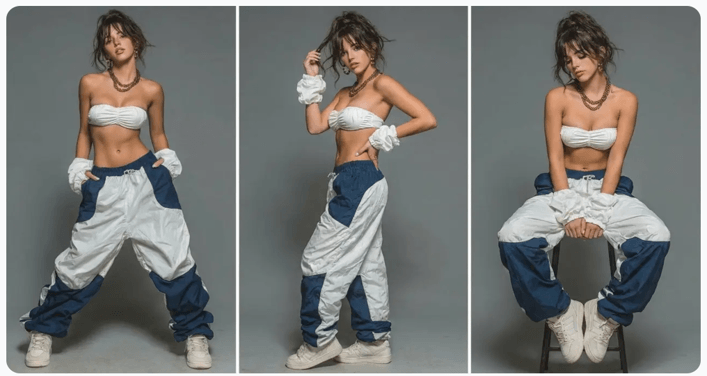
How AI Pose Generation Solves It
One-shot-to-many transforms the costs of image variety. The cost of incorporating a further angle into the production is approximately the same as the first angle, but it is essentially zero after the source image is created. The seller takes a photo of a dress from a forward-facing viewpoint on a mannequin. It takes just one photo to create a three-quarter-angle view (side drape and sleeve detail), a back view (back design and closure detail), a side view (skirt volume and movement), and a detail shot of the fabric pattern or neckline construction.
Context expansion is similar — one shot of a product on white creates images of the product in various lifestyle contexts. A chair that was shot on white turns into a chair in a home office. A yoga mat is displayed in a bright room, surrounded by sunlight, with a person practicing a yoga pose. Products available in multiple colors produce multiple color variants from a single well-shot base image, resulting in a consistent visual appearance of the color variant set. This can be particularly helpful for footwear and accessories where color is all that really distinguishes one item from the other.
Practical Limitations
It is best suited to those situations in which the base image is of high quality, the product has a specific physical shape, and the modifications to the image are of a familiar angle and context, but do not actually alter the product. It is less effective when transparency is complex, mechanical details change with the angle, and texture is the product’s most important attribute. A one-shot-to-many approach works best when it adds the most value in supporting images, rather than in images that are part of the brand’s visual identity, such as hero shots. The image for the hero should be the seller’s most creative representation. Those are the extra angles that help keep the buyer on the page and help them gain confidence to buy the product — these are the ones that are most practically giving computational generation the most benefit.
Conclusion
One of the biggest challenges for ecommerce photography is the one-shot-to-many issue. Even every seller understands that the more pictures you have, the more conversions you will see; however, the standard pricing model of photography is not particularly inexpensive. With AI pose generation, the number of images doesn’t need to be tied to the cost of production, allowing sellers to add the depth of visuals that used to only be available to bestsellers with the most robust photo shoots. PhotoGPT (https://photogpt.io/) provides the platform for this approach.
Try AI Pose Generator on PhotoGPT: https://photogpt.io/ai-pose-generator
Popular on OTW Right Now!


About The Author

Gagan Bhangu
Founder of otechworld.com and managing editor. He is a tech geek, web-developer, and blogger. He holds a master's degree in computer applications and making money online since 2015.