
Personalisation in Omnichannel Marketing: Creating Better Customer Experiences
Introduction
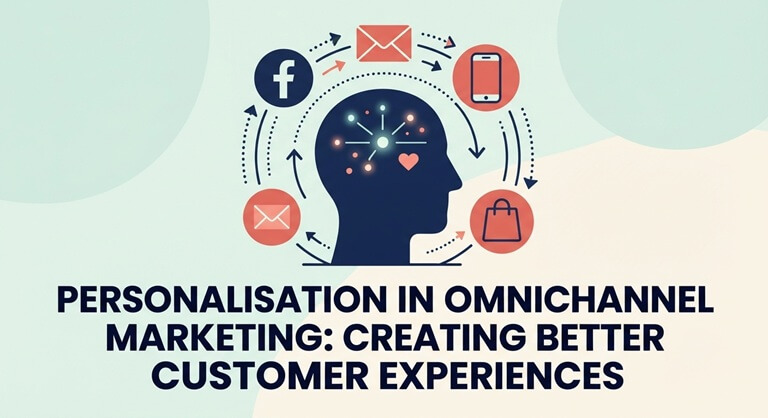
Today, customers engage with brands through websites, mobile applications, social media platforms, email, brick-and-mortar stores, and other digital touchpoints. Customers expect all these interactions to be seamless as opposed to disjointed. Through omnichannel marketing, companies can craft a seamless customer experience by connecting channels and leveraging customer data to customize interactions.
Personalization has been a significant aspect of the strategy. Instead of sending the same message to everyone, a company can use behavioral, demographic, and transactional data to learn customer preferences. Personalization coupled with connected channels allows companies to offer timely and relevant experiences to customers.
Why Personalization Matters in Omnichannel Marketing
Today’s customers produce substantial data in the process of searching, purchasing, visiting websites, using mobile applications, engaging in emails, and socializing online. Firms can use this data to understand customers’ interests and where they are in the buying process. Through omnichannel marketing, companies are able to utilize such insights in their work through several channels instead of storing such information in silos by channel.
For instance, a client who views a product on a company’s website but does not purchase may later receive a personalized reminder email, while the firm’s mobile app presents recommendations for it.
How Omnichannel Marketing Uses Customer Data
Personalization starts with accurate, accessible customer data. Information can be gathered through customer relationship management systems, websites, apps, loyalty programs, emails, and sales transactions. When all these are combined, it helps get a better understanding of customers’ behavior and preferences.
In omni-channel marketing, the data can be used to figure out what the customer requires throughout the entire process. For example, transaction history helps the retailer suggest related items, whereas browsing helps determine which category is needed next. The aim is not just to gather information, but to turn it into customer experiences.
Creating Consistent Omnichannel Marketing Experiences
Personalization efforts do not have to be abandoned once the customer switches from one channel to another. For example, if a customer receives a personalized suggestion by email, they would expect to find related information when visiting the website or mobile app. This kind of continuity might make communication easier.
A company could make use of omnichannel marketing tactics to synchronize content, offers, suggestions, and customer service activities between channels. A customer might first check product information on social media, then browse the website, ask questions through customer support, and finally buy the product in a brick-and-mortar store.
The Role of AI in Omnichannel Marketing Personalization
Artificial intelligence is driving a growing trend toward personalized customer experiences. The technology is capable of analyzing data sets, finding behavioral patterns, predicting customers’ interests, and making recommendations. This will ensure that companies move past segmenting and develop experiences based on individual behavior.
AI could help in omnichannel marketing by determining what products are preferred by customers, what messages would be relevant for them, and when the communication needs to be sent out. For example, an online retailer might use predictive systems to recommend products based on past behavior.
Personalized Content Across Omnichannel Marketing Channels
Personalization is different through various channels. Email personalization could include personalized content based on names, purchase history, product interests, and engagement with the company. Websites can display personalized recommendations, while mobile apps can offer location- or behavior-based content when it fits.
Targeted communication on social media may also depend on the interest of the particular audience and their engagement level. The omnichannel marketing strategy ties all these efforts together and avoids considering each customer as a new audience whenever they move from one channel to another.
Benefits of Omnichannel Marketing Personalization
Personalized experiences can offer several advantages for businesses and consumers. The latter would be able to find relevant products or other information much more easily without the need to spend too much time browsing large product catalogs. It will also help to better engage consumers through communication based on their interests.
Customer retention is another possible advantage of omnichannel marketing. Consumers could form a stronger relationship with a brand due to the consistency and relevance of interactions that they have with it.
Challenges of Personalization in Omnichannel Marketing
However, personalization can present difficulties as well. Companies require accurate data, appropriate technologies, competent personnel, and an approach that will enable them to use customers’ data efficiently. Data scattered over separate systems can complicate the process of grasping the customer’s journey as a whole.
Another aspect to take into account is privacy. Customers might feel uneasy if companies seem to know too much about them. This means omnichannel marketing must balance relevance with proper data handling.
Measuring Omnichannel Marketing Personalization
Organizations must assess how much personalization has improved their marketing efforts and customer experience. Some key metrics include conversion rate, click-through rate, customer retention, customer satisfaction, engagement, and average order value.
Instead of assessing individual channels separately, organizations can assess how customers navigate between different channels. Omnichannel marketing analytics will help in determining the channels that lead to conversions and the channels where customers face issues.
Building a Future-Ready Omnichannel Marketing Strategy
Personalization goes beyond including a customer’s name in an email. It involves understanding a customer’s intentions, bringing together relevant information, coordinating communications, and continually looking for ways to improve their experience. Personalization should be based on valuable customer insights rather than over-targeting.
The future of omnichannel marketing will include AI, predictive analysis, automation, real-time data, and customer journey intelligence, among others. Technology is supposed to be in support of customer experience and not take its place. By combining valuable personalization with consistency, transparency, and convenience, brands can build better customer relations.
Conclusion: The Future of Omnichannel Marketing Personalization
Customer experience is becoming a critical part of modern marketing because customers expect brands to understand their preferences and provide information without making them repeat their requirements across channels.
Omnichannel marketing, which connects customer data, technology, content, and communication, allows companies to create more cohesive experiences for customers. When personalization is done responsibly, it helps customers find the right product, receive relevant communications, and move seamlessly between the virtual and physical worlds.
The most successful methods will, thus, concentrate on adding value for customers through every stage of their journey. By combining cohesive experiences with responsible data and relevant personalization, companies can develop a customer-first approach.
Popular on OTW Right Now!




About The Author

Gagan Bhangu
Founder of otechworld.com and managing editor. He is a tech geek, web-developer, and blogger. He holds a master's degree in computer applications and making money online since 2015.