
Protecting Your Palms: How to Choose, Size, and Break In Gymnastics Hand Guards
Table of Contents
- The Evolution of Hand Protection in Modern Gymnastics
- Deciphering the Anatomy of a Gymnastics Grip
- Selecting the Right Style for Your Event and Level
- Precision Sizing: The Foundation of Safety and Performance
- The Art of the Break-In Process
- Maintenance and Longevity: Caring for Your Leather
- Signs It Is Time to Retire Your Grips
- Mastering the Transition to Professional-Grade Equipment
The Evolution of Hand Protection in Modern Gymnastics
Gymnastics is a sport defined by the constant battle between gravity and grip. As athletes progress from basic swings to high-flying releases, the friction generated between the skin and the wooden or fiberglass rail becomes immense. This friction often leads to rips, which are painful tears in the superficial layers of the skin. While some see these as a rite of passage, professional coaches understand that consistent training requires reliable hand protection.
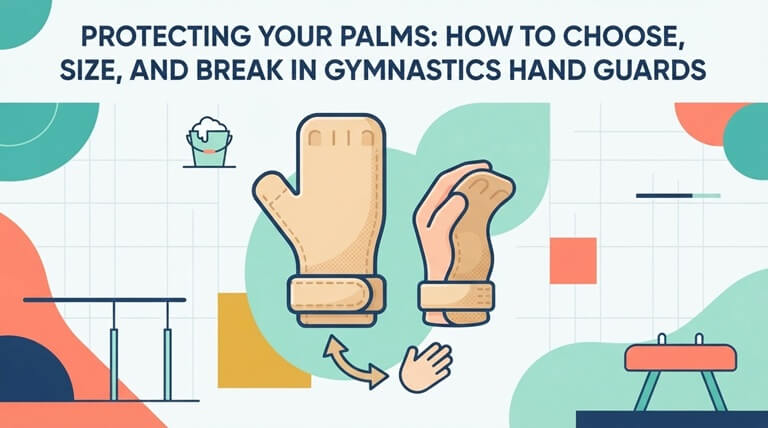
Modern gymnastics hand guards have evolved significantly from the simple pieces of leather used decades ago. Today, they are precision-engineered tools designed to create a mechanical advantage. By using a dowel, a small rod placed across the fingers, the guard allows the gymnast to hook onto the bar literally. This reduces the amount of grip strength required to stay attached during high centrifugal force movements like giants or Kovacs releases. Understanding this technology is the first step toward choosing the right equipment for your competitive journey.
Deciphering the Anatomy of a Gymnastics Grip
Before making a purchase, it is vital to understand the individual components that make up a high-quality hand guard. The primary material is almost always high-grade leather, but the thickness and texture can vary wildly between brands. A thicker leather provides more durability but requires a significantly longer break-in period, while thinner leather offers immediate feel but may stretch faster under heavy use.
The three main components are the palm piece, the dowel, and the wrist closure. The palm piece is the long strip of leather that covers the hand. The dowel is the small cylindrical piece sewn into the top, which is what actually catches the bar. Finally, the wrist closure can be either a buckle or a hook-and-loop strap. Buckles are often preferred by elite athletes for their security and lack of stretch, whereas hook and loop systems offer quick adjustments between sets. When you are looking for top-tier options, Gymnastics Express provides a wide range of these variations to suit different hand shapes and preferences.
Selecting the Right Style for Your Event and Level
Not all hand guards are created equal, and using the wrong type for your specific discipline can be dangerous. Women competing on uneven bars typically use a three-finger grip, which provides a wider surface area to cover the palm during complex transitions between the low and high bars. Men, conversely, require two different types of grips depending on the apparatus.
For the high bar, men use a thin two-finger grip with a large dowel to facilitate the massive swing speeds required. For the still rings, the leather is significantly wider and thicker to handle the intense pressure of strength holds and swinging elements. Beginner gymnasts who are not yet performing circles or clear hips may start with palm protectors, which lack a dowel entirely. These are designed purely to prevent blisters rather than to provide a mechanical hook. As the athlete advances, upgrading to a professional model from a trusted supplier like Gymnastics Express ensures the equipment can handle the increased load.
Precision Sizing: The Foundation of Safety and Performance
The fit of the hand guards is the most important factor. If the grip is too small, it will draw the fingers down and hinder movement; if it is too large, a dangerous condition called grip lock can occur. Grip lock is when too much leather accumulates and wraps around the bar and could cause the gymnast to become stuck to the rail during a rotation and result in serious injury.
The proper way to measure is to use a ruler from the bottom of your palm (at the first wrist crease) to the tip of your middle finger. Most manufacturers have specific charts that are based on this measurement. Keep in mind the leather will stretch over time. When in between sizes, it’s usually best to get the smaller size (as long as your fingers fit through the holes). Using Gymnastics Express brand sizing is the key to your journey to Protecting Your Palms: How to Choose, Size, and Break In Gymnastics Hand Guards and having a great first day.
The Art of the Break-In Process
New leather is quite stiff and feels like wearing parts of plywood on hands. The break-in process should never be rushed, and new grips should never be introduced for the first time at competition or when attempting a new, higher-risk skill. The aim is to give the leather a tannery suppleness so it can be wrapped around the bar without losing its strength.
- Soften the leather by gently rolling the palm piece back and forth. Avoid using water or oils, as these can break down the fibers and cause the leather to stretch prematurely or even rot.
- Use sandpaper or a grip brush to roughen the surface lightly. This helps the leather hold chalk more effectively from the very first swing.
- Wear the grips for basic movements first. Start with simple hangs, then progress to basic swings and kips.
- Gradually increase the intensity of your workout over two weeks until the leather has molded to the specific shape of your hand and the bar.
Maintenance and Longevity: Caring for Your Leather
Taking care of your grips every day is the best way to make the most of your investment. Leather’s No.1 enemy is sweat. Over time, the material can become brittle and cracked due to the salts and moisture. Your gym bag should be emptied of your guards after each practice to allow them to dry out. They’re better stored in a mesh bag, which lets air in, than a plastic bag.
You should also regularly inspect the finger holes. If they’re too constricted, you can gently expand them with a small piece of sandpaper around a pencil. Avoid cutting the leather with scissors as it will make a weak point and is liable to tear when stretched. Many athletes can benefit from wearing high-quality wristbands under their wrist guards, as this helps to absorb sweat and offers a more stable base. By buying these accessories from Gymnastics Express, you can ensure that you have a uniform and professional hand protection system.
Signs It Is Time to Retire Your Grips
All pairs of hand guards come with an expiration date. This varies from pair to pair, from 6 months to a year based on how often the gymnast trains and the gymnast’s weight. Do not cut back on safety for the sake of cost savings. It is important to check your equipment on a weekly basis to check for terminal wear.
- Thinning leather: If the palm piece feels significantly thinner in the center than at the edges, the structural integrity is compromised.
- Stretching: If the finger holes have stretched so far that the dowel sits significantly higher than it used to, you are at risk of grip lock.
- Cracking: Any visible cracks or deep fissures in the leather near the wrist strap or the dowel stitching are immediate red flags.
- Smoothness: If the leather has become so slick that it no longer holds chalk, you will lose your connection to the bar.
Mastering the Transition to Professional Grade Equipment
When you go from recreational gymnastics to competitive, it’s time to change your gear attitude. Hand guards are no longer considered accessories, but essential safety gear. At this point, you will require a provider that comes to understand things on the sport. When you select Gymnastics Express, you are getting equipment that has been used by gymnastics coaches and athletes who know what it’s like in the gym.
Switching between grips can be tricky and initially may cause a drop in performance as you get used to the new grip. But, with a disciplined sizing and break-in protocol, this downtime is reduced. Keep in mind, all world-class gymnasts had to learn to work with their first pair of dowels. With dedication in the gym and the proper equipment, that perfect time comes in the end, when the bar is as though it were an extension of your own body.
Sustaining Peak Performance Through Proper Grip Management
A gymnast’s relationship with their grips is special. It’s a relationship of trust and countless hours of repetition. You’re not just protecting your skin; you are taking the time to understand the materials, what size they need to be, and what level of maintenance is required! You’re giving yourself the stability to go beyond what you think you can accomplish on the bars and rings. Have clean leather, accurate measurements, and up-to-date equipment, and your palms will stay healthy and your swings will stay strong for years to come.
Popular on OTW Right Now!




About The Author

Gagan Bhangu
Founder of otechworld.com and managing editor. He is a tech geek, web-developer, and blogger. He holds a master's degree in computer applications and making money online since 2015.