
How Small Businesses Can Create Better Video Ads With AI
Video advertising has become one of the easiest ways for businesses to get attention online. Whether a company is promoting a new product, announcing an offer, or simply trying to build brand awareness, a short and useful video can communicate the message much faster than a long piece of text.
The challenge is that creating good video ads traditionally requires time, creative skills, editing software, and sometimes a complete production team. For small businesses and individual marketers, managing all of these things for every campaign can quickly become expensive and difficult.
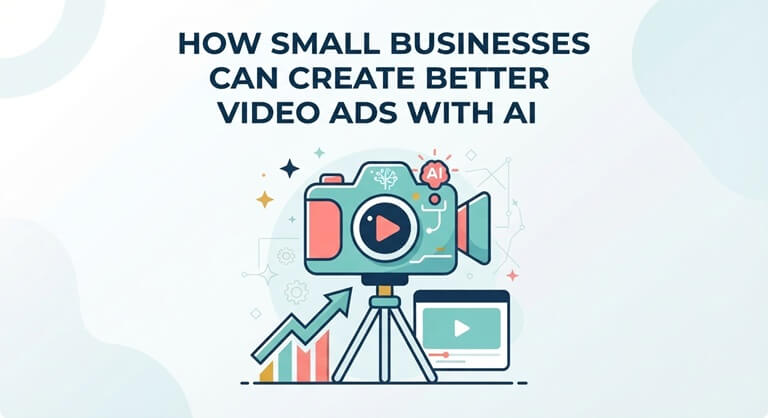
Artificial intelligence is changing this process. Modern AI tools can help marketers create video content faster, experiment with different ideas, and prepare promotional material without starting everything from scratch.
For small businesses, this can make video advertising more practical. Instead of spending most of the campaign budget on production, marketers can focus more on understanding their audience, developing better ideas, and improving the final message.
Why Video Ads Matter for Small Businesses
Small businesses often compete with larger brands that have bigger advertising budgets. A strong video can help smaller companies communicate their value without requiring a huge production setup.
Video is also useful because it combines several forms of communication in one format. A business can use visuals to demonstrate a product, text to highlight important features, and audio to explain the main message.
Social media has made short videos even more important. Platforms such as Instagram, Facebook, YouTube, and TikTok allow businesses to reach potential customers through short-form content.
However, simply creating a video does not guarantee good results. The advertisement needs to be relevant, easy to understand, and suitable for the platform where it will be published, with regular Content Refresh helping keep the message relevant over time.
How AI Is Changing Video Advertising
AI is becoming part of different stages of the advertising process. Marketers can use it for brainstorming, writing scripts, creating visuals, generating voiceovers, and producing different versions of an advertisement.
Instead of spending hours moving between multiple tools, businesses can use AI-powered platforms to simplify several parts of the workflow.
For example, a marketer may start with a basic idea such as:
“Create an advertisement for a new skincare product aimed at young customers.”
AI can help turn this simple idea into a structured concept with a short script, visual suggestions, and a clear call to action.
This makes experimentation easier. A business can try different hooks, messages, and formats before deciding which version is best suited for its audience.
Creating Video Ads Without a Large Production Team
One of the biggest advantages of AI is that it can reduce the amount of manual work involved in producing marketing videos.
A small business may not have access to professional videographers, editors, designers, or voice artists. AI tools can help fill some of these gaps.
A video ad maker predis can help marketers turn advertising ideas into promotional video content more efficiently. Instead of building every element manually, marketers can use AI-assisted features to create and edit ad concepts according to their campaign requirements.
This is particularly useful when a business needs several advertisements for different products or audiences.
For example, an online store could create one advertisement highlighting a product’s features and another focusing on a limited-time discount. Both videos can communicate the same brand message while using different creative approaches.
Important Elements of an Effective AI Video Ad
Using AI does not mean that marketers can ignore the basics of advertising. A successful video still needs a clear message and a reason for viewers to keep watching.
Start With a Strong Hook
The first few seconds are extremely important, especially on social media.
Instead of starting with a long introduction, businesses can immediately show the problem their product solves or present an interesting benefit.
For example, an advertisement for a productivity application could begin with:
“Still spending hours organizing your daily tasks?”
A direct question can quickly tell viewers what the video is about.
Keep the Message Simple
A video advertisement should not try to explain everything about a product.
Choose one main benefit and build the advertisement around it. If viewers understand the primary message quickly, they are more likely to remember the brand.
Businesses can use short sentences, simple visuals, and clear captions to make advertisements easier to follow.
Use Relevant Visuals
Visuals should support the message instead of distracting from it.
AI can help generate or organize visual elements, but marketers still need to decide whether those visuals actually represent the product and brand accurately.
For product advertisements, showing the product clearly is often more useful than filling the video with unnecessary effects.
Add a Clear Call to Action
Every advertisement should give viewers an idea of what they should do next.
Depending on the campaign, the call to action could be:
- Visit the website
- Explore the product
- Sign up for a service
- Download an application
- Claim an offer
- Contact the business
A clear call to action makes the purpose of the advertisement easier to understand.
AI Can Help Businesses Create More Ad Variations
Another useful application of AI in advertising is creating multiple versions of the same campaign.
Different audiences may respond to different messages. One group might care about price, while another may be more interested in convenience or product quality.
Instead of creating one advertisement and using it everywhere, marketers can experiment with different versions.
For example, an ecommerce brand could create:
- A product-focused advertisement
- A discount-focused advertisement
- A problem-and-solution advertisement
- A customer-benefit advertisement
- A short testimonial-style advertisement
These variations can then be tested to understand which message receives better engagement.
This approach is especially useful for digital advertising because marketers can make changes quickly rather than waiting for an entirely new production cycle.
Using AI for Social Media Video Advertising
Social media platforms have different content formats and audience behaviors. A video that works well on one platform may not perform the same way somewhere else.
AI can help marketers adapt creative ideas for different platforms.
A business might create a longer promotional video for YouTube and then turn the same campaign idea into shorter versions for Instagram Reels or TikTok.
Captions, aspect ratios, hooks, and calls to action can also be adjusted depending on the platform.
This allows businesses to get more value from a single campaign idea.
Benefits of AI Video Advertising for Small Businesses
AI-assisted video creation can provide several practical advantages.
Faster Content Production
Traditional video production can take days or weeks depending on the project. AI can reduce the time needed for certain repetitive tasks, allowing marketers to produce content more quickly.
Lower Production Requirements
Businesses may not need a large team for every small advertising campaign. AI tools can help with parts of the creative process that previously required separate software or specialists.
Easier Experimentation
Testing different advertising ideas becomes simpler when marketers can produce multiple versions without rebuilding everything manually.
Consistent Content Creation
Businesses that advertise regularly need a steady supply of fresh creative content. AI can help marketing teams maintain a more consistent production workflow.
Better Use of Marketing Resources
When repetitive production tasks require less time, marketers can spend more effort on strategy, audience research, campaign planning, and performance analysis.
What Businesses Should Avoid When Using AI
AI can make advertising easier, but it should not replace human judgment.
One common mistake is creating advertisements that look too generic. If every brand uses the same style, language, and visual approach, the content can quickly become forgettable.
Businesses should also check AI-generated information before publishing an advertisement. Product specifications, prices, claims, and promotional details should always be reviewed for accuracy.
Brand identity is another important consideration. Colors, language, tone, visuals, and messaging should remain consistent across different advertisements.
AI should be treated as a creative assistant rather than a complete replacement for marketing strategy.
How to Build a Simple AI Video Ad Workflow
A straightforward workflow can make the process easier.
Step 1: Define the Goal
Decide what the advertisement should achieve. The goal could be product sales, website traffic, app downloads, leads, or brand awareness.
Step 2: Understand the Audience
Identify who the advertisement is targeting and what problem or need the product addresses.
Step 3: Develop the Main Message
Choose one key benefit instead of trying to communicate everything at once.
Step 4: Create the Video
Use AI-assisted tools to develop the script, visuals, voiceover, captions, and other creative elements.
Step 5: Review the Content
Check the advertisement carefully for incorrect information, awkward wording, irrelevant visuals, or anything that does not match the brand.
Step 6: Test Different Versions
Create variations with different hooks, messages, or calls to action and compare their performance.
Step 7: Improve Based on Results
Use engagement, clicks, conversions, and other campaign data to understand what works. The best-performing ideas can then be used as a starting point for future advertisements.
The Future of AI Video Advertising
AI is likely to become an even more common part of digital advertising as businesses look for faster and more flexible ways to create content.
Future advertising workflows may involve more automation, personalized video experiences, real-time creative adjustments, and AI systems that help marketers understand which content is most effective.
However, creativity and strategy will continue to matter. Technology can help produce an advertisement, but understanding the audience and communicating a meaningful message will remain essential.
For small businesses, the biggest opportunity is not simply producing more videos. It is using AI to experiment more efficiently and create advertisements that are useful, relevant, and consistent with the brand.
Conclusion
Video advertising no longer has to be limited to businesses with large production teams and expensive equipment. AI is making the creative process more accessible by helping marketers handle different parts of video production more efficiently.
Small businesses can use these tools to experiment with new ideas, create different ad variations, adapt content for social media, and maintain a consistent advertising workflow.
The most effective approach is to combine AI with human creativity and marketing judgment. When businesses understand their audience, keep their message clear, and use technology thoughtfully, video advertising can become a practical part of their digital marketing strategy.
Popular on OTW Right Now!

About The Author

Gagan Bhangu
Founder of otechworld.com and managing editor. He is a tech geek, web-developer, and blogger. He holds a master's degree in computer applications and making money online since 2015.