
Why White-Label CPaaS Platforms Are Becoming the Future of Enterprise Communication Solutions
A white-label CPaaS platform lets a business offer branded messaging, voice, and chat services without building any of the backend technology itself. Instead of spending months (or years) coding a communication system from scratch, a company can plug into a ready-made platform, add its own logo and colors, and launch under its own name.
This shift is happening fast. Enterprises across the US no longer want to manage servers, carrier connections, or compliance rules themselves. They want speed. They want reliability. And they want their brand front and center, not hidden behind a third-party name.
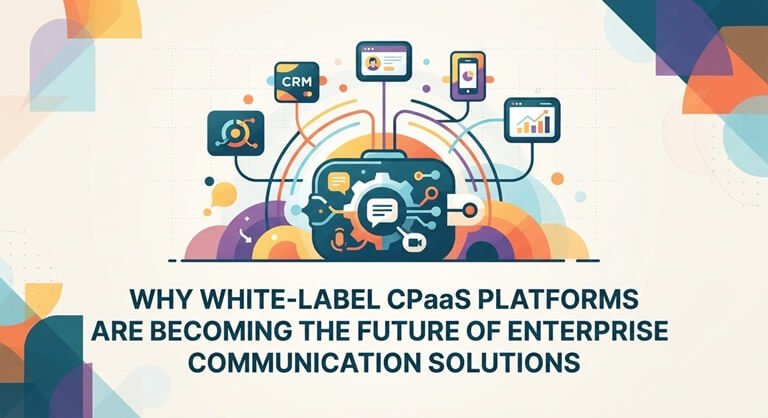
That is exactly why white-label CPaaS platforms are becoming the backbone of modern enterprise communication.
What Is a White-Label CPaaS Platform?
CPaaS stands for Communication Platform as a Service. A CPaaS platform gives businesses the tools to add messaging, voice calls, video, and chat features into their own apps or websites, without building that technology from zero.
“White-label” means the platform’s technology runs in the background, but the enterprise’s own branding sits on top. Customers never see the name of the company that built the platform. They only see the brand they already trust.
Think of it like a private-label product on a supermarket shelf. The manufacturer builds it. The store puts its own label on it. The shopper only sees the store’s brand.
A white-label CPaaS platform works the same way. The technology is built by a specialist provider. The enterprise wears the badge.
Why Enterprises Are Moving Away from Building In-House
Building a communication system from scratch used to be common. It is not anymore, and there are clear reasons why.
It takes too long. Coding secure messaging, voice routing, and carrier connections can take a development team over a year.
It costs too much. Enterprises need engineers, telecom licenses, security audits, and ongoing maintenance. That budget adds up fast.
It falls behind. Technology changes quickly. A system built in-house often looks outdated within two years.
It distracts from the core business. A retail brand should focus on selling products, not maintaining messaging servers.
This shift isn’t just anecdotal. Gartner forecasts the global CPaaS market will grow at a 14% compound annual rate between 2024 and 2029, reaching $27.4 billion, as enterprises lean harder on AI-powered, personalized messaging to run their customer experience.
A white-label CPaaS platform removes all four problems at once. The enterprise gets modern technology, fast deployment, and full control over the brand experience, without the engineering burden.
Key Benefits of a White-Label CPaaS Platform for Enterprises
Here is why more companies are switching to this model.
- Faster time to market. Launch branded messaging in weeks, not months.
- Lower cost. No need to hire a large in-house engineering team.
- Full brand control. Customers only see your name, your logo, and your colors.
- Built-in compliance. Providers handle carrier rules and data regulations for you.
- Add more channels or markets as your business grows.
- Established providers already run tested, secure infrastructure.
These benefits explain why the white-label CPaaS platform model is spreading across industries like banking, healthcare, retail, and logistics.
White Label Messaging Platform vs Building From Scratch
Many enterprises ask the same question: should we build our own system, or use a white-label messaging platform?
The answer usually comes down to speed and risk.
Building in-house is control-oriented, but slow and expensive. It also implies that your team is accountable for all bugs, outages, and security fixes.
A white-label messaging platform gives almost the same control, minus the risk. The provider handles the technical details. You don’t need to worry about server maintenance; your team works on strategy, content, and customer experience.
For most enterprises, this trade-off is an easy choice. Speed wins.
How CPaaS Platforms Use AI-Based Message Personalization
Sending the same message to every customer no longer works well. People expect messages that feel relevant to them.
This is where CPaaS platforms’ AI-based message personalization comes in. Modern platforms use artificial intelligence to study customer behavior, purchase history, and preferences. They then adjust each message automatically.
For example, an area code for a client who is a returning customer may display a message that alludes to his previous purchase. A first-time visitor could find a welcome offer instead. Both messages are delivered via the same medium, but the messaging content varies depending on the recipient.
This level of personalization enhances open rates, increases response rates, and strengthens customer connections. It is also an excellent tool that saves marketing teams time by avoiding the need to manually create dozens of variations of the message.
Providers like Twixor, an AI-native CPaaS and agentic AI platform built for tech and telco partners, are leading this shift. Twixor integrates white-label messaging capabilities with AI agents that can personalize, automate, and even conduct full conversations without human intervention.
What to Look for in a CPaaS Platform Before You Choose One
Not every provider offers the same quality. Before picking a CPaaS platform, enterprises should check a few things carefully.
Channel coverage. Does it support SMS, WhatsApp, RCS, voice, and web chat, all in one place?
Branding depth. Can you fully customize the interface, domain, and customer-facing name?
AI capability. Is it truly personalized or merely plain text messages?
Security and compliance. Does the provider meet data protection standards for your industry?
Pricing model. Does it charge by volume; that is, does it charge per use?
Support for partners. If you are a telecom or tech partner reselling the platform, does it offer easy onboarding for your own clients?
By answering these questions, enterprises can reduce the risk of selecting a platform that may seem appealing on paper but fails to deliver when it’s time for actual use.
The Future of Enterprise Communication with White-Label CPaaS Platforms
The direction is clear. More enterprises want branded, AI-powered communication without the burden of building it themselves.
A few trends are shaping where this is heading.
Agentic AI is taking over routine tasks. While the previous generation of chatbots could respond to questions and offer information, AI agents can now engage in complete conversations, participating in transactions and answering questions.
Rich messaging channels are replacing plain text. So instead of a screen of words, customers now demand images, buttons, and interactive responses in their emails.
Omnichannel is becoming the standard. Businesses desire a single platform that manages all channels, not three different ones for SMS, WhatsApp, and voice.
White-label partnerships are growing among telecom and tech companies. Many businesses are choosing to partner with experts in the CPaaS field rather than building their own solution from scratch and reselling it under their brand.
Together, these trends point to one clear outcome: the white-label CPaaS platform model is not a passing trend. It is increasingly the preferred method of communication for customers to businesses.
In Closing
Businesses can’t afford to develop communication technology any longer. A white-label CPaaS platform gives them speed, security, and full brand control, all without the engineering headache.
Add AI-based message personalization to the mix, and enterprises get more than just a messaging tool. They receive a system that grasps customers better and addresses them accordingly, in a humanized and personalized way, but on a large scale.
Pick up a company such as Twixor to find out where this is going: AI-native, white-label, and tailored for tech and telco partners who wish to provide modern communications from a base of zero.
For any enterprise weighing whether to build or buy, the case for a white-label CPaaS platform keeps getting stronger.
Frequently Asked Questions about White-Label CPaaS Platform
What does white-label mean in CPaaS?
It simply refers to a specialist provider developing the technology for the platform but using your brand name, logo, and design. The name of the original provider is never displayed to customers.
Is a white-label CPaaS platform expensive?
It typically is much cheaper than having to construct a communications infrastructure from the ground up. Most service providers do not have a fixed price, so you only pay for messages or calls that have been sent.
Can small businesses use a white-label CPaaS platform?
Yes. Although enterprises are the largest consumers, there are also many providers that have plans available for smaller teams.
How does AI-based personalization work in messaging?
The platform studies customer data, such as past purchases or browsing behavior, and adjusts each message automatically to match that person’s interests.
Is Twixor a white-label CPaaS provider?
Yes. Twixor is an AI-native, CPaaS and agentic AI platform designed specifically for tech and telco partners aiming to provide branded, AI-powered communication solutions.
Popular on OTW Right Now!
-
 The Real Reason Stylish Fonts Are Taking Over the Internet (And How Creators Are Using Them to Stand Out)
-
 The Connection Between Smart Homes and Basement Waterproofing Systems
-
 The Ultimate Guide to Converting PDF Files to Word Documents
-
 Data Brokers Explained for Beginners: How to Opt Out Before Your Personal Data Spreads


About The Author

Gagan Bhangu
Founder of otechworld.com and managing editor. He is a tech geek, web-developer, and blogger. He holds a master's degree in computer applications and making money online since 2015.