
Why Urban Heating Systems Often Require More Frequent Servicing Than Rural Homes
Urban heating systems, especially in London, tend to work harder than rural boilers because of hard water, tighter installation spaces, older converted properties, and near-constant use in smaller homes. That extra strain means many city boilers benefit from closer attention between services, not just an annual once-over.
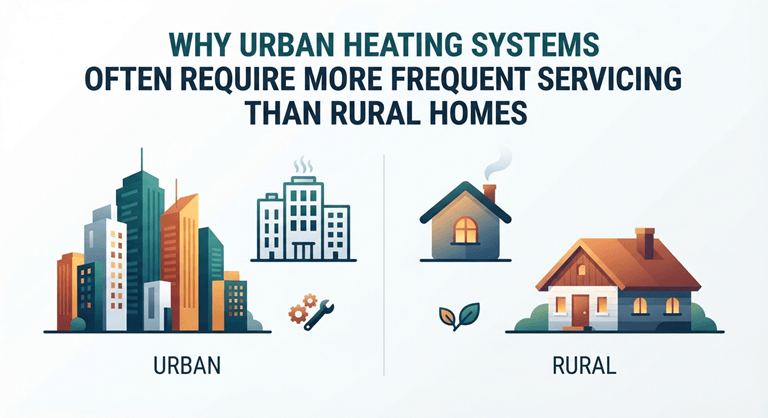
Why City Boilers Face a Tougher Job
Ask any engineer who has worked across both a countryside cottage and a London flat, and they will tell you the boilers are not living the same life. A rural boiler often sits in a larger utility room, draws softer water, and heats a property with more breathing room around the pipework. A city boiler, more often than not, is squeezed into a kitchen cupboard, fighting hard water, and running almost constantly to keep a compact flat warm.
That difference in workload is exactly why a boiler service London homeowners book tends to catch different issues than a service carried out on a farmhouse boiler two hours away. The engineer is looking for scale buildup, restricted airflow, and wear patterns that show up faster in a dense city environment.
Hard Water and Limescale: London’s Biggest Boiler Enemy
Much of London sits on a hard water supply, and hard water is one of the fastest ways to shorten a boiler’s working life. Limescale builds up inside the heat exchanger and pipework, reducing efficiency and forcing the boiler to work harder to reach the same temperature.
This can lead to banging or kettling sounds, uneven room heating, and a steadily longer time to heat a room over the years. This is one reason engineers in the capital often recommend closer checks between regular services in hard-water areas, because a year may not catch scale early enough.
Older Properties and Tighter Installations
The problem is compounded in London, where housing is also scarce. The heating systems installed in many houses date back many years from the original construction and are often “conversions”, Victorian terraces or flats cut from larger buildings. Pipework is diverted, boilers are installed in cupboards which were not intended for them, and flues run along unusual routes through walls that weren’t designed to accommodate modern combustion appliances.
A boiler service London provider will regularly perform will have to check out all of those routes of flue and pipework in the boiler space thoroughly, as a system installed in an old building is likely to wear away in places that a purpose-built rural system does not.
Air Quality and Ventilation in Dense Neighbourhoods
Boilers require clean air for proper fuel combustion, and city air is not always clean enough. The combustion process can be affected more than it would be in an open countryside setting because of higher pollution levels and boilers installed in a poorly ventilated cupboard or loft.
Poor ventilation means the boiler will operate less efficiently and, in some instances, it can be a serious safety issue. This is one of the types of problem that trained London Gas Safe engineers are familiar with, as it’s much less likely to occur in a rural property where there’s much more ventilation.
Urban vs Rural Boilers: A Quick Comparison
The table below sums up the main differences engineers see between city and countryside heating systems.
| Factor | Urban Boiler (London) | Rural Boiler |
| Water hardness | Often very hard, more limescale | Usually softer, less scale buildup |
| Property age | Many older conversions and flats | Mix of ages, often more modern extensions |
| Boiler type | Mostly compact combi boilers | Often system or regular boilers with tanks |
| Ventilation space | Tighter, in cupboards or lofts | Generally more open, easier airflow |
| Usage pattern | Near constant use, smaller properties | Steadier use, larger heating zones |
| Recommended check frequency | Annual, sometimes with mid-year check | Annual is usually sufficient |
Why Local Heating Inspections Matter More in Cities
The regular local heating checks provide an engineer with an opportunity to identify small problems such as a hairline leak or a slightly corroded joint or the early signs of scale before they become a complete heating system failure in the middle of winter. It’s important in a city, where boilers are working at their maximum capacity for the majority of the year, compared to a rural house with a bit more headroom.
How Metropolitan Boiler Maintenance Differs From Countryside Servicing
Maintaining a metropolitan boiler isn’t just a rural service performed in a smaller space. A detailed visit is conducted differently in London, as there is a higher number of combi boilers in use, and a greater number of hard water problems and less access. Checks are likely to be mostly about descaling, safety in the flue in confined areas, and pressure uniformity in systems that rarely receive a good night’s rest.
Choosing Capital Heating Specialists Over a General Callout
Not all heating engineers have had years of experience in dense city housing, so that’s reflected in their work. The experts at capital heating companies who work on a day-to-day basis across London are more aware of these trends: What building types tend to conceal pipework in the awkwardest spots, which postcodes have the toughest water type, and which boiler models are prone to being short-cycled in small flats?
Simple London Home Heating Care Between Services
A few habits between visits help take some of the pressure off a hardworking city boiler. Good London home heating care does not need to be complicated:
- Check the pressure gauge monthly and top up if it drops below the recommended range.
- Bleed radiators that feel cold at the top but warm at the bottom.
- Keep the area around the boiler clear for proper ventilation.
- Listen for new noises; banging or gurgling often points to scale building up.
- Book a check promptly if hot water suddenly takes longer to heat up.
Frequently Asked Questions
1. Do London boilers really need servicing more often than rural ones?
Many do, mainly because of hard water and because they’re used constantly in smaller homes. While once-a-year servicing is still standard, homeowners in the city should consider an additional inspection if they have scale or noise concerns.
2. Why does hard water affect boilers so much?
Hard water causes mineral deposits to build up within pipework and heat exchangers, resulting in lower efficiency and straining the boiler over time, which accelerates wear relative to areas with softer water.
3. Are combi boilers more common in London for a reason?
Yes. Combi boilers are ideal for smaller properties or for those with restricted space – a large proportion of London flats and conversions fall into this category. Still, they are also going to have to work harder as there is no separate tank to ease demand.
4. Can poor ventilation in a flat really affect boiler safety?
Yes. Whether you use any fuel, your boiler requires sufficient air to burn it safely and efficiently. Because a cramped or poorly ventilated installation can affect combustion, it is important to have checks to ensure proper combustion.
5. How can I tell if my boiler is struggling with scale?
Early signs include banging or kettling sounds, slower water heating times, and erratic hot water delivery. A trained engineer can identify scale deposits through a routine check.
6. Is it worth using an engineer who specializes in city properties?
It can be of great assistance. A single engineering expert with knowledge of the local houses and water systems may identify issues quicker than one with no such expertise.
Keeping a City Boiler Running the Way It Should
Living in the city can be a strain on your heating system, and the best way to avoid an unpleasant surprise is to understand it. When you factor in the increased stress on urban boilers, it makes sense to treat them as such and avoid the problems that can follow. Homeowners who value that special service without the hassle of a lot of guesswork on their part can use the services of the local engineers who have experience in the field and know what London properties throw at a heating system, and who have the same amount of paperwork and checks year after year, 0800homefix.
Popular on OTW Right Now!




About The Author

Gagan Bhangu
Founder of otechworld.com and managing editor. He is a tech geek, web-developer, and blogger. He holds a master's degree in computer applications and making money online since 2015.