
Custom Website vs Template: Which Is Right for Your Business?
Which One Actually Grows Your Business?
By the time a customer picks up the phone, they’ve usually already made up their mind. They found your business online, clicked through to your website, and have already decided whether you’re worth contacting before you and your business even spoke. Your website is selling, whether you intended it to or not; it’s an everyday occurrence. For businesses that want to see their website lead generation, custom web design is more beneficial than using pre-made templates. That’s because those who have been thinking about how your customers think will always outperform those who are thinking about a generic layout that will fit anyone.
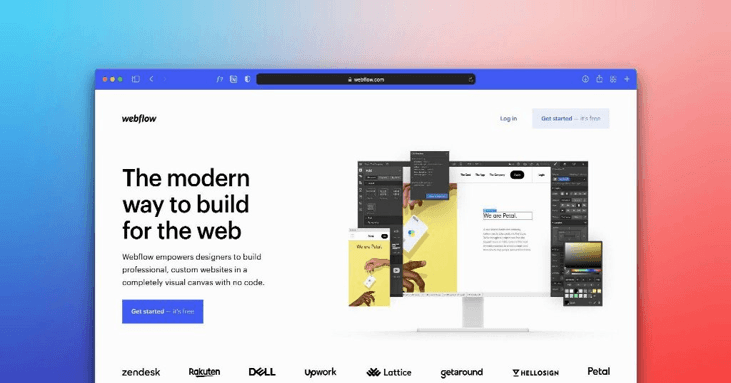
That’s what makes the choice between a template and a custom website bigger than it first appears. It isn’t really a design decision; it’s a decision about how visible you are in search results, how much you stand out from competitors running the same theme, and whether the site can grow alongside your business or needs to be rebuilt the moment you outgrow it. Both trails launch an enterprise website. One is constructed to operate as the business evolves.
Templates, Website Builders, and Custom Sites
Before comparing the trade-offs, it helps to be clear about what each option actually means, since the terms get used loosely and often blur together.
Template Themes
A template theme is a ready-made template that is used for a content management system (CMS) such as WordPress. You choose a theme, add your logo and colors, and insert your content into the pre-existing sections. It is easy to install, but you are operating in a structure that was constructed by somebody else for a generic business, not yours. The sections, layout, and styling are pre-predetermined in one-website-builder platforms.
But platforms such as Wix and Squarespace take it one step further as they offer hosting, design, and editing capabilities all in one drag-and-drop tool. This makes it the easiest one to learn – no technical setup needed, and the business owner can construct and manage the site. The drawback is that the platform determines what is possible, and once out of the box and integrations, it becomes challenging – if not impossible – to add later.
Custom Websites
A custom website starts from a blank page. There are no predetermined layouts, features, or structure. The entire design of the site is focused on your brand, your customers, and what you truly need the website to do – whether that’s book appointments, manage multiple locations, or inspire them to take some form of action that converts them into a lead.
Which Comparison Actually Matters
The choice between a real website builder and a custom website typically hinges on a single factor: you will be online in no time at all with a builder, whereas with a custom website, you will have to build it from scratch because there is no framework, only your business designed around on purpose.
Where Each Option Actually Wins
Rather than listing template pros and custom pros separately, it’s more useful to compare both directly across the categories that actually affect your business.
Cost and Speed to Launch
Templates or website builders here, with hardly any argument at all. You can get a site live within days, for a few hundred dollars or a monthly subscription. Custom builds are more expensive and time-consuming, because each page and feature must be created from scratch, rather than pulled from other components or built from existing components.
Ongoing Editing and Management
Owners, however, who may not be technically inclined are able to make quick changes to their websites thanks to the website builders designed to allow them to do so in minutes. As well, custom sites can be developed with easy content management, while more advanced structural modifications typically require a developer, something that templates do not require.
Design and Brand Differentiation
Templates look tidied up, but it is a shared tidy-up. Thousands of other businesses are using the same themes, and your site may look like many of your competitors’ sites with different logos used. A custom website is created according to your brand; it does not share the framework, tone,ne or graphics of any theme library.
SEO and Site Performance
There are a lot of templates and builders that claim to provide SEO tools, and for a regular website, this may be sufficient. However, templates tend to include additional code and setups that have a negative impact on the speed of loading pages, and also obstruct the ability to order the pages for search engines. Custom build allows complete control over technical SEO, clean code, page structure for your target keywords, and more.
Scalability as the Business Grows
As a website builder, you can add some locations, a complex booking system, and other features with add-ons and plug-ins, but new locations, new booking systems, and new advanced features will hit a ceiling. Custom sites start with a flexible foundation and then develop new features as extensions to the foundation.
Integration With Business Tools
The templates and builders are usually linked to a set of pre-approved integrations. With custom sites, businesses can integrate with the tools they already use, such as a CRM or booking platform, making the website a hub, rather than just another disjointed platform.
Does Business Size Change the Answer
Many people believe that custom web design is exclusive to the big boys, but that’s not necessarily true. Often small businesses are facing larger, more-capable, and more-resourced companies online—and a “generic” website for a small business owner can mean even bigger success for the competition. But it doesn’t take much to make a custom site count; it only needs to be a visually accurate representation of the business that makes customers feel the need to choose it over its competitor with a huge marketing budget and a forgettable website.
What About AI Website Builders
What They’re Actually Good For
AI website builders can create a functional website in just minutes, making them a truly valuable tool for a quick-and-easy website if you’re looking for a temporary holding site or even to test a business concept before committing more resources.
Where They Fall Short
They can’t make the strategic decisions a lead-generating site relies on. Creating your pages around your customers’ browsing patterns, determining what content will earn your customers’ trust, optimizing your pages to rank for your business’s searches, and many other things require judgment that an AI tool wouldn’t make: from it and your customers’ actual behaviors. That’s more important to bridge for a business that relies on its website to generate leads than the speed it provides at the outset.
The Real Cost Conversation
What You Pay Upfront
Website builders and templates are usually low-cost to set up; depending on where they are obtained, they might be a subscription service or a one-time payment, making them an easy initial option for many businesses.
What You Pay Later
The lower upfront cost can come back to bite you in the butt. You need to rebuild a site from scratch when you are outgrowing a platform, and they are not very expensive, especially when the site is generic and doesn’t convert. Custom sites are more expensive initially but won’t incur those costs in the future.
A Quick Way to Decide
Is a custom website really worth it for a small business?
Yes, in most cases, particularly if the site is going to be used for some marketing as opposed to just as a site to fill in time. As opposed to a generic template that is competing for the same attention as your site, a custom site is created around the way your customers search, browse, and make decisions. The investment is greater in the beginning,g but it is carried on with the business as it grows and not needing to rebuild it when its limitations are reached completely.
Can I start with a template and switch to custom later?
Yes, and there are lots of businesses that do that. When a business is still in its infancy, a template or website builder can be a useful method to get online and start building some visibility. The downside is that migration later will typically mean that you have to start over with structure/content because templates are not designed to be extended out into a custom framework. If the growth is already in the plan, consider whether it is more advantageous to invest in a custom-built solution or to change later.
Are AI website builders a good substitute for a custom website?
They are a viable solution for a temporary fix or to test out a concept before a custom build is undertaken, but not a solution for a strategic build. While AI can quickly put up a site, it cannot make the same decisions about what will lead your visitors to turn into leads, or how your site ought to be designed for it to be found via the searches that are significant to your business.
How do I know if my business needs custom web design instead of a template?
It’s typically a matter of what you are expected to do with your website. For mostly informational, low-stakes sites, a template might suffice. However, if it is meant to do more than deliver leads, it’s meant to stand out from the competition or, in the future, support growth – a custom site usually pays off over time, although it will cost more to create.
Making the Right Call for Your Business
The answer to custom vs template website is not one size fits all, but rather it’s the right answer for the right business at the right time. If you want to get online fast and don’t have a long-term vision for a “site,” a template or website builder might be a good and practical way to begin. Once you are using your site to generate leads, stand out from your competition, and grow without having to rebuild your site in a year or two, a custom site makes more sense.
The key isn’t which is the better of the two of them in the abstract; it’s the truth of what your website will have to do for your business, and the choice of how to do it. Whatever you do, the objective remains the same – a site that will work just as hard as you do for your business.
Popular on OTW Right Now!


About The Author

Gagan Bhangu
Founder of otechworld.com and managing editor. He is a tech geek, web-developer, and blogger. He holds a master's degree in computer applications and making money online since 2015.