
Why Battery Capacity Alone Does Not Define a Successful Energy Storage Project
The biggest number is not always the most important one
When companies evaluate an energy storage project, battery capacity is usually one of the first factors they consider.
How many kilowatt-hours can the system store? How long can it supply power? How much energy is available during an outage?
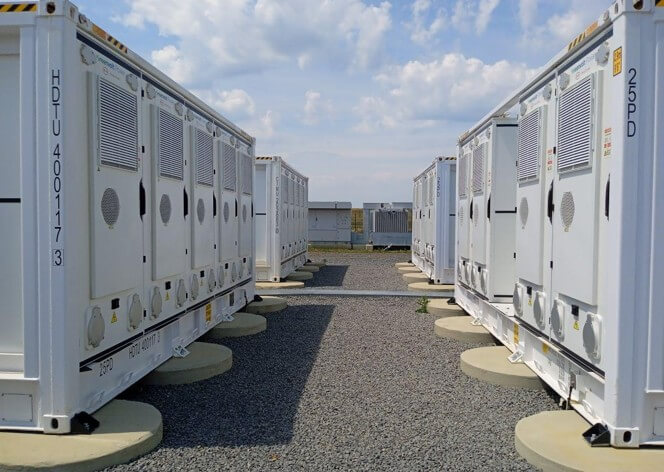
These are reasonable questions. The ability of an energy storage system is a key component. The system has insufficient energy storage; it cannot provide the desired value.
But it is not necessarily the case that a project’s success is determined by its capacity.
The higher the capacity of a battery, the better an energy storage solution it is not necessarily. The actual performance of the system in a real-world scenario will vary based on the interactions with the power demand, grid conditions, operational objectives, and long-term usage.
Creating a useful storage project can just as easily be the difference between design decisions outside of the battery as it can be inside.
Energy storage is about when energy is available, not only how much exists
A common misconception is that the bigger the battery, the bigger the benefits.
But in fact, stored energy is highly dependent on the timings!
A commercial facility might have relatively large electricity requirements for most of the day, but incur significant demand charges for a brief period during the day. In this instance, the added value of the stored energy is not its capacity to store a large amount of energy – it’s its ability to power on at the right time.
A smaller, properly sized and managed (PS and Control) system may offer a more effective reduction in peak demand than a larger battery that is not well suited to the load profile.
That’s why the design process for an energy storage solution typically begins with a study of electricity use rather than by choosing the largest battery possible.
Power capability and response speed can be just as important
The capacity of a battery is measured in kilowatt-hours (kWh), but there is another important metric of battery performance: the power output, measured in kilowatts (kW).
These 2 values represent different skills.
Capacity is a measure of the amount of energy that can be stored.
Power indicates how quickly that energy can be delivered.
If a factory is going to use lots of heavy equipment for a short period of time, it may not need a large energy reserve. Rather, it may require a system that can react quickly and reliably.
In applications such as frequency regulation, microgrid support, industrial power quality management, and other fast-response applications, response time may be more highly valued than discharge duration.
The operating strategy determines long-term value.
An energy storage system is not a ‘passive energy store’. It’s an active asset that requires intelligent management.
A variety of charging schedules, discharge strategies, battery health management, and interactions with renewable generation can affect the final project result.
For instance, during the night, when demand is high, excess solar energy could be stored and used during the daytime, when demand is low. This demands coordination between the battery, power conversion equipment, nd energy management software to ensure this is done efficiently.
Modern battery energy storage solutions are increasingly designed around this broader approach, focusing not only on storage capacity but also on system flexibility, control capability, and operational efficiency.
Battery size also affects cost and lifecycle performance; it might initially appear to be a good idea to oversize a battery, but it can also mean additional expense.
The larger battery will result in a higher upfront cost, more space, and greater maintenance requirements. The extra capacity may not prove profitable if it is not in high demand.
However, a well-sized system can have a higher utilization. The battery operates as needed in an appropriate environment and delivers value throughout its useful life.
That’s why project developers are increasingly considering lifecycle economics and capacity.
The question is shifting from:
“How much energy can we store?”
to:
“How effectively can we use stored energy?”
A successful project balances multiple factors.
Not all energy storage projects are so large as to involve the greatest number of batteries. These are the ones that involve collaboration amongst different elements.
The result varies based on capacity, power rating, control systems, battery chemistry, and operational goals and needs.
The first step in a well-designed system is understanding the problem it aims to solve. The correct storage configuration can only be determined once this has been done.
The battery, just one piece of the puzzle, can be part of the solution in the quest to reduce electric bills, promote renewables, enhance back-up power or bolster grid stability.
Conclusion: The value of storage comes from intelligent design
While battery capacity is a key specification, it shouldn’t be the only one to consider.
The true value of energy storage projects is to provide stored energy when it’s needed, at the right power level and size.
The trend is shifting from scaling up energy storage systems to making more intelligent, efficient, and flexible ones.
It won’t be about how much energy a battery can store; it will be about how well that energy supports systems.
Popular on OTW Right Now!
-
 Choosing Terrazzo Floor Tiles Melbourne Homeowners Actually Love: Style, Durability and Value
-
 RCM – New way to Improve for Healthcare Providers in USA (Upcoming Years)
-
From Shoreline to Seafloor: Positioning Basics for Practical Bathymetric Surveys
-
 Yubashiri Sword vs Sandai Kitetsu Sword: Comparing Two of Zoro’s Legendary Blades




About The Author

Gagan Bhangu
Founder of otechworld.com and managing editor. He is a tech geek, web-developer, and blogger. He holds a master's degree in computer applications and making money online since 2015.