
How to Fix Brown Well Water: Common Causes and Easy Solutions
Turning on a faucet only to see discolored, muddy, or rust-colored liquid pour out is an unsettling experience for any homeowner. For those who rely on a private well system, discolored water is a clear indicator that something within the supply chain requires immediate attention.
Well water can be brown for many reasons, from normal changes in the mineral content of the water to structural problems with the water well assembly itself. Fortunately, most cases of water discoloration can be solved with simple plumbing or filtration solutions, so long as the cause is properly identified.
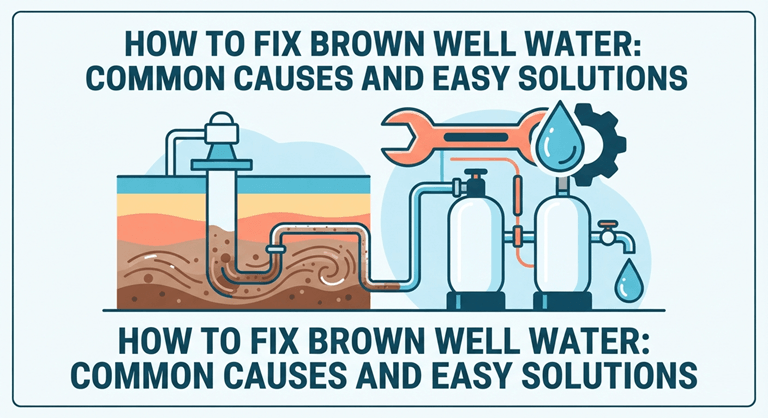
High Concentrations of Iron and Manganese
The most common cause for yellow, orange, or deep brown water is the natural occurrence of minerals in the local aquifer. Groundwater passes through underground rock,k which dissolves trace amounts of iron and manganese.
The Chemistry of Oxidation
Water from the ground is often completely clear. But when the dissolved iron comes in contact with oxygen in the air or inside a pressure tank, it will chemically oxidize. In this process, the clear ferrous iron is changed to particulate ferric iron, giving the liquid a distinct rusty brown color. The action of manganese is the same but may result in dark brown or black flecks and a bitter, metallic flavor.
The Remediation Strategy
If it is a mineral problem, a special water filter should be used. A simple water softener may be able to remove the iron by an ion exchange process in lower concentrations. If concentrations are high or the iron has already oxidized, a dedicated iron filter or an oxidizing filtration system will remove the particles before they reach the house tap.
Accumulation of Sediment and Silt
If the water is not definitely metallic, but rather cloudy or muddy, then it is most likely that physical earth particles are present in the column. Over time, silt and sand may settle in the bottom of the well shaft.
Environmental and Mechanical Triggers
There are several ways that sediment can get into the plumbing system. Subsurface water can be agitated by heavy rainstorms, localized flooding, or seismic activity. Otherwise, if the submersible pump is in an excessively low location in the casing, it can start pulling debris up from the bottom of the casing all the way up to the pump. This is a typical problem when a new well is initially drilled, and can occur when a large decline in water level occurs in a regional aquifer.
The Remediation Strategy
A physical settlement test can confirm this. The heavy particles will settle at the bottom of a clean jar of water if it is left undisturbed for several hours. The simplest is to install a whole-house sediment filter where the water line enters the building. The mechanical barrier on this cartridge keeps dirt, sand, and silt from getting to household appliances and fixtures.
Internal Plumbing and Well Casing Corrosion
Sometimes the brown tint does not come from the earth at all, but rather from the deteriorating infrastructure of the water system itself.
Aging Steel and Iron Elements
Galvanized steel pipes and cast iron pipes are extremely susceptible to internal corrosion if installed in older homes. The zinc coating gets damaged with tim,e and the metal surface starts to rust, releasing flakes into the stream. Discoloration that only occurs during hot water use indicates that the internal linings or the sacrificial anode rod inside the water heater are probably deteriorating. Steel well casings can ru,st and on a larger scale, dirt and rust can penetrate the well shaft.
The Remediation Strategy
If it’s a problem with a particular fixture, or it only occurs when the hot water is being used, a plumbing repair or a water heater flushing should solve the issue. If, however, the structural decay is believed to be extensive within the well shaft, a professional inspection should be conducted. While minor structural issues can sometimes be patched, more extensive deterioration might require drilling a brand-new shaft, a common reality for aging properties relying on outdated well drilling in Utah or other mountainous terrains where old steel infrastructure is common.
Popular on OTW Right Now!
-
 Why Roblox Players Use Delta Executor: A Complete Guide
-
 Settlement Preparation Strategies in Complex Inheritance Disputes
-
 Can Charter Buses Cross the U.S.–Canada Border? Everything Group Travelers Need to Know
-
B2B Loyalty Program Software: Which Platform Lets Me Create Silver Gold Platinum Loyalty Tiers?




About The Author

Gagan Bhangu
Founder of otechworld.com and managing editor. He is a tech geek, web-developer, and blogger. He holds a master's degree in computer applications and making money online since 2015.