
3 Basic Financial Reports for New Landlords
Managing rental properties involves much more than collecting rent and handling maintenance requests. Landlords must be able to get the financial reports so they can see how the investments are going and how they will make money in the future. Fortunately, there are a few basic reports that are really all that are needed to get started for a beginner.
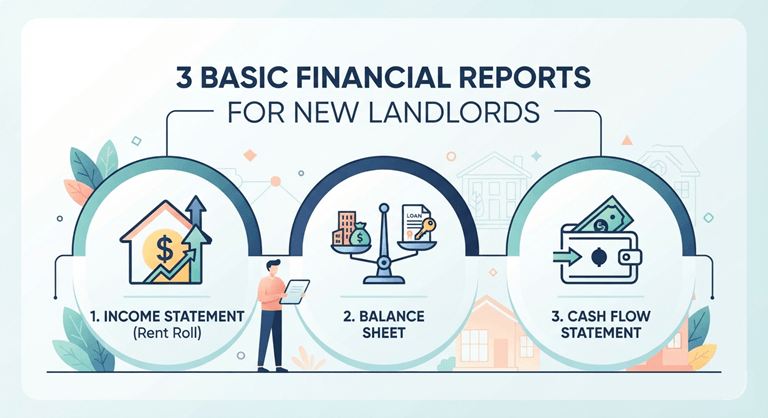
The rent roll is one of the most useful reports provided to new landlords, along with the profit and loss statement and the pro forma statement. These documents give insight into the current performance and assist investors in planning for growth.
1. Rent Roll
One of the most important reports to track rental income is called a rent roll. It provides an organized overview of each unit and tenant, allowing landlords to monitor occupancy and lease information in one place.
Typical information found in a rent roll includes:
- Tenant names
- Unit numbers
- Monthly rent amounts
- Lease start and end dates
- Security deposit details
- Payment histories
Regularly reviewing a rent roll can help a landlord notice rental trends, including late payments, expiration of leases, and empty properties. This information can help with maintaining constant cash flow as well as planning renewals.
Many property owners use a rent roll template Excel spreadsheet to organize this information. For small portfolios, Excel templates are particularly beneficial, as they allow landlords to tweak columns and manage multiple properties without buying expensive software.
A well-maintained rent roll is also useful when applying for financing or assessing the rentals as a whole
2. Rental Property Profit and Loss Statement
Another essential report is the profit and loss statement, commonly called a P&L. A rental property p&l summarizes all income and expenses over a specific period, such as a month, quarter, or year.
Income categories often include:
- Rent payments
- Late fees
- Other property-related income
Expense categories may include:
- Repairs and maintenance
- Insurance
- Property taxes
- Utilities
- Professional services
- Management fees
Once landlords calculate their income and expenses and subtract the latter from the former, they can calculate their net operating income and assess the profitability of their properties over the time period in question.
A rental p&l template streamlines the process of reporting by offering operators and formulas that have been prebuilt. These templates make it easier to track expenses and avoid missing out on important deductions.
Regularly reviewing a P&L statement allows landlords to:
- Measure property profitability.
- Identify rising expenses.
- Improve budgeting decisions.
- Prepare records for tax season.
- Compare performance over time.
In fact, many veteran investors suggest that they should all be creating a P&L every month so that they are better informed and don’t encounter any surprises at the year-end. One of the best habits to develop as a new landlord is to keep a rental property p&l report.
3. Pro Forma Statement
The rent roll, P&L statement, and the pro forma statement are based on what is happening now and what has happened in the past, whereas a pro forma statement is used to assess what will happen in the future.
A pro forma projects the expected financial performance of a property by estimating:
- Rental income
- Vacancy rates
- Operating expenses
- Financing costs
- Cash flow
- Return on investment
These forecasts help landlords decide if a property is a good investment prior to buying. Pro forma analysis is particularly useful if you are considering expanding your portfolio or evaluating multiple options.
Investors often start with a rental property pro forma template to help them predict future income and outgo. A template helps standardize assumptions and facilitates easy comparison between properties.
While no prediction is ever made, a successful pro forma can help investors make decisions based on numbers rather than assumptions.
Why These Three Reports Matter
Financial reporting doesn’t have to be complicated. Three simple reports can give new landlords meaningful insight into their business:
- A rent roll to track tenants and rental income.
- A profit and loss statement to measure profitability.
- A pro forma statement to forecast future returns.
These reports complement each other to give a short-term and long-term view of a property’s financial health. Regularly updating them enables landlords to identify trends, enhance their cash flow, and make more informed investment choices.
If you are single-handed or you’re looking to expand your rental portfolio, starting with good reporting will help to build an organized and profitable business.
Popular on OTW Right Now!



About The Author

Gagan Bhangu
Founder of otechworld.com and managing editor. He is a tech geek, web-developer, and blogger. He holds a master's degree in computer applications and making money online since 2015.