
Threat Hunting vs Threat Detection — Understanding the Human Element
There’s a funny thing about cybersecurity. When it’s working, nobody notices. Emails land where they should. Payments process. Files open. Life is good. But behind that calm surface is watchfulness; a steady, patient kind of attention that keeps things from going sideways.
In the tech arena, we hear a lot about tools, software, and systems, but we seldom turn our attention to people; specifically, the human element behind threat hunting and threat detection.
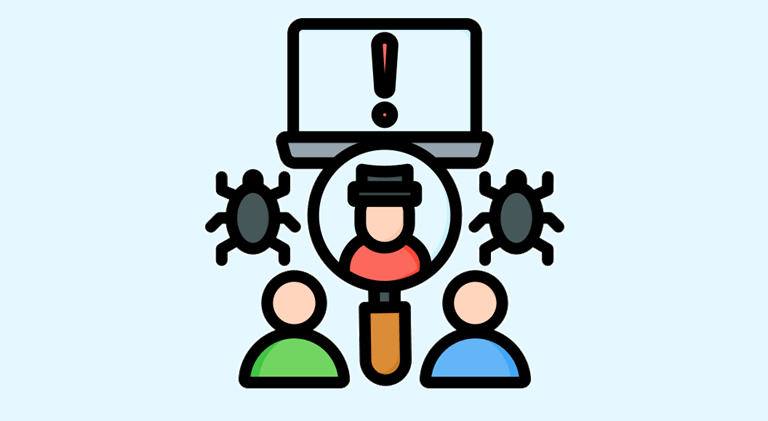
Threat Detection is Basically The Alarm System
Threat detection relies on predefined rules, known attack patterns, and automated systems. Antivirus software flags malicious files. Firewalls block suspicious traffic. SIEM platforms correlate logs and raise alerts.
That is, the detection tools are configured to be aware of known bad behavior. When malware acts as we have witnessed, it is flagged. In case a login request corresponds to a suspicious pattern, it is blocked.
The Curious Mind at Work
Threat hunting is proactive. It doesn’t wait for the alarm. It asks:
- What are we missing?
- What patterns look unusual, even if they aren’t flagged?
- Where would I conceal myself as a malefactor?
Here the human factor is added, and it truly does make a difference than we sometimes acknowledge. Advisories and records are necessary. Dashboards are essential. Data is essential. Still, they are merely a part of the picture. Hunting is based on intuition, on experience, and on mere human curiosity, as well. It rests on a priori knowledge of patterns to a person who is sensitive to when a situation is not quite fitting. It is the mind of a professional considering the routine of the activity and thinking that something is strange, and then opting not to dismiss that thought. Automation of that choice to stop and investigate is not done automatically. It is the result of long-term judgment. Automation is able to bring data out fast and in large quantities. It can sort, filter, and flag. But humans connect dots. They pose various questions. They look at context. They consider intent. And so in it, they tend to discover what would otherwise be missed by a system.
Why You Need Both
The thing is that you cannot make a choice between detection and hunting. You need both. Keeping things is your premise. It excludes the apparent dangers. It manages the volume, and it is also what ensures that your team is not being suffocated by the noise. Meanwhile, you have threat hunting as an advantage. It finds what slips through. It reveals slight lateral movement. It detects slumbering backdoors before they get up.
Detection responses: What has occurred?
Hunting poses a question: What is going on currently?
And in cybersecurity, that can be hours. Sometimes minutes. And millions of dollars, now and then.
The Importance of Nonstop Cyber Lookout
Businesses today don’t sleep. Cloud apps run at midnight. Customers log in from different time zones, and transactions happen around the clock. So the protection can’t clock out at 5 PM. A nonstop cyber lookout keeps systems steady and stable behind the scenes. This kind of vigilance often lives inside a 24/7 SOC — a security operations center that monitors alerts, investigates anomalies, and responds in real time. The most important thing about this is, however, that it is not just screens and dashboards; it is a judgment call made by the analysts. It is specialists who determine whether there is a scream or the first gasp of a violation. The instruments give us sight and the individual’s wisdom. And that mixture is what keeps the businesses operating as they ought to, even when no one notices that something almost went wrong.
More Than Technology
We are in a time that is fond of automation. And rightly so. Machines are fast. They do not have to get exhausted, and they do not have to have coffee. But they do not experience that minute scratch of something not fitting. They do not even think of what a smart hacker would attempt to do next month.
Humans do.
Curiosity is the ideal attitude that is developed by the most effective security teams. They make analysts think like opponents. They not only reward answers but also questions. To a certain extent, threat hunting is not about technology, but it is more about character. It requires patience. Discipline. The desire to search under the rocks, even when most of the rocks are deserted. Then, when such a culture is present, organizations are resilient.
What This Means for Modern Businesses
In case you are operating an expanding business, particularly one that is based on digital infrastructure, you should ask yourself:
- Are we just dependent on the automatic observances?
- Are there people who are active in questioning what may be lurking?
- Does the system have somebody guarding when the rest of us are asleep?
The responses to those questions will give the level of maturity of your cybersecurity posture.
Thus, it is important to keep in mind that a tool that will make one safe does not exist. They create capability. Proficiency is safety in the use of those tools by purposeful persons.
Popular on OTW Right Now!



About The Author

Gagan Bhangu
Founder of otechworld.com and managing editor. He is a tech geek, web-developer, and blogger. He holds a master's degree in computer applications and making money online since 2015.