
Manufacturing Automation Case Studies: 15 Real Results With Numbers
Manufacturing automation case studies are most useful when they show measurable changes in throughput, downtime, labor, quality, energy, inventory, or return on investment rather than simply describing the technology installed. The 15 examples below show how automation, MES, SCADA, robotics, analytics, simulation, and AI are producing measurable results across real manufacturing operations.
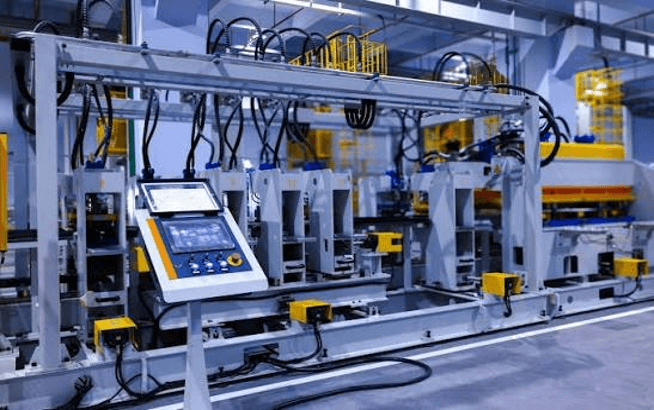
What do manufacturing automation case studies pdf collections show?
Manufacturing automation case studies PDF collections show how specific automation projects were applied to real production problems and what measurable outcomes followed.
They commonly reveal five recurring patterns:
- Automation is usually introduced to solve a defined operational constraint.
- The strongest case studies quantify the result.
- Many projects combine automation with data collection or analytics rather than replacing the entire factory.
- ROI often comes from several smaller improvements rather than one dramatic saving.
- Successful projects are frequently expanded after the first implementation proves its value.
Vendor PDF collections are particularly useful for finding implementation details, but they should be treated as vendor-reported evidence rather than independent proof. The strongest case study includes the baseline, intervention, measurement period, resulting KPI, and financial impact.
Fifteen quantified results illustrate the range:
- Rockwell’s food-manufacturing MPC project increased dryer throughput by up to 21%, eliminated 145 hours of lost production annually, and achieved ROI in under six months.
- Rockwell’s AAM deployment increased manufacturing output by 5% and improved inventory turns by 5–10%.
- Rockwell’s own global manufacturing transformation reduced inventory days from 120 to 82, captured 30% annual capital avoidance, and produced an estimated 4–5% annual productivity improvement.
- Rockwell’s cement-mill project increased throughput by 4.8% and 5.7% on two mills, increased finish-mill production by 5%, and reduced power consumption by 3.5 kWh per ton.
- Rockwell reported approximately 200% ROI from a predictive algorithm at its Twinsburg facility, alongside a 22% improvement in stencil fail rate and $9 million in revenue realized sooner.
- Ultra Tool & Manufacturing reported $48,000 in annual savings from automating production recording and label-making, plus $80,000 in annual savings from reduced work-center setup time.
- E&E Manufacturing reduced cost of quality by 42% in its first year using automated quality checks and production controls.
- Ralco Industries reduced scrap by more than 60%, reduced premium freight costs by more than 20%, cut training hours by more than 50%, and achieved payback in just over one year.
- Rockwell reported a 20% reduction in production-line downtime and $162,000 in annual savings after automating material movement with autonomous mobile robots and production orchestration.
- Siemens reported a 15% throughput increase in MG Motor India’s paint shop after combining industrial IoT analytics with production simulation.
- Siemens Drives reported £30 million in first-phase savings, a 20% inventory reduction, a 60% reduction in work in progress, and a 14% improvement in utilization after implementing advanced planning and scheduling.
- SHL Medical reduced personnel requirements by 60%, reduced excess inventory by 15–20%, increased operating efficiency by 25%, and improved intralogistics performance by 25–30% using simulation-guided automation.
- ABB’s SUS Corporation robotic assembly project increased productivity by 20%, reduced the number of dedicated assembly machines from 11 to five, and had an expected two-year payback.
- ABB’s Fedegari robotic welding cells reduced cycle time by 50% and improved production capability by 35%.
- ABB’s 2026 Xiang Piao Piao project increased overall line efficiency by 40%, increased picking speed by 15%, and saved more than two million yuan annually at one factory.
These examples show why a useful case-study collection should be organized around measurable business outcomes rather than around product names alone.
What does an automation case study need to be credible?
An automation case study needs a clear baseline, a defined intervention, a measurable result, a time period, and enough context to understand what actually caused the improvement.
A credible case study should answer six questions:
- What problem existed before automation?
- What was automated or changed?
- What technology was introduced?
- What was the baseline KPI?
- What changed after implementation?
- How was the financial or operational benefit calculated?
For example, saying that “AI improved efficiency” is weak evidence.
Saying that a steel producer integrated a machine-learning model with Ignition, increased the proportion of heats meeting its target temperature by 10%, reduced superheat by approximately 13°C for certain grades, reduced ladle-furnace energy consumption by up to 1.86%, and increased ladle-furnace productivity by up to 8.8% is substantially more useful.
A credible case study should also distinguish between measured results and projections.
An expected two-year payback is not the same evidence as a verified two-year payback. Similarly, a vendor-reported improvement should not automatically be treated as independently audited performance.
The strongest studies provide enough information for another manufacturer to judge whether the same economics could plausibly apply to its own plant.
What does a rockwell automation case study reveal about ROI?
A Rockwell Automation case study reveals that automation ROI often comes from combining measurable production improvements with labor, quality, energy, inventory, or downtime savings.
One recent food-manufacturing example is especially clear. Rockwell’s model-predictive-control deployment increased dryer throughput by as much as 21%, eliminated 145 hours of lost production annually, improved product consistency, and achieved ROI in under six months.
Another example demonstrates how predictive analytics can create a different ROI pathway. At Rockwell’s Twinsburg facility, an algorithm provided 30–60 days of advance warning of stencil failure. The reported stencil fail rate improved by 22%, annual labor savings produced approximately 200% ROI, and reduced disruption enabled $9 million of revenue to be realized sooner.
Rockwell’s own digital transformation also demonstrates that ROI does not have to come from a single machine. The company reported reducing inventory days from 120 to 82, achieving 30% annual capital avoidance, increasing delivery performance to as much as 96%, cutting lead times in half, and achieving an estimated 4–5% annual productivity improvement.
The lesson is important: calculate automation ROI from the complete value stream.
A project that costs $500,000 should not be justified only through labor savings if it also reduces scrap, increases capacity, reduces inventory, lowers energy consumption, and prevents downtime.
What do rockwell automation case studies have in common?
Rockwell Automation case studies commonly connect industrial automation with real-time data, process improvement, production visibility, analytics, MES, control systems, or workflow automation rather than treating automation hardware as an isolated investment.
Several examples follow the same pattern.
First, the manufacturer has a measurable operational problem. Second, plant-floor data is collected or made more accessible. Third, software or automation is used to identify or control the problem. Finally, the result is expressed through a production, cost, quality, labor, or financial metric.
Ultra Tool & Manufacturing, for example, expanded an MES and automation implementation from one stamping press to additional machines. The project generated $48,000 in annual savings from automated production recording and label-making, $80,000 in annual savings from setup-time reductions, and 243 saved labor hours annually.
Another Rockwell example shows the importance of scaling after a successful pilot. An autonomous material-handling deployment at Twinsburg reduced line downtime by 20%, generated $162,000 in annual savings, cut work-in-process staging space by 50%, and produced a 1.5-year ROI. The project was subsequently expanded to three additional Rockwell facilities.
The common thread is therefore not a particular PLC, robot, or software package. It is the connection between plant-floor data, an operational decision, and a measurable business outcome.
What do ignition case studies show for SCADA projects?
Ignition case studies show that SCADA projects increasingly function as broader industrial data and application platforms connecting equipment, operators, databases, MES, analytics, and enterprise systems.
A strong example is AriZona Beverages, where Ignition and Sepasoft were used to connect HMI, SCADA, MES, and SAP ERP at a new 621,000-square-foot plant designed to produce 60 million cases annually. Operators could access production, OEE, downtime, and KPI information across plant displays and mobile devices.
Prima Frutta provides another quantified result. After overhauling its cherry production line with new equipment and controls, the company increased production by 50% without increasing its workforce. Ignition was used to provide plant-wide production information, with data displayed across more than 120 screens and control available through 10 tablets.
JMA Wireless built more than 20 applications on Ignition for manufacturing, testing, data acquisition, OEE, part tracking, historical analysis, and reporting. The company uses the resulting data to investigate problems and respond faster to production issues.
These cases show that SCADA value is increasingly tied to data accessibility and application flexibility, not merely visualization.
A modern SCADA project can become the operational data layer connecting PLCs and machines to dashboards, quality systems, MES, databases, mobile interfaces, and analytics.
How is inductive automation ai changing plant software?
Inductive Automation AI is changing plant software by moving AI from a separate analytics experiment toward a development, integration, and process-optimization capability inside industrial application architectures.
One current direction is AI-assisted development. At its 2025 conference, Inductive Automation demonstrated how AI can assist with coding, architecture generation, and integration design for Ignition applications and containers. The stated objective is to accelerate development, modernize legacy systems, unify data sources, and create more scalable applications across MES, SCADA, and enterprise platforms.
A second direction is machine learning applied directly to manufacturing processes.
At Gerdau Corsa’s steel plant, ECON Tech integrated a custom machine-learning model with Ignition to provide real-time predictive guidance for molten-steel temperature. The result included a 10% increase in heats meeting the target temperature, up to 1.86% energy savings in the ladle furnace, and up to 8.8% higher ladle-furnace productivity.
The important change is architectural.
Traditional plant software generally follows:
Machine » PLC » SCADA » Historian » Human analysis.
AI-enabled architectures increasingly add:
Machine » PLC » Industrial data platform » AI/ML model » Prediction or recommendation » Operator or control action.
That does not mean every AI system should automatically control a machine. In safety-critical or tightly controlled processes, AI may initially be better used for prediction, anomaly detection, decision support, or optimization while deterministic control remains in the validated automation layer.
The result is a gradual transition from software that primarily tells operators what happened toward software that can help predict what is likely to happen next and recommend what should be done.
Turn automation case studies into a measurable business case
The most useful manufacturing automation case studies do more than demonstrate that a technology works. They show what changed in production and whether the financial result justified the investment.
When evaluating an automation project, look for five numbers first:
Baseline » Investment » Operational improvement » Financial benefit » Payback.
Then check whether the result was measured or projected, whether the comparison period is clear, and whether the improvement came from automation itself or from a broader process redesign.
The 15 examples above show that the strongest opportunities are not limited to robotics. Manufacturers are generating measurable gains from MES, SCADA, predictive analytics, digital twins, advanced process control, scheduling, machine learning, autonomous material movement, and AI-assisted industrial software development.
The best automation business case is therefore the one that starts with a measurable production constraint and works backward to the technology needed to remove it.
Popular on OTW Right Now!




About The Author

Gagan Bhangu
Founder of otechworld.com and managing editor. He is a tech geek, web-developer, and blogger. He holds a master's degree in computer applications and making money online since 2015.