
How Crypto Tools Are Becoming Easier for Everyday Technology Users
Digital assets have moved from a niche topic into a regular part of the technology conversation. What once seemed relevant mainly to traders and blockchain developers is now connected to online payments, mobile apps, digital wallets, gaming, creator platforms, and cross-border transactions. For everyday tech users, the most important change is not only the growth of cryptocurrencies themselves, but the gradual improvement of the tools built around them.
Back in the early days of cryptocurrencies, there was a technical confidence needed to use digital assets. Users were required to have knowledge of wallet addresses, private keys, blockchain networks, transaction fees, etc., and how to navigate exchanges. Incorrect action may result in a loss of time or even money. The difficulty of adoption and the sense of inaccessibility to many people were due to this complexity.
Today, the industry is slowly moving toward simpler user experiences. Services like https://stealthex.io/ reflect a broader demand for tools that help users exchange and manage digital assets without making the process feel overly technical. This shift matters because mainstream adoption depends less on hype and more on whether people can use crypto safely and confidently.
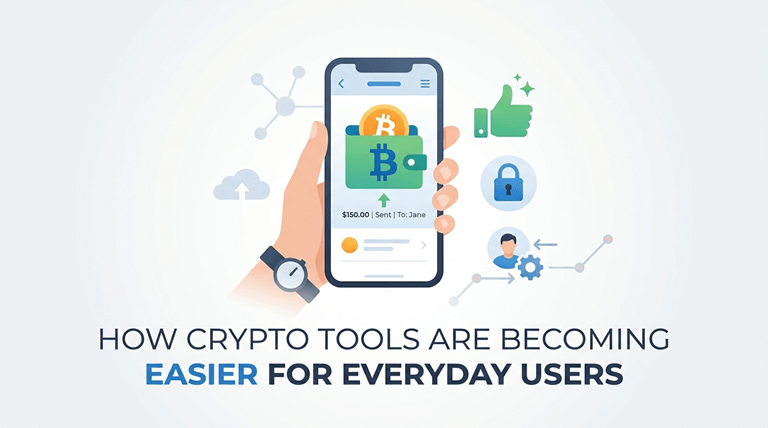
Why Simplicity Matters in Crypto
A major part of the users want to understand nothing about blockchain architecture before sending and receiving digital assets. They seek clarity, certainty, and consistency on processes and cost, as well as confirmation that a transaction has been achieved. In a similar way, people make use of online banking or even payment apps, even though the procedure is intricate, the interface ought to be comprehensible.
Crypto hasn’t always lived up to that. The rules of the network are different; assets may be on several chains, and transaction fees can differ based on the degree of network activity. These are significant facts, but that’s not always a good way to present them to the user.
This friction can be minimized by better design. Digital asset tools can be easier to use with clear transaction previews, visible information of the network, simple explanations, and helpful warnings. Good technology does not take the responsibility off the shoulders of the user, but it can help to avoid unnecessary errors.
The Need for Better Interoperability
Fragmentation is one of the most significant issues in the crypto world. There are numerous blockchains, tokens, wallets, and applications. They can be used for different things, and it’s common to have to switch between them.
It’s here that interoperability comes into play. You can own one asset, pay in with another, and transact with apps on another blockchain. If there is no functionality to transfer assets and networks, it can be confusing and inefficient.
This is a challenge and an opportunity for technology companies and developers. In the future, products that can link various aspects of the crypto world straightforwardly and securely can become more valuable. The idea is not to make the users consider each technical layer, but to help them to complete the transactions with the information they will need to make a decision.
Security Remains a Core Priority
Security should not be an afterthought, and as crypto tools are becoming increasingly user-friendly, this issue will remain a key priority. A clean interface is useful to the degree that it also shields users from confusion, phishing, unsupported assets, and bad transaction details. Generally, blockchain transactions cannot be reversed, and errors can result in expensive consequences.
However, users need to still be mindful of wallet security, destination addresses, network selection, and transaction confirmations. Meanwhile, the developers will need to create products that facilitate such checks. Security should not be achieved when users only catch the small details just before it’s needed.
Transparency is a factor of trust, too. Individuals should know the fees involved, the time frame which can be required, and the threats involved. But if information is not available or is ambiguous, even expert users can make bad choices.
What This Means for the Future of Digital Finance
Speculation is not likely to be the basis of the future of crypto. Digital assets can be incorporated into payment apps, gaming platforms, tools for creators, e-commerce, and financial services. Many users may not be concerned with blockchain technology and may interact with these systems without considering them.
It isn’t the end of traditional finance, however; crypto will coexist with them. It is probably more likely to be incorporated into a larger digital economy. The best use cases will be ones that help to speed up things, decrease friction, open up a wider customer base, or provide more flexibility for online transactions.
In the real-world, it is essential for those using technology on a daily basis to assess crypto utilities. A product needs to be innovative, and it needs to solve a problem, it needs to go over the risks clearly, and it needs to make digital asset activity easier to manage.
Conclusion
The industry is moving from technical experimentation to usability and accessibility, with crypto tools becoming more accessible. Security, regulation, volatility, and user education remain issues for the sector, but there are signs of positive developments as the industry places greater emphasis on ease of use and improved transaction flows.
For those who are more technically minded, the biggest advantage to take away is that digital assets will increasingly be more and more important as they’re more easily used safely. However, tools that simplify the use of crypto and make it more accessible to everyday digital life will be the next crucial phase in adoption.
Popular on OTW Right Now!


About The Author

Gagan Bhangu
Founder of otechworld.com and managing editor. He is a tech geek, web-developer, and blogger. He holds a master's degree in computer applications and making money online since 2015.