
GPS Robot Mower Buying Guide for 2026
GPS robot mowers in 2026 are best for homeowners who want cleaner lawn care with less manual setup, smarter navigation, and fewer boundary limitations. A good model should match your yard’s size, design, slope, signal location, cutting requirements, and lifestyle. The right solution can eliminate the need to mow at random, set up zones, schedule mowing with an app, and auto-charge. When purchasing, focus on functionality over individual features. It outlines what to look for in your yard, which GPS features are most important, and what to review before buying a mower: cutting, safety, battery, and connected controls.
Check If Your Yard Fits a GPS Robot Mower
Measure Lawn Size and Mowing Zones
Start by measuring the total mowable grass area, not the full property size. Include front yards, backyards, side strips, and any separate lawn sections the mower must reach. A GPS robot mower works best when its rated coverage comfortably exceeds your actual mowing area. Also check the number of zones, narrow connectors, and isolated patches. This helps you choose a model with enough mapping, battery life, and scheduling options to suit your regular cutting needs.
Check Trees, Walls, and Signal Blockers
GPS performance relies on stable positioning, so check for anything blocking or reflecting satellites. Accuracy decreases with tall walls, dense tree canopy, covered passages, metal structures, and narrow corridors. Drier conditions over the primary grass typically result in better navigation and tracking. A mower that pairs GPS with vision or visual mapping support is ideal for more complex gardens and can keep functioning in less-than-ideal signal conditions.
Review Slopes, Narrow Paths, and Edges
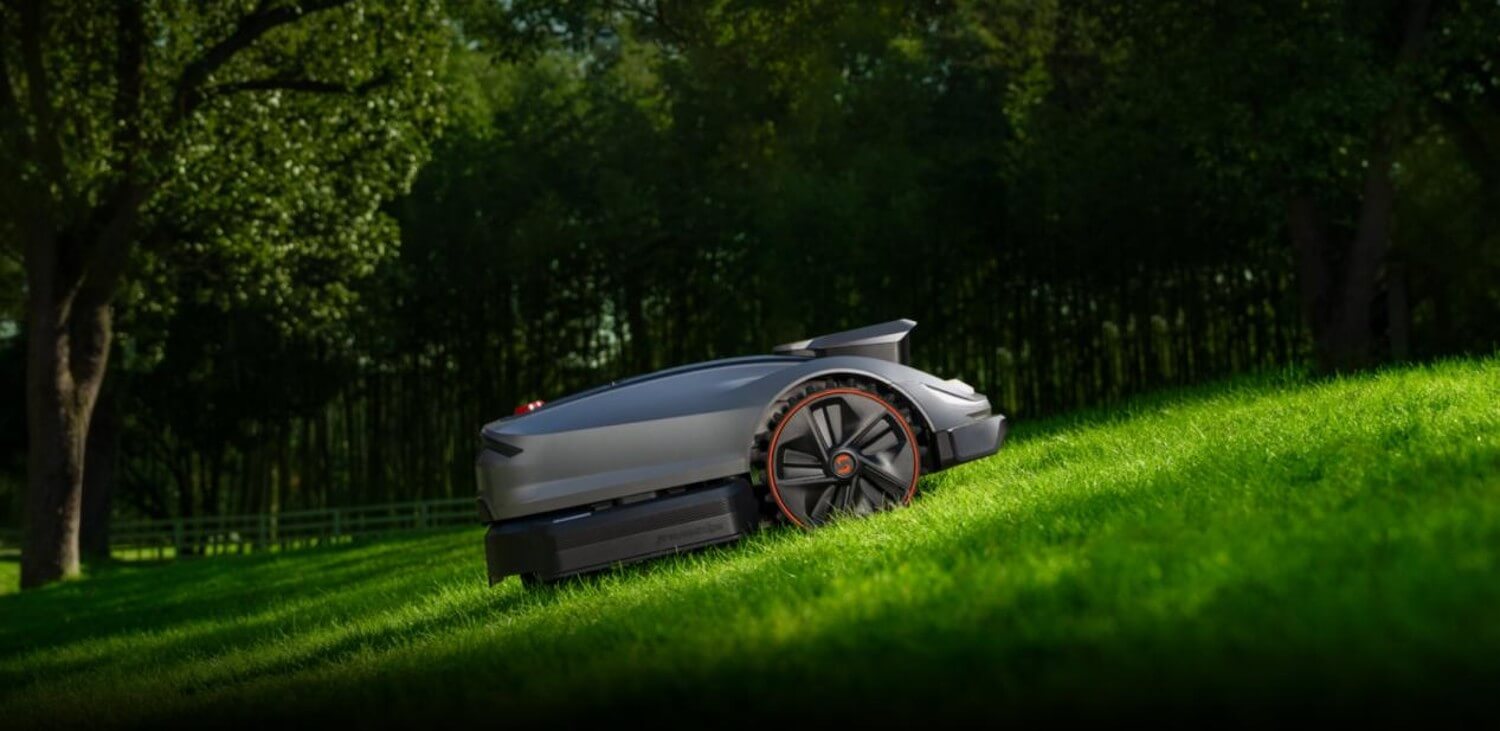
Do a yard walk and look for steep slopes, uneven areas, soft spots, narrow openings, raised borders, and curves. These areas impact the traction, turning, and trimming quality. A mower that has more powerful drive control is better for uneven and hilly lawns than a “flat-yard” mower. Moveable zones must be wide enough for narrow paths. Another consideration is edges—they also impact performance since inadequate boundary control may result in strips that need to be cut by hand regularly.
Decide Between Wire-Free and Boundary-Assisted Setup
For quick installation, boundary editing, and minimal lawn disruption, a wire-free GPS setup is preferable. Ideal for gardens that are in the process of being transformed, rental homes, and those seeking home control through an app. Even in challenging signal environments or in a very confined space, you can still benefit from boundary-assisted setup. For most yards these days, opt for wire-free navigation first, and if you’re finding reception and/or layout problems throughout the yard, consider boundary support.
Compare the GPS Features That Affect Performance
RTK Accuracy and Virtual Boundary Control
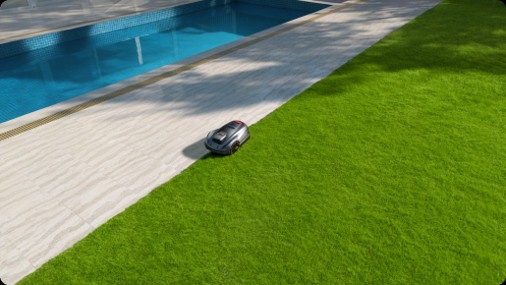
RTK is one of the most important GPS mower features because it provides real-time correction signals that improve location accuracy. Improved accuracy enables the mower to stick to a set path, observe virtual barriers, and miss fewer patches. It should be easy to edit the virtual boundary control in the app, particularly around flower beds, patios, pools, and no-go areas. In 2026, focus on models that offer accurate positioning and easy-to-use map editing, especially those that are not GPS dependent.
Vision, LiDAR, and Obstacle Detection Support
Obstacle detection helps protect the yard and mower. Vision systems can detect common objects like trees, furniture, toys, and garden edges, and, with LiDAR or depth sensing, distance can be improved in complex environments. If children, pets, tools, or outdoor furniture are frequently found on the lawn, these features matter most. Pay attention to responsive sensing, smooth rerouting, and reliable slowdown behavior; safe navigation relies on the mower’s real-time reactions.
Smart Mapping for Multiple Lawn Areas
Smart mapping should also let you create, name, schedule, and modify several lawn areas without remapping the entire yard. Here is where Sunseeker Elite GPS robot mowers are a helpful reference: Models include AONavi technology, RTK positioning, VSLAM, virtual boundaries, Vision AI, binocular sensing, up to 10 TOPS AI computing, 0.5 – 1.5 acre coverage, 7-inch to 14-inch dual-disc cutting, AWD and slope capability of up to 60% or 70% / 35%.
Review Cutting, Safety, Battery, and App Controls
Cutting Width, Cutting Height, and Blade Design
A narrower mowing width will reduce the speed at which the mower cuts the grass. Broad decks work well in large open spaces; small decks are more agile in small gardens and narrow spaces. Cutting height is adjustable because the ideal finish depends on the type of grass, the time of year, and the weather. Examine the blade design for clean cutting, easy replacement, and safety. A good mower should cut an even lawn instead of scalping rough patches.
Runtime, Charging Speed, and Auto-Return
Your mowing size and frequency will determine your battery’s performance. Review run time, charging times, and mowing area completed per cycle. This way, the mower should automatically return to the charging station before the battery gets too low to operate, as this is necessary for auto-return. Once it has charged, it should be able to complete its unfinished work without requiring manual intervention. This ensures that larger lawns or multi-zone lawns are maintained with fewer pauses.
Rain Handling, Theft Protection, and Pet Safety
Rain handling helps save the lawn and mower. A rain sensor can stop the mower when the grass is wet and could clump, rut, or mow poorly. Protection from theft is important for outdoor equipment as well, so if you can find the ability to receive alerts on the app, tracking, PIN locking, or 4G support is worth considering. To keep pets safe, select obstacle detection, lift sensors, tilt sensors, and scheduling controls to enable mowing when pets are inside.
App Scheduling, Zone Control, and Updates
A good app should be easy to use for daily mower control. Be sure to check for scheduling, zone cutting, remote start/stop, mowing history, zone editing, rain settings, and night mode. Zone control lets you make more frequent cuts in areas of higher growth and fewer passes on slower sections. It is also helpful to include OTA updates, as these can give better navigation, mapping, and safety behavior after the mower is purchased, all without replacing the mower.
Conclusion
The best GPS robot mower for the 2026 model year is the one that will work in your yard with your signal, slope, obstacles, and control requirements. Select RTK accuracy, intelligent mapping capabilities, robust obstacle detection, useful battery life, cutting-edge design, and user-friendly app control. These characteristics are ideal for your lawn,, and GPS mowing is a reliable upgrade to help you save time and keep your lawn consistently maintained.
Popular on OTW Right Now!




About The Author

Gagan Bhangu
Founder of otechworld.com and managing editor. He is a tech geek, web-developer, and blogger. He holds a master's degree in computer applications and making money online since 2015.