
FROM U.S. HEALTHCARE TECHNOLOGY TO INDIAN LOGISTICS: HOW PRASANTH KUMAR CHEVVA IS BUILDING OVKAY
Prasanth Kumar Chevva spent a decade building enterprise software for some of America’s most demanding technology environments. Then he looked back at the country he came from and saw a gap that existing digital solutions had not fully addressed.
There is a particular kind of frustration that only engineers feel: seeing a problem and knowing, with absolute certainty, that it has a technical solution and then watching the world continue to live without it anyway. For Prasanth Kumar Chevva, that frustration arrived during a phone call with a relative back in India who needed to transport a motorcycle from Hyderabad to Chennai and had no good way to do it.
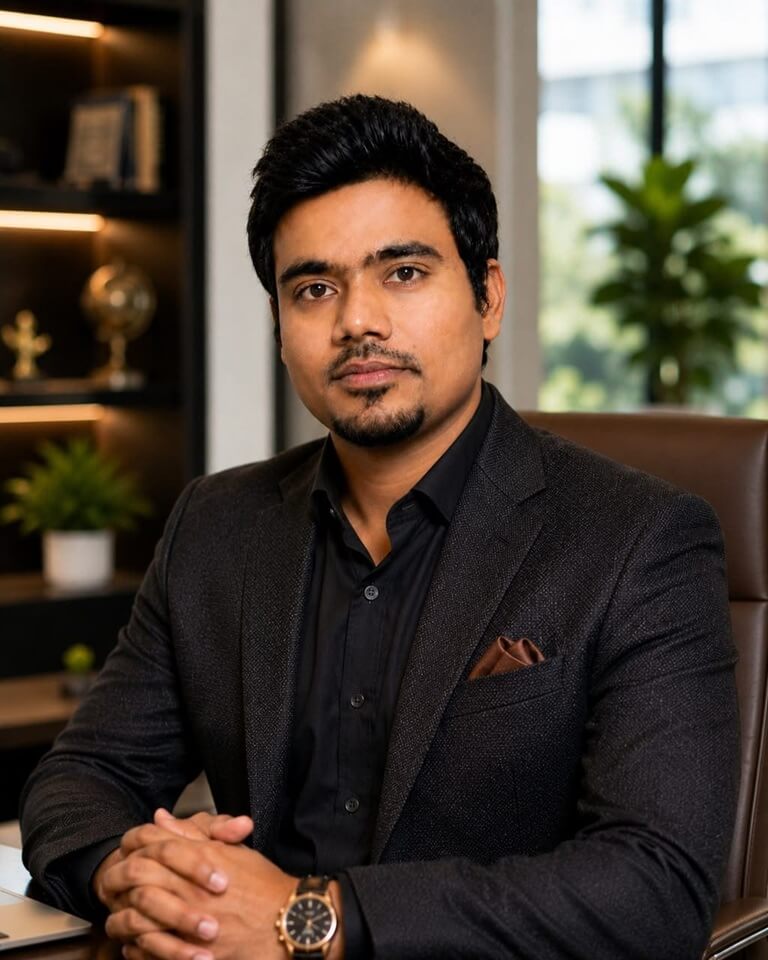
Not no good way. No widely adopted digital platform, really. Not one that involved a digital booking, a tracking system, a confirmed pickup time, or any of the other things that Prasanth, who spent years building enterprise software for some of America’s most demanding institutions, had come to take for granted. There were brokers, there were informal networks, and there was a lot of waiting and hoping and calling around. There was no platform. There was no data. There was no Ovkay.
That last word is what Prasanth decided to build instead of just complaining about the gap. Ovkay is a logistics technology platform he co-founded while maintaining a full-time senior engineering role in the United States, and it is perhaps the clearest expression of who he is: someone who responds to a broken system not with resignation but with architecture.
“I kept thinking: we have the technology to solve this. The problem is not technical it is that nobody has applied the technology yet. That gap felt like an opportunity.”
The Long Road to the Right Problem
Prasanth did not arrive at entrepreneurship quickly or easily. He came to the United States more than a decade ago with a master’s degree in information technology from Ferris State University in Michigan, and spent the years that followed doing what good engineers do: learning the craft in the most demanding environments available.
Those environments spanned healthcare technology, enterprise information services, and large-scale consumer platforms, each adding something different. Experience in healthcare systems deepened his understanding of the reliability, privacy, and compliance demands involved in large-scale technology. Work across enterprise and consumer scale platforms gave him a cross industry view of how data systems behave under pressure, and how the tension between utility and user control plays out differently depending on the stakes involved.
Currently, as a Senior Software Developer at DaVita Inc., one of the largest kidney care organizations in the country, Chevva contributes to enterprise software systems that support healthcare operations in one of the most compliance-heavy environments in American technology. That experience has deepened his understanding of what it means to build systems where data reliability and privacy are not optional.
But somewhere alongside all of this, a different kind of education was also happening. Every time he visited India. Every time a family member described navigating a logistics system that had not changed in decades. Every time he saw the gap between what technology had made possible and what the Indian transportation sector was actually using.
Building Ovkay: Infrastructure First
Ovkay is not a consumer app. It is not a marketplace in the conventional sense. It is, at its foundation, a digital infrastructure layer, a platform that connects transport providers, warehouse operators, and logistics coordinators across multiple cities under a single digital roof. The question Prasanth was trying to answer was not “how do we make it easier to book a transport?” It was a much more fundamental question: “why does this sector have no data?”
When there is no data, nothing improves. Trucks run with empty space because there is no system for matching available capacity to demand. Handoffs between transporters happen on paper, which means they happen slowly and incorrectly. Customers cannot track their goods because no one is generating a digital record of where those goods are. The inefficiency is not mysterious; it is the direct consequence of a sector where much of the fragmented two-wheeler logistics market has historically lacked integrated software platforms.
That is what Prasanth set out to build: not merely another booking layer, but an effort to digitize and streamline workflows that have traditionally depended on fragmented and informal processes, automated workflows, real-time tracking, digital documentation, capacity pooling. Features that remain inconsistently available across many parts of the fragmented two-wheeler transportation market.
“The technical problems are actually the easy part. The harder challenge is getting an entire ecosystem of operators to trust a digital system when they have survived without one for thirty years.”
The venture has drawn attention from the Indian business press. Prasanth and Ovkay have been featured in publications including Forbes India, Hindustan Times, Business Standard, and ANI, with coverage focusing on the platform’s technology-led vision rather than any single product or service.
Doing It All at Once and Why That Makes Sense
The natural question to ask about someone who holds a demanding senior engineering role while building a startup across two continents is: how? The more interesting question, though, is why. Why not choose? Why not leave the corporate role, raise funding, and go all in? Or alternatively, why not shelve the startup idea and enjoy the stability of a well paying engineering career?
The answer Prasanth gives is neither romantic nor surprising. It is an engineer’s answer. The two tracks are not in competition; they are in dialogue. The distributed systems architecture he works with at DaVita every day is the same architecture he uses to think about how Ovkay’s platform should handle data across multiple cities. The experience of contributing to healthcare systems that cannot go down has made him more careful, not less ambitious, about the systems he is building for Ovkay. The enterprise discipline informs the startup’s foundations.
And his research has entered the picture too. Prasanth has published peer-reviewed work on privacy preserving data architectures presented at the International Conference on Artificial Intelligence and Applications (ICAAAI 2025) that explores how to perform meaningful analytics on data without centralizing or exposing that data. In a logistics network where multiple competing operators are sharing a platform, that question is not abstract. Who can see what? How do you generate network wide efficiency insights without handing one operator a view into another’s business? These are exactly the questions Ovkay will need to answer as it scales, and Prasanth has been working on the theoretical foundations while also building the product.
What Comes Next
Ovkay is still early. Prasanth is candid about that. The technology foundation is in place and the team is growing but the harder work of changing an industry’s habits is ongoing. Trust, he says, is the real product. The technology is just the means of delivering it.
What he is watching most closely is India’s evolving national logistics policy, particularly the Unified Logistics Interface Platform (ULIP) framework, a government initiative to digitally integrate India’s fragmented logistics ecosystem. Ovkay’s architecture was designed from the beginning with integration into national digital infrastructure in mind. If ULIP scales the way its architects intend, platforms like Ovkay that have already built the digital layer at the operator level will be well positioned to connect to it.
For now, though, Prasanth is doing what he has always done: writing good software, staying close to the problem, and building for the long term. The motorcycle that could not find a reliable transport a few years ago might one day be booked, tracked, handed off between warehouses, and delivered through a platform his company built. That is not a bad outcome for an engineer who could not look at a broken system without wanting to fix it.
Popular on OTW Right Now!



About The Author

Gagan Bhangu
Founder of otechworld.com and managing editor. He is a tech geek, web-developer, and blogger. He holds a master's degree in computer applications and making money online since 2015.