
Why the same Windows license can cost five times more in one store than in another
Anyone who has built a PC has seen it. The official store lists Windows at full retail price, and another site offers what looks like the same product for a fraction of that. Sometimes the cheaper offer is fine, sometimes it is a key that stops working a few months later. The difference usually comes down to the type of license.
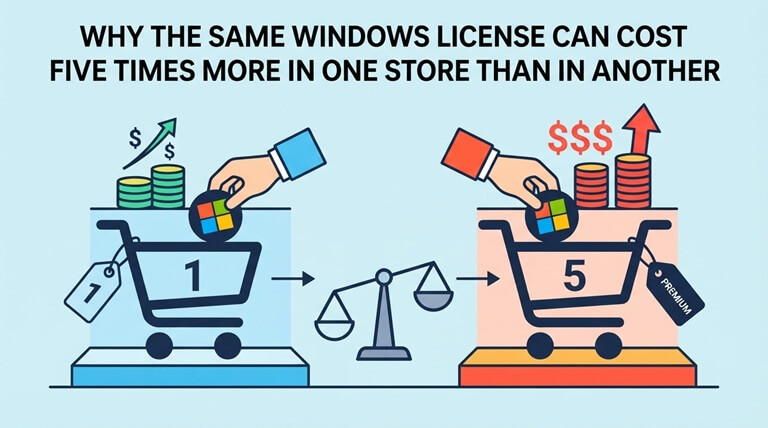
A retail license is the full-price version. It can be moved to a new computer when the old one is replaced, which suits people who upgrade their hardware every couple of years.
An OEM license was originally meant for system builders. It is tied to the first machine it activates on, and that limit is the reason for the lower price. For someone who builds a PC and keeps it for five or six years, an OEM key normally covers everything they need.
Volume licenses are another matter. Companies buy them in bulk to manage their own computers, and they are not intended for resale to individuals. Many of the suspiciously cheap keys online appear to come from this channel, and forums are full of threads from people whose activation was revoked without warning.
A clear listing should say whether the key is retail or OEM and which edition it activates. Home is enough for most personal computers. Pro adds features such as BitLocker drive encryption and the ability to host remote desktop sessions. These matter on work machines and are rarely used at home, so many buyers pay for Pro without needing it.
The seller deserves as much attention as the price. On marketplaces, a rating and a long record of completed sales are a better sign than a new account with a single listing. On GGSel, for example, each Windows key listing shows the seller’s reviews and sales count, which makes it easier to compare offers before buying.
Activation itself should be simple. A normal key goes into the activation screen in Windows Settings, and that is the whole process. A request to run a script, edit system files or disable antivirus software is a clear signal to walk away. It also helps to check in advance what happens if the key does not work: a reliable seller either replaces it or refunds the payment.
Many first-time builders don’t know that Windows can be used without activation for some time. A watermark appears in the corner and some personalization settings are locked, but the system otherwise works. That gives time to install drivers, run stress tests and make sure the hardware is stable before spending money on a license.
Once Windows is activated, linking the license to a Microsoft account is worth the extra minute. After a clean reinstall the system then reactivates on its own, and nobody has to dig through old emails for a 25-character key.
Popular on OTW Right Now!



About The Author

Gagan Bhangu
Founder of otechworld.com and managing editor. He is a tech geek, web-developer, and blogger. He holds a master's degree in computer applications and making money online since 2015.