
oTechWorld » Artificial Intelligence » AI Email Assistants for Sales Teams: Setup, Guardrails, and Reply-Rate Benchmarks
AI Email Assistants for Sales Teams: Setup, Guardrails, and Reply-Rate Benchmarks
An AI email assistant for sales teams is able to draft personalized emails, summarise customer context, suggest follow-ups, and automate certain aspects of prospect engagement, but the optimal arrangement will depend on whether the sales representatives need help with drafting or if they require an agent who can act on their behalf.
For Salesforce teams, this distinction is important since Salesforce now offers generative Sales Emails for drafting as well as Agentforce Engagement for carrying out autonomous prospect nurturing and qualification.
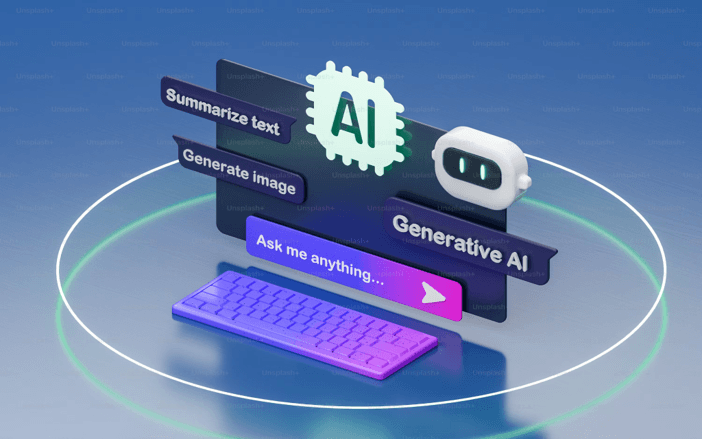
What should an AI email assistant do for a sales team?
A useful AI email assistant should handle more than generic email writing.
The highest-value capabilities are:
- CRM-grounded drafting: Generate messages using contact, account, opportunity, and campaign information already stored in the CRM.
- Personalization: Adapt the message to the prospect rather than simply inserting a first name.
- Follow-up assistance: Recommend or generate follow-ups based on previous conversations and sales-stage context.
- Reply analysis: Identify buying signals, objections, questions, and requests for additional information.
- Next-step recommendations: Suggest whether the rep should reply, call, send documentation, or involve another team member.
- Activity capture: Keep customer communication and follow-up activity connected to the CRM.
- Human approval: Let representatives review messages before external communication when the workflow requires it.
For example, the Sales Emails feature of Salesforce is able to create draft emails that are personalized using contact information and Salesforce data, and users can then look at and make changes to the output before sending it.
AI email assistance is most useful insofar as it gets rid of repetitive tasks without taking away the salesperson’s judgment.
What is the best ai email assistant for sales teams in salesforce?
For Salesforce sales teams, Salesforce’s native AI capabilities are the strongest starting point when the goal is CRM-grounded email assistance, with the choice depending on whether the team needs drafting or autonomous prospect engagement.
Here are the main options to evaluate:
- Salesforce Sales Emails with Einstein — best for rep-assisted email drafting
With Sales Emails, representatives are able to create personalized messages both within Salesforce’s email composer and via the Salesforce integrations with Outlook and Gmail. The feature can make use of the contact and lead information in Salesforce and allows for either predefined or custom instructions.
It is the superior option in the case where salespeople want the AI to prepare the emails but still retain control over those that are sent. - Agentforce Engagement — best for autonomous email-based prospect nurturing
Agentforce Engagement involves more than just drafting; according to Salesforce, it is an autonomous sales agent that is able to automatically engage new or updated leads, send customized introductory emails, respond to replies, answer questions, and connect qualified leads with sales representatives.
It is better suited to the situation in which the aim is to automate certain aspects of top-of-funnel prospect engagement rather than just making individual sales reps work faster. - Agentforce Sales — best for broader AI sales workflows
The sales activities of Agentforce extend beyond email to include a wider range of sales tasks. Salesforce states that its AI agents can assist with prospecting, lead nurturing, data capture, and other sales workflows, with AI and human representatives working together.
It is more sensible if email is just one part of a broader AI-assisted sales operation. - Sales Engagement — best when email is part of a structured sales cadence
Sales Engagement in Salesforce offers sales cadences, work queues, lead scoring, email productivity tools, the ability to book meetings, automated actions, and other prospecting features. Salesforce currently charges $50 per user per month when the service is billed on an annual basis.
It is beneficial for teams that want structured outbound execution together with AI assistance.
Which Salesforce option should you choose?
Use Sales Emails when reps need better drafts.
Use Sales Engagement when the main problem is organizing prospecting and follow-up.
Use Agentforce Engagement when you want an AI agent to autonomously nurture and qualify prospects.
Use Agentforce Sales when email needs to be part of a wider agentic sales workflow.
This distinction prevents a common mistake: buying or deploying an autonomous agent when the sales team actually needs a controlled writing assistant.
Set up an AI email assistant around the CRM context
The quality of AI-generated sales email depends heavily on the information supplied to the model.
Before deployment, make sure the assistant can access the information it legitimately needs, including:
- Contact and account details.
- Opportunity stage.
- Relevant products or services.
- Previous customer interactions.
- Campaign context.
- Approved messaging.
- Sales-rep information.
- Relevant content or documentation.
- Customer preferences and communication history.
The feature in Salesforce for Sales Emails is intended so that the drafts generated will be based on Salesforce data rather than regard the email as a separate writing task.
The team ought to standardize the prompts or instructions in the various situations such as the first point of contact, following up after a meeting, carrying out follow-up on a proposal, re-engaging customers, and answering questions about the product.
Add guardrails before allowing AI to send emails
AI-generated sales email should not automatically become autonomous outbound communication without controls.
At minimum, establish these guardrails:
- Human approval for sensitive messages: Require review for pricing, contractual commitments, legal claims, security responses, or unusual customer requests.
- Approved claims: Restrict the assistant to verified product capabilities and approved messaging.
- No fabricated personalization: The assistant should never invent a prospect’s interests, company initiatives, previous conversations, or business problems.
- Clear escalation: Questions involving legal, security, procurement, technical implementation, or custom pricing should route to an appropriate human.
- Frequency controls: Prevent the AI from repeatedly contacting prospects without regard to previous communication.
- Opt-out handling: Respect suppression lists and communication preferences.
- Auditability: Keep sufficient records to determine what the AI generated, what was changed, and what was ultimately sent.
Salesforce explicitly warns that generative AI can produce inaccurate or harmful responses and tells users to review generated emails for accuracy and safety before sharing them externally.
For autonomous agents, these controls become even more important because the system can move from generating text to taking actions.
Measure reply rate without over-crediting the AI
Reply rate is useful, but it should not be the only benchmark.
A 2026 benchmark cited by AI-agent sales research reports a 3.43% platform-wide average reply rate for outbound email, while signal-based campaigns can perform materially better.
Treat that as a directional benchmark rather than a guaranteed target. Reply rates vary substantially according to audience, list quality, offer, industry, sending reputation, personalization, campaign type, and whether the recipient has demonstrated buying intent.
Track at least:
- Delivery rate.
- Positive reply rate.
- Negative reply rate.
- Meeting-booking rate.
- Qualified-opportunity rate.
- Opportunity-to-close rate.
- Revenue per campaign.
- Unsubscribe or opt-out rate.
- Human editing time per email.
The most important comparison is usually AI-assisted versus the team’s previous process, using the same audience and comparable campaigns.
If AI doubles the number of emails sent but does not improve qualified meetings, it may simply be making the team more efficient at producing low-value activity.
Use AI to improve targeting, not just writing speed
The strongest sales teams should treat email generation as one layer of the workflow rather than the entire AI strategy.
A better system can identify which accounts deserve attention, determine why an account is relevant, retrieve the appropriate context, draft a message, recommend a next action, and measure the response.
That is particularly important because current outbound benchmarks show that generic AI-generated writing alone does not guarantee strong response rates. Signal quality and targeting can have a much larger effect on the economics of the campaign.
For Salesforce teams, the practical progression is:
CRM data » account/lead prioritization » AI-generated draft » human review or approved automation » reply classification » CRM update » next action
That creates a measurable sales workflow instead of simply adding a chatbot-like writing tool to the inbox.
Start with assisted email before autonomous sending
For most sales teams, the safest starting point is an AI assistant that drafts emails while the salesperson retains final approval.
Measure time saved, positive replies, meetings booked, opportunities created, and revenue before expanding automation.
Once the team has reliable data, approved messaging, clean CRM records, and clear escalation rules, autonomous capabilities such as Agentforce Engagement can be introduced for narrowly defined prospecting workflows. Salesforce specifically positions Agentforce Engagement for automated email nurturing, replies, qualification, and sales handoff.
The goal is not to send more AI-written emails. It is to help salespeople spend more time on conversations that can actually become revenue.
Popular on OTW Right Now!
About The Author

Gagan Bhangu
Founder of otechworld.com and managing editor. He is a tech geek, web-developer, and blogger. He holds a master's degree in computer applications and making money online since 2015.