
What You Can Buy With Crypto in 2026: A Realistic Shopping Guide
It was once doubted whether cryptocurrency would ever be able to purchase anything, but by 2026 the more relevant question had become what it purchases well. A survey carried out in January by PayPal found that somewhere between 750 and 900 million people now hold cryptocurrency, 39 percent of US merchants take it at checkout, and stablecoins alone totted up $33 trillion last year. Underlying all of these figures is a more subtle narrative: a series of everyday purchases in which paying with Bitcoin, a stablecoin or Monero has become not only possible but, in a number of respects, better than using a card.
Theguide llooks at the various categories in which this is the case, giving as an example one store for each of the three most important ones and also providing a visit to the otherso providing a visit to the others.
Why some purchases suit crypto and others don’t
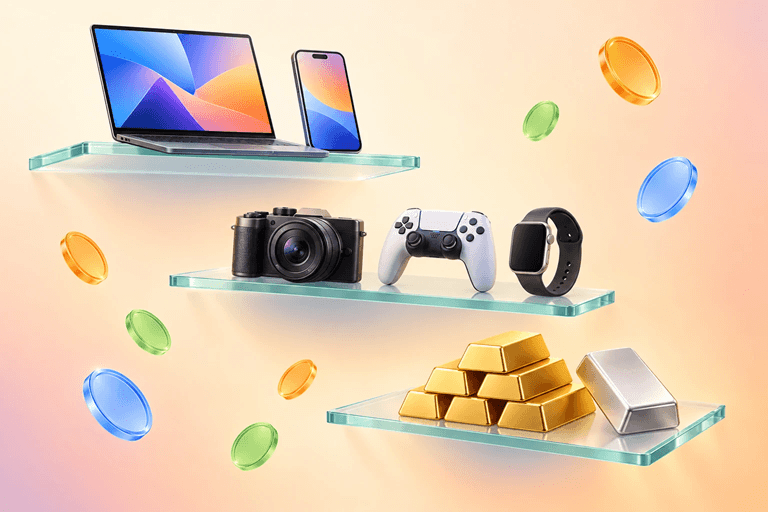
Crypto works only in cases where three conditions are met: the item in question is high-value, which means the savings on fees is genuine; it is sealed or standardised, so that the absence of chargebacks poses little cost to the buyer; and the purchase is one that people would rather not have on their bank statement. A coffee does not meet any of these three criteria, whereas a laptop, a bar of silver or an iPhone does.
The process is identical in all cases: the store displays a fixed price, converts it into an exact amount of crypto currency, locks that amount for between 15 and 20 minutes, and then you make the payment from your own wallet. The network fees amount to just a few cents (on some chains even fractions of a cent) as opposed to the 2 to 3 per cent charged by cards, there is no foreign transaction fee, and since a payment once confirmed cannot be reversed, crypto-based stores are able to offer free and insured worldwide shipping to customers who are routinely rejected by card processors.
1. Apple products
Apple doesn’t accept cryptocurrency, which is the reason that “buy iPhone with Bitcoin” has for so long been one of the most frequently searched purchase options and also explains the existence of a small number of independent resellers to deal with the request. Apple Bitcoin has been the go-to store since 2021, offering the current range of iPhones, MacBooks, Mac minis, iPads, Apple Watches and AirPods together with accessories, and it accepts Bitcoin, Ethereum, USDC, USDT, Solana, Monero and more than fifty other coins.
All the features that make buying a four-figure amount of crypto a sensible idea are there. The products come in sealed packaging and are genuine, backed by Apple’s own warranty. The checkout process is non-custodial (you pay from your wallet and the store never has access to your funds) and secures the price for 20 minutes. Delivery is free and fully insured, taking two to four days to reach the US, Canada and Europe and five to six days elsewhere. Returns can be made for 14 days with a refund given at the original fiat value, so if the price rises after you’ve made the purchase you won’t pay the difference. The store has a rating of 4.8 out of 5 based on over 12,400 orders, which is the figure you should check first when looking at any retailer that only deals in crypto.
2. Laptops, cameras, consoles, watches and the rest of the list
Beyond the Apple aisle, most people’s shopping list is a mix: a Windows laptop for work, a camera for a trip, a games console, a watch, a bottle of perfume. CryptoBitMart carries that whole mix, from laptops, desktops and tablets to cameras and optics, consoles and VR, drones, phones, audio, smartwatches, perfumes, sunglasses, shoes and electric scooters, and takes more than fifty coins including Monero.
The wording is no different from that of a reliable online seller, and that is the whole idea. All the products are brand new and come in factory sealed condition. Shipping is free and insured for over 180 countries, most orders from the EU, the US and Canada arriving within three to four business days. The sale includes a 30-day money-back guarantee and a one-year global warranty, payments are made wallet to wallet with no account required beyond providing a delivery address, and the company is registered in the UK. The fact that gaming consoles and fragrances can be purchased using crypto without hesitation shows that the technology has succeeded.
3. Gold, silver and platinum
Gold was the first alternative to state-issued money when crypto was created, and switching from one to the other has now become one of the most frequent large investments in crypto this year. Gold reached a record high of above $5,600 an ounce in January 2026 and is now trading about a quarter lower than that; silver surged past $120 and has since settled at around $60; central banks purchased approximately 289 tonnes of gold in just the second quarter. It is at this point, when the price of the metal is falling, that people who hold volatile assets usually shift their holdings.
BTC Mints offers gold, silver and platinum coins and bars that come from sovereign mints and LBMA-certified refiners, gives each item a price based on the current spot rate together with a clear and published premium, and accepts Bitcoin, Ethereum, USDT, USDC, BNB, Solana, XRP, Litecoin, TRON, Dogecoin and Monero directly, without using a third party to convert the funds and therefore adding a spread; all orders are shipped fully insured to over fifty countries in simple, unmarked packaging with tracking, each one comes with a certificate of authenticity, and the first order receives a 10 per cent discount using the code MINT10. Unlike a gold token, which generally requires about 430 ounces before it can be redeemed and relies on the issuer, a bar kept on your desk has no counterparty.
What else crypto buys in 2026
• Travel. Flights on hundreds of airlines and millions of hotel rooms can now be booked in crypto, priced in dollars and settled in the coin you choose, with a network fee of cents instead of a card’s foreign-transaction charge.
• Hosting, domains and VPNs. The oldest crypto category and still the biggest: VPS plans, dedicated servers, domain names and privacy VPNs, some with a discount for paying in Monero and no email required.
• eSIMs and phone numbers. Travel data plans for 200-plus countries and virtual numbers for verification codes, bought in minutes with no card on file.
• Mining hardware. ASIC and GPU rigs purchased outright with crypto, with hosting available for people who do not want a three-kilowatt machine at home. Treat “cloud mining” offers with suspicion; owning a serial-numbered machine is the honest version.
• Gift cards. The bridge to everything else: pay in crypto, receive a card for a big-box store, a streaming service or a food-delivery app.
• Software, games and subscriptions. From indie games to AI tools, an increasing share of digital products take crypto at checkout, often with instant delivery after one confirmation.
Before you pay: a short checklist
• Respect the price lock. Pay inside the window or generate a fresh invoice.
• Scan, don’t type. Copy the exact amount and address from the invoice; an underpayment stalls an order and a mistyped address is gone.
• Expect confirmations before dispatch. One or two for digital goods, more for expensive physical items.
• Read the refund policy in fiat terms. Crypto payments are final, so the store’s returns policy is your protection. The good ones refund at the original fiat value.
• Check the seller’s track record. Published order counts and review averages, a registered company behind the site, and prices that are never below market are the three signals that separate a real store from a landing page.
The bottom line
A MacBook, a camera, and a kilo of silver—none of these items is unusual, since all of them are available all over the world and can be paid for in 2026 without using a bank, a card, or leaving a permanent record of the transaction. Although cryptocurrency has not taken the place of the card in everyday use and probably never will, it has become the better option for the kinds of purchases that matter, namely those that are expensive, sealed, and not anyone else’s concern.
Popular on OTW Right Now!



About The Author

Gagan Bhangu
Founder of otechworld.com and managing editor. He is a tech geek, web-developer, and blogger. He holds a master's degree in computer applications and making money online since 2015.