
How Instant-Play Web Games Are Changing Casual Gaming Habits
Casual gaming has always been about convenience, but instant-play web games are pushing that idea much further. Instead of downloading an app, waiting for an installation, or creating a large amount of storage space, players can open a browser and start playing within moments.
That small change affects how people approach games. Rather than planning a long session around one title, players can jump between puzzle games, racing challenges, card games, runners, and multiplayer matches depending on how much time they have. Gaming becomes something that fits around the day instead of something that always requires a dedicated session.
Starting a game now takes almost no commitment.
One of the significant transformations is the ease with which it’s possible to do something different. When players are uncertain about their enjoyment of the game, downloading a game can be a commitment. Instant Play games don’t require much hesitation.
This more accessible gate makes for experimentation. A person who typically plays racing games might try a puzzle game, and a puzzle lover may play a quick sports game because it’s easy to start.
Short breaks are becoming real gaming sessions.
A 5- or 10-minute interval may be sufficient for a number of times playing a runner game, a few rounds of a puzzle game, or a couple of games of a competitive game. Instant-play games are especially helpful in short breaks, which is why they’re so handy.
Subway Surfers is similar. A player may begin a run and chase a score and then abandon it after one or two attempts without feeling guilty that they’ve given up on a larger goal.
Such a design alters the notion of a “gaming session. Not necessarily a one-hour sitting. This is sometimes enough of a challenge.
Players are switching between genres more often.
It’s easier to access games, which means players have less reason to restrict themselves to a single genre.
You may want to start with Drive Mad, and then move on to Jewel Blocks and finish with Basketball Stars, which is a more competitive option.
If you are looking for relaxing entertainment, you can try a card or puzzle game. A runner or racing game would be more appropriate if you’re looking for speedy action. What’s important is that changing one’s mind isn’t too hard.
Quick restarts are encouraging “one more try” behavior
If a player fails, little time passes before another attempt is made. That gives one of the more robust habits in casual gaming – that is, one that is tempting to try again right away.
It’s the same for runner games. If the player makes an error, the attempt is done, and they are given a good excuse to try again.
It’s a quick loop because there’s always the next goal. Perhaps you’ll get it this time! Perhaps you might be able to beat your earlier score. Perhaps a further shot will get past the tricky bit.
Puzzle games fit naturally into instant-play habits
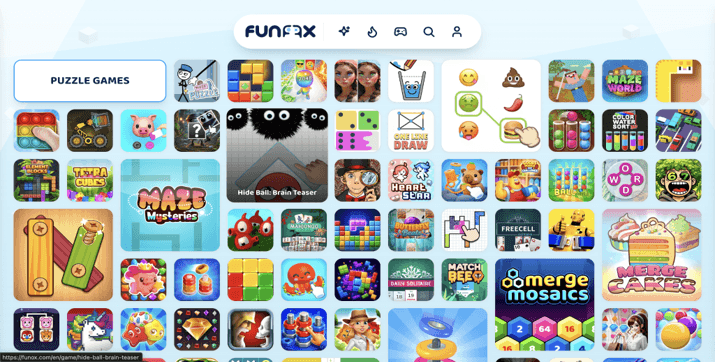
Jewel Blocks, Train 2048, and Thief Puzzle all use different mechanics, but they share an important quality: players can make meaningful progress without needing a long session.
Train 2048 is a thinking game. Players must make their own plan for combinations and space control as the game progresses, rather than relying on a fixed level to solve.
Familiar games are becoming easier to revisit
The classic solitaire is a good example. Almost no learning curve, as many players know the rules. Playing Classic Solitaire can get the player started in the game without them having to memorize a new system.
Simple card games, Ludo, and chess also work because of this. With familiar mechanics, there is less explanation required, which makes the game more suited for casual use.
This is important because sometimes you play games for fun and the mood doesn’t have to be right. One condition is that sometimes players are not looking for something new. They’re really looking for a game that’s familiar to them, starts fast, and has a comfortable feel.
Multiplayer games are becoming easier to fit into casual sessions
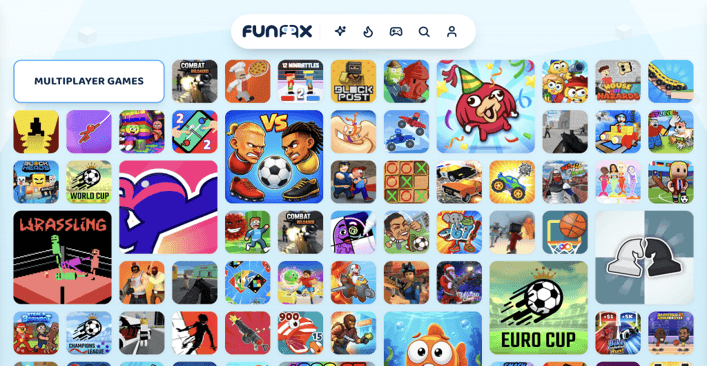
Multiplayer games can be time-consuming and complex to set up, especially with traditional play modes. Instead, casual web games can make that commitment easier by playing shorter games with simple goals.
An example of this is the title Basketball Stars. The simple objective is clear, and games can be intense in a matter of moments. Players don’t have to learn a very complicated set of systems before the game is interesting.
This also alters the ways players play multiplayer. Getting together to play doesn’t have to be.
Simple controls are becoming more valuable.
This doesn’t mean the game has to be easy to play. The movement system in Stickman Hook, for instance, is easy to master but more difficult to time and understand the momentum to complete some of the harder parts.
This also works with puzzles, racing, and sports games. Easy controls make it easier to get started, and hard level design makes it more challenging later on.
Casual gaming is becoming more flexible.
Less waiting time before playing, less commitment when playing something new, less pressure to play for a prolonged amount of time. Short levels and fast resets also help you to convert a few free minutes into a full game.
Games such as Drive Mad, Thief Puzzle, Dino Game, Classic Solitaire, and Basketball Stars show how different that casual experience can be. It’s possible to concentrate on physics, problem-solving abilities, or competition, all in short sessions.
This versatility is what casual browser games are all about. Players can decide which games they wish to play, can play them quickly, and can walk away whenever they feel like it.
Popular on OTW Right Now!



About The Author

Gagan Bhangu
Founder of otechworld.com and managing editor. He is a tech geek, web-developer, and blogger. He holds a master's degree in computer applications and making money online since 2015.