
As Living Costs Rise, Digital Tools Are Changing How Households Compare Insurance
When groceries, utilities, rent, and car repairs become more expensive, household budgets tend to get reviewed line by line. Insurance is often part of that review—not because coverage has become unnecessary, but because families want to know whether they are paying a reasonable price for the protection they have.
Thanks to digital tools, that has become more convenient. New tools like online quote platforms, insurer apps, digital policy documents, telematics programs, and automated comparison tools provide more opportunities for consumers to consider coverage and what they’re paying for before a policy comes up for renewal.
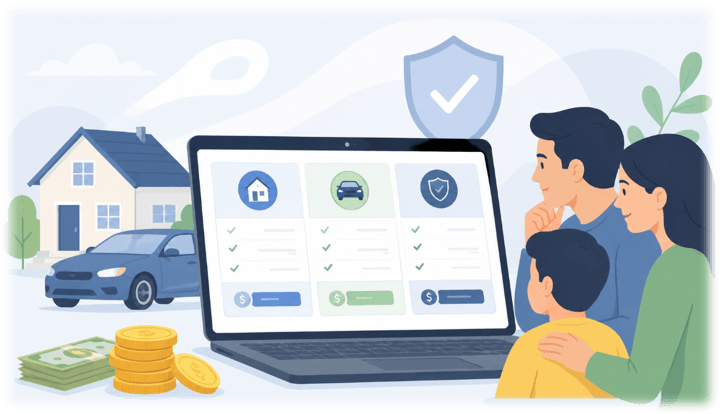
Thus, an insurance checkup may be beneficial, especially as renewal approaches. But cutting your premium without carefully reviewing deductibles, coverage limits, exclusions, and extra protection may leave a household paying significantly more after a claim.
Why Insurance Deserves a Regular Review
Many people buy insurance and don’t change much about it for several years. Things can change in a lot of ways over that period of time. The value of a vehicle can go down, a house can get renovated, a new driver can be added to the family, or the replacement cost of personal property may rise.
Insurance companies also vary widely in price. Every company employs its own rating techniques, incorporates risk factors in different proportions, and provides a variety of discounts and coverage choices. What used to be a competitive policy may not be the best option now.
With the help of digital access, it is easier to look at these differences. Sometimes, policyholders don’t need to wait for paper documents to see their coverage limits, deductibles, payment schedule, and renewal information on the insurer’s website or mobile app. Additionally, online quoting services can help you compare multiple insurers with comparable coverage options.
That isn’t to say that everybody should change companies every time. Remaining with the same insurance company can help to retain some of the discounts or other advantages. However, comparing the options available now is helpful. Even if a household decides not to change its policy, it can do so with a better understanding of the premium and coverage it has versus its alternatives.
Mobile Home Coverage Requires a Closer Look
The same insurance does not cover mobile and manufactured homes as traditional site-built homes. Coverage can include the home, personal property, personal liability, and costs of living away from home if a covered loss renders the home uninhabitable. Separate protection may also be required for hazards that are not covered by the standard policy, depending on the policy, property, and location.
Owners need to be especially mindful of the valuation of their home and personal valuables following a loss covered under the policy. Actual cash value typically includes depreciation, whereas replacement cost may offer a higher settlement option to fix or replace the property, depending on the terms, conditions, and limits of a policy. Replacement cost protection is also more costly, but this may be significant after a significant claim.
Because coverage terms can vary, comparing mobile home insurance coverage can help homeowners understand how deductibles, property limits, liability protection, and optional coverages differ among available policies.
Technology is also becoming more of a factor in property insurance. Homeowners can spot some issues earlier via smart smoke detectors, leak sensors, security systems, and other connected devices. Some insurers may consider approved protective devices when deciding whether to offer discounts, and if so, what they are. Availability and requirements vary by company and location.
Homeowners should confirm the identity of the insurer, look at the official policy documents, and understand what is covered and what isn’t before selecting a policy. The treatment of decks, sheds, detached garages, permanently attached additions and other structures may be different.
A Low Auto Premium Does Not Tell the Whole Story
Another common cost for households to consider cutting back on is car insurance. A negligible premium that will easily fit into the budget may be attractive, but the monthly premium payment tells very little about the protection that is being purchased.
If a cheaper policy has a higher deductible, lower liability limits, or is written without collision and comprehensive coverage, etc., then it may be an acceptable policy. It may also not include optional features like roadside assistance or rental reimbursement. None of these differences is automatic disqualification of a policy. The issue is that when a driver first realizes the restrictions, it is after an accident or one of the events covered.
Drivers working with a specific monthly budget can compare factors that affect car insurance options around $100 a month, while keeping in mind that advertised prices are estimates and individual premiums can vary substantially.
Actual premiums vary based on factors such as location, driving history, age (when applicable), vehicle type, chosen liability limits, deductibles, annual mileage, and other information the insurance provider uses. Credit-based insurance information is also a factor in pricing in states where it is allowed.
Technology is having a major impact on the auto insurance industry. Today, many insurance companies are implementing telematics programs, which gather driving data, including how fast cars are driven, how they are braking, how fast they are accelerating, or the time spent driving. Depending on the insurance company and program, those numbers can be used to determine discounts and/or premium calculations. Before signing up for telematics, consumers should review the savings they may anticipate and what data is being collected.
Compare Equivalent Policies, Not Just Prices
All inputs should be equal when comparing insurance. A car’s price tag is not just the liability coverage. If one car has only the minimum liability coverage mandated by the state, and the other car has higher liability coverage along with the optional collision and comprehensive coverage, it’s not a like-for-like comparison. This is the same with mobile home insurance.
When requesting quotes, households should try to keep the following details consistent:
- Coverage limits
- Deductible amounts
- Optional endorsements and add-ons
- Property or vehicle information
- Listed drivers and household residents
- Payment schedule
- Policy term
Digital comparison tools can help, but the information you enter into each quote still matters. Prices can differ significantly based on deductibles, liability limits, and optional coverages.
Also, make sure that a quote has all the applicable fees. Monthly payments could include installment or payment-processing fees that add up to an annual payment that is greater than the amount suggested by a simple monthly estimate.
Discounts are also a factor, but confirm any discounts. Some companies offer discounts for having several policies, installing qualifying security equipment, having a good driving record, opting for some usage-based programs, or making automatic payments. Discounts will be offered depending on the offer, and should be included in the final policy documents, as any discounts discussed during the quote process may be subject to change.
Know Where Reducing Coverage Can Backfire
A common way to lower an insurance premium is to increase the deductible. It makes sense for families who have the savings to afford the higher out-of-pocket cost following a claim comfortably. However, for those who don’t have an emergency fund, a high deductible may make a covered loss a difficult financial burden.
Lowering liability limits may have more repercussions. When serious auto accidents result in injuries or significant property damage, costs may exceed a low policy limit. Then, based on the situation and legal rules involved, the policyholder may have to pay out of his own pocket for costs that exceed the policy limits. That’s something to consider more than a relatively modest decrease in the monthly premium.
In some cases, it can be justifiable to drop collision and comprehensive coverage on an older car – especially if the cost of the insurance premiums and deductibles is low compared to the potential payout cost. The decision should consider the vehicle’s current value, the cost of carrying the coverage, and whether the household could afford to repair or replace the vehicle without insurance proceeds.
Use Digital Tools as a Starting Point, Not the Final Decision
Shopping for insurance and handling policy is much quicker with insurance technology, but there is still a need to comprehend the coverage being purchased. A comparison website can provide multiple prices in mere seconds, but without a comparable limit and deductible, those numbers don’t really mean much.
This is also true when using mobile apps and automated recommendations. They can help you to locate policy documents, remind you to file a claim, file a claim, or check coverage options, but the actual insurance policy will determine coverage.
Consumers should use digital tools to narrow choices and focus on the questions that matter most. It’s a good idea to check the declarations page and coverage documents, if any, deductibles, major exclusions, and the financial and regulatory data about the insurance company before buying a policy.
Make the Renewal Review a Household Habit
You don’t have to make the annual insurance review into a huge undertaking. It can be helpful to collect up several comparable declarations pages and to see if coverage requirements have shifted since the time of your last quote.
Another reason to reevaluate insurance after life changes is that households may want to review significant policy changes now instead of at the next annual renewal. A number of life changes such as purchasing a car, relocating or remodeling a home, introducing a new driver into the family, or buying large personal items can impact how much insurance coverage is needed.
When changing insurance policies, check the effective date of coverage and don’t cancel your current coverage too early. If coverage isn’t obtained, the family is left without protection, and it can also affect future auto insurance premiums or coverage.
With the rising cost of living, households should seriously consider their recurring costs, and insurance is no exception. Digital tools have made comparing policies easier and faster, but the best result isn’t necessarily the cheapest policy. Coverage that covers losses a family can’t afford at the budget’s price point is coverage. Coverage is coverage; it’s coverage that you can afford at the price point that you can budget.
Popular on OTW Right Now!




About The Author

Gagan Bhangu
Founder of otechworld.com and managing editor. He is a tech geek, web-developer, and blogger. He holds a master's degree in computer applications and making money online since 2015.