
How Advanced Simulation Technology Helps Business Decision Making
Rapid shifts in technology make strategic planning a difficult assignment for corporate leaders. If you are using spreadsheets to make huge investments or changes in operations, you’re risking a lot of money. That’s why a bad decision on supply chain logistics or in allocating your resources can cost you millions.
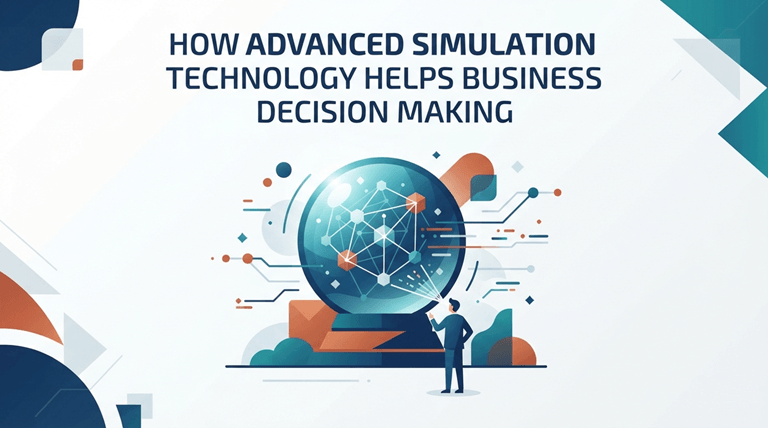
Simulation platforms allow leaders to recreate their operating systems and analyze the results. Virtual digital twin environments are created for organizations to safely test different scenarios. This blog shares how simulation technology is changing the way firms make decisions and driving commercial growth.
Modeling Complex Supply Chains and Logistics
You can’t analyze supply chain resilience with static spreadsheets because they don’t encompass dynamic interactions. With platform tools such as simulation solutions, logistics managers can model supply chain networks with a very high level of mathematical precision. Virtual simulation systems can test different shipping routes and warehouse configurations and highlight supply chain bottlenecks.
Simulation-driven supply chain optimizations:
- Identifying Bottlenecks: Identifies structural delays in shipping ports, sorting hubs, and transit routes during high volume
- Inventory Threshold Testing: Calculates optimal safety stock levels to prevent inventory stock-outs and reduce storage costs
- Route Risk Analysis: Knows alternative freight shipping routes to reduce fuel costs and avoid weather-related disruptions
Optimizing Factory Operations and Floor Layouts
Once construction begins, any redesign of the plant’s assembly line means costly downtime. Industrial simulation software allows plant engineers to create virtual models of proposed robotic assembly sequences and factory floor layouts. Testing equipment speeds, material movements, and worker ergonomics helps ensure new manufacturing lines run at maximum efficiency.
Here are the simple yet essential manufacturing benefits from digital modeling:
- Assembly Line Balancing: Given machine cycle times and worker movement sequences, maximize hourly factory production
- Equipment Stress Analysis: Simulates the machinery’s load capacity to predict component fatigue and schedule maintenance before failure occurs
- Capital Investment Validation: Tests return-on-investment projections for new machinery before signing expensive purchase contracts
Enhancing Risk Management and Crisis Planning
Corporate risk managers must get their organizations ready for rare but high-impact events such as natural disasters or sudden market crashes. Running physical emergency drills at multi-site corporate operations is costly, disruptive, and challenging to organize regularly. Executive teams can run virtual stress tests and real-time, emergency crisis response scenarios safely with digital simulation technology.
Take a look at the uses of risk mitigation for business leaders:
- Financial Stress Testing: Models the resilience of cash flows and the effects on the balance sheet under scenarios of severe economic recession
- Cyber Incident Response: Conducts ransomware attack simulations to test data recovery protocols and the IT security team’s response times
- Facility Emergency Drills: Test building evacuation plans and emergency resource deployment in simulated disaster scenarios.
Accelerating New Product Development and Testing
Bringing innovative physical products to market involves multiple design iterations, physical prototyping cycles, and stress tests. Building physical prototypes repeatedly drains valuable development budgets, delays product launches, and extends time-to-market. Engineering teams can now digitally stress test and analyze thermals on 3D models using advanced simulation tools.
Drive Strategic Growth with Simulation Tech Today
Using advanced simulation technology allows leaders to make bold, data-driven strategic decisions. They can gain a competitive advantage by modeling supply chains, optimizing manufacturing floor plans, and accelerating product development. Don’t forget that virtual testing eliminates operational errors, protects your capital investments, and ensures your business is ready to respond to a changing market.
Popular on OTW Right Now!


About The Author

Gagan Bhangu
Founder of otechworld.com and managing editor. He is a tech geek, web-developer, and blogger. He holds a master's degree in computer applications and making money online since 2015.