
Why an AI Camera Angle Editor Is Becoming an Essential Tool for Modern Creators
Picture you’ve finally generated the perfect image. It could be a beautifully designed product layout, a game character you’ve spent days refining, or an AI-made concept that your client has already approved. Everyone is happy until the next request arrives.
‘Can we also see the back?’
‘What would it look like from the side?’
‘Do you have a three-quarter view?’
One perfect image suddenly fails to deliver. This scenario plays out every day for many content creators across industries of game development, 3D modeling, and e-commerce. A single visual is often the starting point for an entire project, and before long, multiple angles are needed to keep production moving.
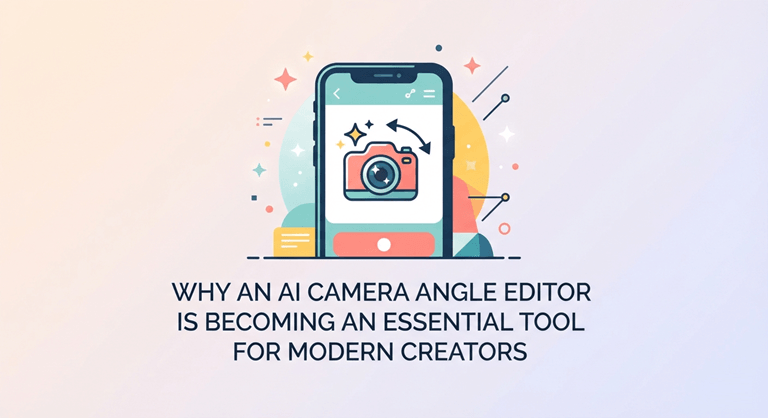
Unfortunately, getting those additional perspectives has traditionally meant more drawing, photography, revisions, and expenses. Specialized tools for angle editing optimize the workflow, changing the whole image design game.
Why One Image Rarely Tells the Whole Story
Visual projects usually don’t stop after the first draft. Once an image is approved, it usually becomes the foundation for everything that follows.
A game developer may need front, back, and side references before moving into 3D production. An online seller expects shoppers to inspect a product from every possible camera angle. A designer may require a few perspectives to present an idea to a client. Meanwhile, a content creator simply wants greater variety without the necessity to recreate the same artwork over and over. The common challenge is that everyone starts with a single visual but quickly realizes they demand many more.
This is exactly where an AI Camera Angle Editor brings value. It removes the burden of manual remodeling by generating multiple views from one approved image. Whether you demand a front view, side profile, rear view, or a different camera angle, the process gets significantly faster while keeping the original design consistent.
The Traditional Workflow Isn’t Built for Speed
Until recently, creating multiple views meant starting over or at least starting halfway over. If you were illustrating a character, you had to redraw all angles manually. Each perspective demanded paying close attention to anatomy, proportions, and lighting. Even experienced artists could spend hours making sure every detail matched the original.
Product photography wasn’t much easier. To show a product from different directions, you needed to arrange lighting, reposition the object, adjust the camera, take dozens of photos, and edit each one individually. If the packaging changed or a new color became available, you’d often repeat the entire shoot from scratch.
For 3D artists, the situation could be even more frustrating. Modeling from a single concept image often involves wondering what hidden details look like. That guesswork usually leads to revisions, consuming both time and budget.
The traditional process shares the same drawbacks across creative industries:
- Hours of repetitive manual work
- Higher production costs
- Longer project timelines
- Increased chances of inconsistencies
- More revisions between teams and clients
When you’re handling dozens – or even hundreds – of assets, these inefficiencies add up quickly.
The Reasons Creators Benefit From Multiple Angles
Every profession has its own reasons, explained in detail below.
Content Creators
Content creators rarely use the same image only once. A thumbnail, banner, social media post, blog illustration, and promotional graphic may all come with a different composition.
Having multiple angles makes it much easier to keep content fresh while maintaining the same visual identity. So creators don’t have to waste time on recreating artwork, as they could move on with various viewpoints of an already approved image.
Game Developers
A character typically exists as a reference sheet filled with varied perspectives before they are playable. It ensures consistency when different artists work on the same project.
The lack of references to back, left side, right side, and three-quarter views can trigger misalignment between the concept art and the outcome.
3D Modelers
Ask any 3D artist, and they’ll tell you that it’s rare for one image to provide enough information. A front view might visualize the face, but what about the back of the outfit? How thick is the object? Where are the hidden details?
Additional perspectives reduce guesswork and allow modelers to recreate assets with better accuracy from the very beginning.
E-commerce Businesses
Customers can’t pick up products through a screen. It explains that online stores invest heavily in showing products from every possible camera angle. The more information shoppers get, the more confident they feel before purchasing.
Traditionally, this required professional photography sessions with every product change. Now imagine updating hundreds of listings. The costs – and the hours involved – can become overwhelming.
Designers
Designers often seek to present ideas from several viewpoints, whether it’s furniture, packaging, consumer products, or architectural pieces.
Clients understand concepts much faster when they can examine every side instead of imagining what’s invisible.
How an AI Camera Angle Generator Simplifies the Process
AI camera angle generator offers a practical advantage, allowing creators to begin with a single approved image and generate additional viewpoints from it.
Need the front? Generate it.
Need the back? Generate it.
Need a left profile or a dramatic three-quarter perspective? Generate those too.
Professionals can dedicate time to polishing ideas instead of manually rebuilding them because there’s no need to perform the repetitive creative tasks.
Better Camera Control, Less Repetitive Work
Modern AI tools boast improved camera control. It means creators are no longer required to treat every new perspective as a completely separate project. They can easily explore different viewpoints while keeping the original design intact.
This alignment is especially important during multi-person collaboration on the same project. Concept artists, 3D modelers, marketing designers, and clients all run from the single visual foundation. The result is smoother collaboration and fewer revision requests on interpreting missing details throughout the process.
Saving Time and Budget
Time is worth its weight in gold. Every additional hour spent on illustration redraws, organizing photoshoots, or inconsistency fixes increases production costs. A multiple angle image generator helps eliminate much of that repetitive work.
- For freelancers, this translates to delivering projects sooner.
- For agencies, it’s about handling more clients without expanding delivery time.
- For businesses, it involves reduced costs while maintaining high-quality visuals.
A Smarter Workflow for Modern Creative Teams
Creative work should be about pitching ideas, not repeating the same task over and over. Designed to help skip tedious redraws and costly reshoots, an AI camera angle editor transforms one approved image into multiple angle views.
With an AI-driven angle generator and precise camera control, you can get every required camera perspective faster, reduce production costs, and spend more time bringing great concepts to life.
Popular on OTW Right Now!
-
 Image to Video AI Review: Transforming Still Images into Dynamic Videos
-
 How AI Video Is Making High-End Visual Advertising Accessible to Lean Teams
-
 How AI Room Planning Helps Shoppers Choose a Dresser That Fits
-
 I Handed MeltFlex AI My Ugliest Room on Purpose. It Nailed the Vibe and Fumbled the Fine Print

About The Author

Gagan Bhangu
Founder of otechworld.com and managing editor. He is a tech geek, web-developer, and blogger. He holds a master's degree in computer applications and making money online since 2015.