
Choosing the Right Portable Solar Panel for RV, Camping and Portable Power Stations
Outdoor travel is easier when you have a reliable power source. From an overnight camping trip to an RV road trip across the country to surviving in an emergency, solar power enables you to stay connected without relying on a grid connection. The right-hand side will also use fewer fuel-powered generators, making your setup quieter and cleaner.
When deciding on a panel, consider the ways you will use it. On RV trips, you may need sufficient power to recharge batteries and run lights, fans, refrigerators, and electronics. Campers often opt for lightweight gear to power phones, cameras, laptops, and other small electronics. When choosing a portable power station, electrical compatibility, solar input limitations, and charging speed are important to consider.
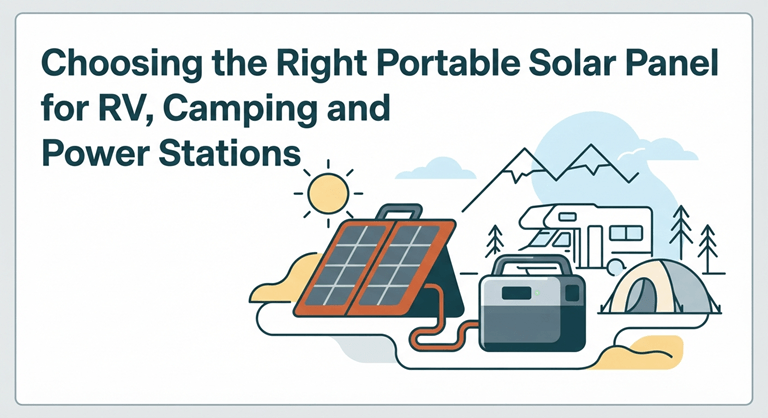
Start With Your Power Needs
The first step is to determine the energy requirements for each day. The power rating of solar panels is measured in watts, and power stations are measured in watt-hours. These numbers represent various things.
The 200W is a maximum rating under the test conditions. A 1,000Wh power station is a measure of the energy stored in its battery. Your daily energy requirements should determine the size of both components.
A camper, for instance, who primarily uses a cell phone, camera, and laptop could require a smaller panel. If you’re using multiple appliances in your RV and are plugging in a sizeable battery bank, then you probably need a more powerful system.
Make a list of the devices used and roughly how much energy each consumes every day. This will provide a more realistic starting point than selecting a panel based solely on wattage. The actual amount of solar energy produced also varies based on weather, shading, panel angle, le and temperature.
Choose the Right Panel for Your Lifestyle
When traveling, portability is important. If you move from campground to campground regularly, look for a panel that can be moved, set up, linked, and stored. Folding or portable designs can be moved to direct sunlight, while the RV or tent is situated in your shadowed area. Folding or portable options will provide you with the flexibility you need, ed as you can place them in direct sunlight whilst your RV or tent is in your shadowed area.
For RV owners, portable solar panels offer a practical option for solar charging without committing to a permanent rooftop installation. Ground-deployed panels also allow adjustments throughout the day to maximize sunlight collection.
For frequent campers, consider the panel’s size and weight. Some high-wattage models tend to be more space-intensive, so make sure that it will fit in your car. Easy setup is a factor you’ll want to take into account, too.
Check Power Station Compatibility
A solar panel and portable power station need to work together. Before buying, check the power station’s solar input specifications. Pay close attention to:
- Maximum solar input wattage.
- Supported voltage range.
- Maximum input current.
- Connector type.
- Whether an adapter is required.
The panel’s voltage and current should be within the power station’s acceptable range. This can lead to suboptimal charging speeds or equipment damage if an incompatible setup is used. Another important distinction between systems is the type of connectors that are used – make sure they are compatible before buying any cables or adapters.
This is particularly important if you are upgrading your solar system. A strong panel doesn’t always imply quicker charging when your power station has a lower solar input limit.
Consider Bifacial Solar Technology
Bifacial panels are another alternative for mobile power supplies. Bifacial panels are designed to capture more of the light that falls on the back surface; in contrast, traditional panels can only collect sunlight from one side.
For travelers seeking higher energy collection in suitable environments, a 480W bifacial portable solar panel is worth considering. Bifacial performance depends heavily on installation conditions. The amount of extra energy received by the rear side depends on the amount of reflective surface, open ground, and proper positioning.
If the bifacial panel is used outdoors, do not position it against a dark surface. Provide sufficient backlight to the back. This makes you more likely to make the best of the panel’s design.
Think About Durability and Weather
Equipment used outside is exposed to dust, moisture, heat, and repeated handling. The conditions you plan to use the solar panel in should match the conditions it is rated for.
Those who travel in an RV need to consider panels that can withstand the movements and setups they encounter daily. Campers need to research the panels’ durability and weather resistance. If you anticipate heavy use in the elements, check the manufacturer’s specifications for water resistance and operating temperatures.
When space is a constraint, so is panel efficiency. When storage and deployment space is limited, higher efficiency panels will generate more electricity per square foot under certain conditions.
Portable Solar Power Requires Smart Planning
The highest wattage solar panel is not necessarily the best portable solar panel. It’s the one that suits your energy needs, capacity needs, travel patterns, and power station requirements.
Before purchase, estimate daily power requirements, the solar charging input ratings of the power station, connector compatibility, and the frequency of solar panel relocation. Portable ground-mounted panels are good for those who travel in their RVs and camp, as they can be brought with you. If more electricity can be generated in a smaller system, then bifacial tech is an additional solution.
The right mix of panel capacity, compatibility, portability, and durability can help you create a solar system that matches your adventures. This smart option will help you spend more time outdoors while keeping your devices and equipment charged wherever you go.
Popular on OTW Right Now!
-
 Why Data Centres Depend on Reliable Electrical Connections
-
 How to Hire a Software Development Team: Best Practices, Models & Pitfalls to Avoid
-
 The Next Generation in Mental Health Services Requires Genuine Sales-Assisted Technology Solutions
-
 10 Key Factors to Consider When Choosing a PCB Assembly Partner in Poland



About The Author

Gagan Bhangu
Founder of otechworld.com and managing editor. He is a tech geek, web-developer, and blogger. He holds a master's degree in computer applications and making money online since 2015.