
Why More Practices Are Turning to Automated Claims Processing
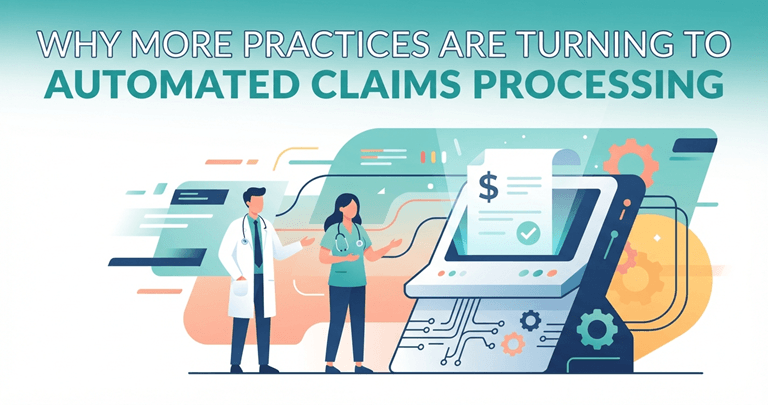
There’s a quiet shift happening across medical practices of every size: billing departments that once relied entirely on manual processes are increasingly turning to automated systems to manage their claims workload. It’s not a trend driven by novelty; it’s driven by necessity, as payer requirements grow more complex and margins grow tighter across the healthcare industry.
The Pressure Practices Are Facing
As operating costs have increased, reimbursement rates have stayed level in many specialties. Meanwhile, payer policies surrounding documentation and coding accuracy have tightened significantly, reducing the amount of room for the small slip-ups that did not always mean much. These factors are driving more practices to automation as a necessity, not a luxury upgrade.
What’s Actually Driving Adoption
The benefits of automated claims processing that practices consistently cite center around three things: fewer denials, faster payments, and reduced administrative burden on already-stretched billing teams. These aren’t abstract advantages; they show up directly in a practice’s monthly financial reports.
Staffing Shortages Are Accelerating the Shift
There have been longstanding staffing deficits in healthcare administrative jobs, such as those in billing and coding. Organizations that may be having difficulty employing and keeping billing experts are more and more turning to automation not as a trade for these skilled individuals, but as a means to make these already skilled billing staff even more effective.
Patients Expect More Transparency
Patients today want more accurate and transparent billing information and quicker answers to billing inquiries. However, manual processes that are liable to delays and potential errors are often unable to keep up with these expectations. Automated systems can yield more accurate and timely billing data, enhancing the patient financial journey.
Competitive Pressure Within Specialties
As more of a specialty’s practices roll out automated billing and noticeably improve cash flow and efficiency, there is increased competition to adopt it. As more and more practices move over to outdated manual practices, they are becoming a step behind their more modernized counterparts in terms of financial standing.
The Shift From Reactive to Proactive Billing
One of the biggest cultural changes automation brings is from a reactive to a proactive stance for billing teams, where they’re always chasing denials and errors after the fact, to a proactive approach where they can identify and avoid them before they hit a payer. This will be a significant change in the day-to-day experience for billing staff, which will help alleviate burnout and make their jobs more enjoyable.
Integration With Broader Practice Technology
As the claims processing trend moves toward automation, it is now more frequently integrated directly with practice management and EHR software, which helps to streamline the information transfer from patient visit to payment. This integration eliminates the double data entry that has caused big headaches in billing in the past.
Considering the Long-Term Trajectory
With the trajectory of healthcare technology overall, it’s no surprise that automated claims processing will only become part of the standard offering across the industry. Practices that do this early tend to develop institutional experience with these systems years before the need arises, and reap benefits as the need evolves.
Frequently Asked Questions
Is automated claims processing becoming an industry standard?
Adoption continues to rise, driven in part by increasing payer complexity and staffing challenges.
Do smaller independent practices benefit as much as larger health systems?
Yes, there is a significant relative improvement in smaller practices because they generally cannot afford to cover unexpected billing mistakes or cash-flow losses.
How does automation affect the patient billing experience?
Automated systems are likely to generate more correct and prompt billing data, thereby boosting overall patient satisfaction with the billing process.
What role does staffing play in the decision to automate?
One of the main reasons is the ongoing staffing issues with medical billing positions, which is leading more practices to seek ways to use automation to get the most out of their staff.
Popular on OTW Right Now!



About The Author

Gagan Bhangu
Founder of otechworld.com and managing editor. He is a tech geek, web-developer, and blogger. He holds a master's degree in computer applications and making money online since 2015.