
Turning Ecommerce Data Into Revenue Through Better Analytics and Business Intelligence
Every ecommerce business generates a significant amount of data, from customer visits and product searches to completed purchases and inventory updates. However, collecting data alone does not increase sales or improve decision-making. Businesses need meaningful analysis to uncover customer preferences, identify growth opportunities, and respond to changing market trends. By investing in data engineering solutions, retailers can organize information more effectively and build a strong foundation for ecommerce business intelligence that supports data-driven ecommerce growth.
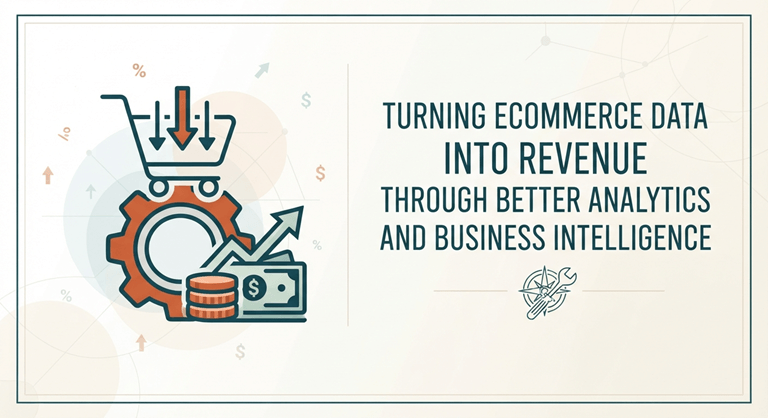
Combining analytics with business intelligence can give ecommerce businesses a better understanding of customer behavior, operations, and opportunities. Rather than making assumptions, decision-makers can leverage trusted insights to drive better sales, optimize inventory, and design a higher-quality shopping experience, all of which helps ensure sustainable sales revenue growth.
Why Ecommerce Data Matters More Than Ever
Today’s ecommerce platforms gather data from several customer touchpoints daily. Many valuable pieces of business data can be collected from website visits, product searches, purchases, returns, marketing campaigns, and customer service management.
Gathering information is great, but analysis and understanding are key. Properly organized and interpreted data can reveal the story of the business’s customers, emerging buying patterns, and opportunities that can be overlooked.
Good business reporting also facilitates overall performance checks by leaders, and consistent performance indicators and trend analysis provide timely data-driven business decisions. An understanding of data will help organizations to make informed decisions when responding to their customers and evolving market dynamics.
Key Ecommerce Metrics Every Retailer Should Track
Successful merchants focus on indicators that are valuable to the business rather than gathering vast amounts of data. Understanding customer segmentation enables companies to identify different customer groups and better tailor marketing strategies.
Purchase behavior can be analyzed to understand how people use products before purchase, and monitoring the conversion funnel can help uncover where potential customers drop off during the purchasing process.
Other beneficial metrics include customer lifetime value, shopping cart analysis,, and product performance analysis, which provide deeper insight into customer relationships and product performance.
By conveying these insights through structured KPI tracking and an interactive sales dashboard, decision-makers can monitor business performance and make quicker, more confident decisions.
Customer Behavior Analysis for Better Revenue Growth
By understanding customer behavior, ecommerce companies can tailor their websites to better serve customer needs and enhance their purchasing experience, which can lead to higher sales and better customer satisfaction.
Analysis of customer behavior can help organizations detect patterns of browsing, repeat buying, and shopping cart abandonment and know when and how to promote products and services on an individual basis. These insights enable businesses to create experiences that better match customer expectations.
This detailed customer segmentation, combined with an analysis of purchase behavior, can enable more personalized suggestions and marketing campaigns. With strong customer insights, retailers can anticipate customer desires, not just respond to past trends.
This allows businesses to enhance their revenue optimization analytics strategies, which can lead to better customer satisfaction and long-term profits.
Using Business Intelligence to Improve Inventory Decisions
One of the largest challenges for e-commerce companies is maintaining the right stock levels. Excessive stock can also consume valuable resources, and having too little stock can result in lost sales and customer satisfaction.
Business intelligence can help make inventory decisions smarter by enhancing demand forecasting and making more accurate predictions of purchasing trends. These insights also help in improving inventory management, giving retailers a better balance between having the right products on hand and running them efficiently.
Accurate analytics also contribute to pricing strategies, allowing companies to adapt better to evolving customer needs and competitive dynamics. When used in conjunction with accurate sales and revenue forecasting, these tools can boost profitability and cut excess inventory expenses.
How Data Engineering Improves Ecommerce Reporting Accuracy
Ecommerce data can be spread across different systems, such as online shops, payment platforms, inventory software, customer relationship management apps, and marketing programs. Reports can have incomplete or inconsistent information if the data is not properly organized. An Ecommerce Data API helps businesses connect and access structured data from multiple sources, ensuring accurate product, pricing, inventory, and customer insights for better analysis and decision-making.
Strong business intelligence and data engineering practices help consolidate information into a centralized data warehouse, creating a more reliable foundation for business reporting.
The efficient ETL pipeline fetches, cleans, and formats the data from other sources for analysis. Consistency is further enhanced by effective data modeling, which structures the data in a way that makes it easier to analyze.
Comprehensible business reporting paired with data visualization empowers decision makers to better understand complex information and make better decisions.
Building a Single Source of Truth for Retail Data
Different business departments often rely on separate reports, which can result in conflicting numbers and inconsistent decision-making. Establishing a single, trusted source of business information helps eliminate confusion while improving collaboration across teams.
An executive dashboard integrates the critical business data and provides leaders with a place to view it. This information also enhances decision support systems as reliable information for planning and strategy development.
When trusted data is coupled with insights from online retail performance, companies can better assess performance and also rely on predictive modeling to foresee future trends and opportunities. With everyone operating from a single source of trusted data, organizations can make quicker, better business decisions.
Conclusion
It is not enough to just gather ecommerce data; it must also be translated into business value. Firms with robust analytics and reliable data management are better positioned to make informed business decisions, optimize operations, and have a better understanding of their customers.
Retailers can boost long-term data-driven ecommerce growth by investing in ecommerce business intelligence, tracking the appropriate performance metrics, and implementing effective engineering practices to ensure accurate data. With ecommerce still a maturing industry, those able to leverage data into actionable insights will be better equipped to deliver a better customer experience, streamline operations, and grow their revenues sustainably.
Popular on OTW Right Now!


About The Author

Gagan Bhangu
Founder of otechworld.com and managing editor. He is a tech geek, web-developer, and blogger. He holds a master's degree in computer applications and making money online since 2015.