
Common Challenges Solved By Advanced Material Handling Solutions
Consider a warehouse during the holiday rush: stacks of pallets reaching the roof, forklifts moving through tight aisles, and employees working against time to load shipments out the door.
Also, consider a similar warehouse operating like a well-oiled machine, with orders flowing seamlessly through the process without a bottleneck anywhere along the way. That’s the difference advanced material handling solutions make.
As supply chains become increasingly complicated and customer demands rise, traditional methods will no longer cut it. The good news is that automated systems are here to help alleviate today’s problems that were once thought unsolvable.
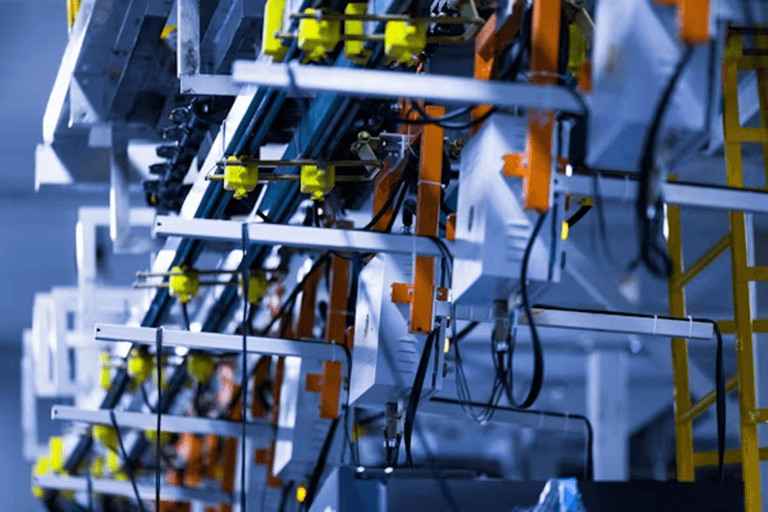
Whether dealing with a labor shortage or an inefficient design, the new systems being developed are redefining how materials are handled and moved.
Here are some common challenges that advanced material-handling solutions solve.
1. Labor Shortages and Rising Workforce Costs
Hiring and retaining workers in warehouses has become one of the biggest challenges faced by distribution centers everywhere.
For this reason, Material Handling Solutions and automation are increasingly the preferred choice for many companies to address the shortfall caused by a shrinking labor force.
The use of robotic picking, autonomous mobile robots, and automated sorting means that there is no need for labor to perform repetitive and physically arduous tasks. This means the current workforce can be shifted to work that involves critical thinking and monitoring, rather than repetitive, arduous tasks like lifting and walking.
Automation also saves the company time and costs associated with training new workers because most of the work is performed by machines. This results in predictable labor costs and makes the company less vulnerable to seasonal hiring and staffing problems.
2. Inefficient Use of Warehouse Space
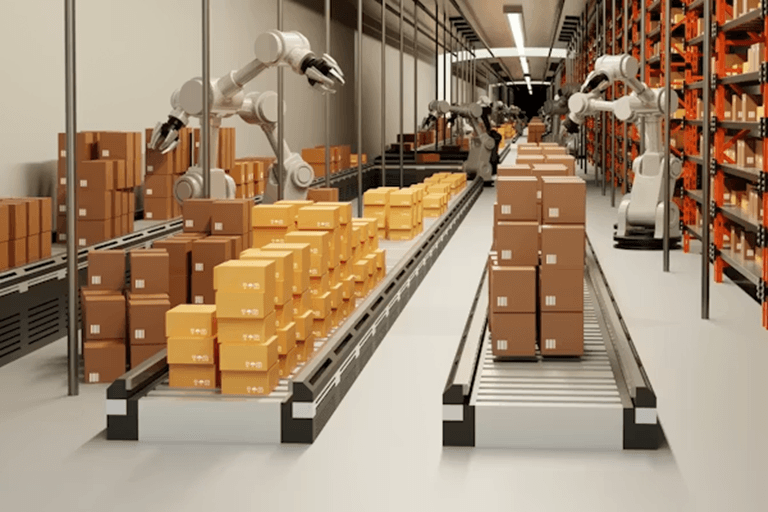
Space is frequently the costliest and most under-utilized resource in a facility. Traditional storage methods, however, tend to waste vertical space and create cluttered layouts that slow down every process downstream.
To address this, automated storage and retrieval systems make use of vertical space that would otherwise sit empty, dramatically increasing storage density without expanding a building’s footprint.
Besides, smart and efficient placement of goods in the storage area, based on demand analysis, helps achieve maximum operational speed. This allows your companies to maximize their product storage capacity and throughput and postpone costly facility expansion plans.
3. Order Accuracy and Fulfillment Errors
Order fulfillment mistakes come at a cost – both financially, in returns and reshipping, and in lost customer trust.
Therefore, advanced sorting and dispensing technologies dramatically cut down on the human error that so often creeps into manual picking and packing processes.
Also, precision dispensing ensures consistent, accurate measurement and distribution of material, while automated sorting technology verifies the route for each product before it leaves the warehouse.
Similarly, software that provides real-time access to inventory and order information enables teams to spot problems before they become too big to solve. Typically, technologies are interconnected, and the mistakes that used to go undetected until a client contacted the company could be spotted immediately.
4. Scalability During Peak Demand
Seasonal demand spikes and surges can be problematic for facilities that lack design flexibility. Scalable automation can be achieved through flexible palletizing and conveying, enabling organizations to increase production capabilities without redesigning their entire facility.
Rather than training temporary employees every season, companies can use equipment that adjusts to varying levels of production and activity.
Furthermore, by using software that provides real-time data on potential changes in demand, organizations can prepare for the changes ahead of time rather than being unprepared and trying to catch up.
5. Lack of Visibility Across Operations
The inability of management in manufacturing units to get a clear view of the situation on the shop floor has been attributed to the lack of integration among various processes.
Today, however, thanks to software integration platforms, all machinery and processes are linked through a single platform.
Through this integration, the manager can monitor performance across various metrics, inventory movement, and bottlenecks in real time, rather than relying on daily reports prepared only at the end of the day. Decision-making becomes much faster and more informed, as problems can be resolved immediately.
Conclusion
While the problems facing the current generation of material handling processes are unlikely to be gone in the near future, the technologies used to solve them have never been more advanced.
Advanced technologies are no longer the exclusive privilege of large companies; such solutions have become a must-have for all businesses wishing to stay competitive in the fast-paced market.
By solving multiple problems like workforce shortage, inefficiencies in using the space, accuracy problems, scalability needs, and lack of visibility at once, these technologies provide a solution that is very rarely found.
Therefore, as the world evolves, businesses that embrace new technologies now will be the winners in the future.
Popular on OTW Right Now!



About The Author

Gagan Bhangu
Founder of otechworld.com and managing editor. He is a tech geek, web-developer, and blogger. He holds a master's degree in computer applications and making money online since 2015.