
8 common weak points in supply chains that counterfeiters exploit
Counterfeiting is usually seen as a problem that happens at the point of sale. Many people imagine fake products appearing on online marketplaces or store shelves. In reality, counterfeiters usually take advantage of the weaknesses much earlier in the supply chain.
Every step between manufacturing and delivery creates opportunities for bad actors to introduce fake goods. There might be possibilities for manipulating the records or distributing unauthorized products.
This is why businesses have been investing in stronger supply chain security. They have been looking for more advanced authentication methods. The reliable anti-counterfeit services help identify risks before counterfeit products reach customers. Understanding where the vulnerabilities exist is equally important.
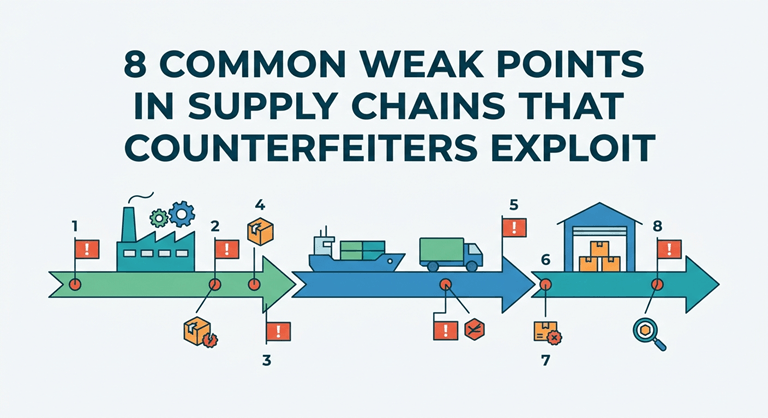
The challenge is that modern supply chains are complex. Products usually move across countries. They pass through multiple vendors and involve numerous logistics partners. There are plenty of touchpoints.
The opportunities for counterfeiters to exploit the weaknesses are also plentiful. Below are 8 of the most common supply chain weak points that businesses should pay close attention to.
Unverified Manufacturing Partners
Many companies outsource manufacturing to third-party facilities. This can reduce the cost and improve the efficiency. However, it creates security risks when the suppliers are not properly vetted. Counterfeiters usually target the weak manufacturing networks.
They provide access to the product specifications, materials, and production processes. The common risks include unauthorized production runs, in addition to the misuse of manufacturing equipment.
It leads to the theft of the product designs or unapproved subcontracting. Businesses should always audit their manufacturing partners and maintain clear oversight of the production activities to reduce such risks.
Packaging and labeling suppliers
Packaging suppliers play a critical role in product security. They are sometimes overlooked when companies evaluate supply chain risks. Counterfeiters understand that convincing packaging makes the fake products appear legitimate.
They gain access to the packaging materials, labels, or design files. Then they create counterfeit goods that become much easier to produce. The potential vulnerabilities include stolen packaging materials in addition to unauthorized label production.
Then there may be leaked design templates with the misuse of excess inventory. The strong supplier management under controlled access to the packaging assets helps minimize such threats.
Poor inventory visibility
A lack of visibility is one of the biggest challenges in supply chain management. Companies cannot accurately track inventory movement often. In this regard, counterfeit products enter legitimate channels without being detected.
The signs of poor inventory visibility include unexplained stock discrepancies and inconsistent shipment data. Then there may be missing inventory reports or delayed reporting. Modern tracking systems allow businesses to monitor their products more effectively.
They can identify the irregularities before they become larger problems. Organizations have been investing in a comprehensive anti-counterfeit solution. They usually prioritize inventory transparency. It helps reduce the opportunities for counterfeit infiltration.
Warehousing operations
Warehouses are important checkpoints within the supply chain. However, they can also become vulnerable areas when the security measures are insufficient. The products usually remain in storage for extended periods before moving to the next stage of distribution. During this time, unauthorized product substitution can occur.
The common warehouse risks include product swapping and unauthorized access. Then there may be inventory tampering or inadequate security controls. Regular audits and employee training are important.
Besides, inventory verification procedures significantly reduce the warehouse-related vulnerabilities. Third-party distributors help the products reach wider markets. However, they introduce additional complexities into the supply chain. Without the proper oversight, counterfeit goods enter the distribution networks.
They eventually reach the retailers or consumers. Some common distributor-related challenges include the lack of product verification as well as inconsistent record-keeping. Then there may be unauthorised sourcing or weak compliance standards. Businesses should always establish clear expectations and conduct periodic reviews.
They should ensure the distributors follow the established authentication procedures. Many companies also use professional anti-counterfeit services for the improvement of oversight across the distribution networks. It also helps them identify the potential vulnerabilities before they lead to a larger issue.
Online marketplaces and the third-party sellers
E-commerce has transformed the way products are bought and sold. Unfortunately, it has also created new opportunities for the counterfeiters. Online marketplaces allow third-party sellers to reach consumers directly.
It makes it effortless for counterfeit goods to appear alongside legitimate products. The common issues include fake seller accounts as well as unauthorised resellers. Then there may be misleading product listings or counterfeit product substitution.
Consumers usually struggle to distinguish genuine products from fraudulent ones online. It usually happens when the counterfeit listings use the authentic images and descriptions. For businesses, maintaining visibility across online sales channels has become an essential part of brand protection.
International shipping and logistics networks
Global supply chains rely heavily on transportation providers. They look for custom processes and logistics partners. Every transfer point creates a potential opportunity for counterfeit products to be introduced or authentic goods to be diverted.
Risks within the logistics networks include cargo tampering or shipment diversion. Then there may be documentation fraud or unauthorized handling. Companies that operate internationally usually face additional challenges.
It happens because the products may cross multiple borders before reaching the final destination. The complexity has increased the demand for stronger authentication systems. The best anti-counterfeit solution will be capable of supporting global operations.
Product returns and reverse logistics
Returns are a normal part of the business. It is especially true in the e-commerce era. However, the return processes create unexpected vulnerabilities. Counterfeiters sometimes exploit the return systems by sending the fake products back to the retailers while keeping the genuine items.
The verification process may be weak. In this case, the counterfeit goods may re-enter the inventory and eventually be resold. The common return-related risks include product substitution or inventory contamination. Then there may be fraudulent refund claims or verification failures.
The businesses should always implement strict inspection processes for returned products. They should ensure that the items are authenticated before being returned to the inventory. Many organizations also rely on specialized anti-counterfeit services. It helps strengthen the return verification procedures and reduce fraud-related losses.
Building a stronger supply chain defense
Protecting the products requires a combination of visibility, accountability, and authentication. Effective strategies include supplier audits and inventory monitoring. Then there is a need for distribution oversight and product tracking.
Employee training and authentication technologies are a must. There is no single approach that eliminates every risk. Instead, organizations must always identify the vulnerabilities. They must create multiple layers of protection throughout the supply chain. Companies have been searching for the best anti-counterfeit solution.
They usually discover that success depends on combining the technology with strong operational practices. Authentication systems can also improve visibility; however, they work best when there is disciplined supply chain management.
A modern anti-counterfeit solution should always help businesses detect irregularities. This should be able to strengthen the product verification and reduce the opportunities for counterfeit products to enter the legitimate channels.
Final thoughts
Counterfeiters rarely succeed because of a single security failure. More often, they explore small weaknesses that exist across the multiple layers of the supply chain, manufacturing patterns, warehouses, manufacturing partners, distributors, and online marketplaces.
In addition to the return systems becoming targets when the proper safeguards are not in place. Understanding such weak points is the first step towards building a stronger defense. Businesses that take a proactive approach to supply chain security get better results from their products, customers, and reputation.
As the global supply chains continue to become more interconnected, companies must always remain vigilant. They should continuously evaluate the potential vulnerabilities. The ones that invest in stronger authentication will receive better results in the long run.
Popular on OTW Right Now!



About The Author

Gagan Bhangu
Founder of otechworld.com and managing editor. He is a tech geek, web-developer, and blogger. He holds a master's degree in computer applications and making money online since 2015.